












Symmetrical dinuclear complexes with high DNA affinity based on [Ru(dpq)2(phen)]2+
Literature Information
Publication Date
2004-03-23
DOI
10.1039/B316917K
Impact Factor
6.222
Authors
Janice Aldrich-Wright, Craig Brodie, Edith C. Glazer, Nathan W. Luedtke, Lev Elson-Schwab, Yitzhak Tor
View Original
Abstract
Symmetrical homometallic dinuclear complexes of the type [{Ru(dpq)2}2(phen–SOS–phen)]4+, with a flexible 2-mercaptoethyl ether linker joining the two [Ru(dpq)2(phen)]2+-based sub-units, have DNA dissociation constants (Kd) in the nM range.
Related Literature
Direct imaging of layered O3- and P2-NaxFe1/2Mn1/2O2 structures at the atomic scale
Yuesheng Wang, Pin Liu, Lin Gu, Yong-Sheng Hu, Hong Li, George P. Demopoulos, Liquan Chen
2014-08-26
Communication
DOI: 10.1039/C4CP02957G
Epitope mapping of imidazolium cations in ionic liquid–protein interactions unveils the balance between hydrophobicity and electrostatics towards protein destabilisation
Micael Silva, Angelo Miguel Figueiredo, Eurico J. Cabrita
2014-09-23
Paper
DOI: 10.1039/C4CP03534H
Interfacial structure and orientation of confined ionic liquids on charged quartz surfaces
Yong-Lei Wang
2014-09-09
Paper
DOI: 10.1039/C4CP03077J
Fuel mediated solution combustion synthesis of ZnO supported gold clusters and nanoparticles and their catalytic activity and in vitro cytotoxicity
T. Inakhunbi Chanu, Thangavelu Muthukumar, Periakaruppan T. Manoharan
2014-09-16
Paper
DOI: 10.1039/C4CP03393K
Seaurchin-like hierarchical NiCo2O4@NiMoO4 core–shell nanomaterials for high performance supercapacitors
Qiang Zhang, Yanghua Deng, Zhonghua Hu, Yafei Liu, Mingming Yao, Peipei Liu
2014-09-12
Paper
DOI: 10.1039/C4CP02928C
Near room temperature reduction of graphene oxide Langmuir–Blodgett monolayers by hydrogen plasma
Gulbagh Singh, V. Divakar Botcha, D. S. Sutar, Pavan K. Narayanam, S. S. Talwar, R. S. Srinivasa, S. S. Major
2014-04-17
Paper
DOI: 10.1039/C4CP00875H
Complexation of DNA with ruthenium organometallic compounds: the high complexation ratio limit
Stéphane Despax, Fuchao Jia, Michel Pfeffer, Pascal Hébraud
2014-03-28
Paper
DOI: 10.1039/C4CP00726C
The shape of d-glucosamine
Isabel Peña, Lucie Kolesniková, Carlos Cabezas, Celina Bermúdez, Matías Berdakin, Alcides Simão, José L. Alonso
2014-09-16
Paper
DOI: 10.1039/C4CP03593C
Depletion region effect of highly efficient hole conductor free CH3NH3PbI3 perovskite solar cells
Sigalit Aharon, Shany Gamliel, Bat El Cohen, Lioz Etgar
2014-04-09
Paper
DOI: 10.1039/C4CP00460D
You might also like
Compound Q&A
What is the market or research trend for N-(4-Methoxybenzyl)-2-pyridinamine (CAS: 52818-63-0)?
N-(4-Methoxybenzyl)-2-pyridinamine (CAS: 52818-63-0) is increasingly being used ...
52818-63-0N-(4-Methoxybenzyl)-...
Compound Q&A
What precautions should be taken when handling Ethyl 4-(2-chlorophenyl)-1,3-thiazole-2-carboxylate (CAS: 1050507-06-6)?
When handling Ethyl 4-(2-chlorophenyl)-1,3-thiazole-2-carboxylate, appropriate p...
1050507-06-6Ethyl 4-(2-chlorophe...
Compound Q&A
What regulatory guidelines apply to diethyldiselane (CAS: 628-39-7)?
Diethyldiselane (CAS: 628-39-7) is classified under the Globally Harmonized Syst...
628-39-7Diethyldiselane
Compound Q&A
What is the market or research trend for oxocopper (CAS: 12053-18-8)?
The market for oxocopper (CAS: 12053-18-8) is primarily driven by its use in cat...
12053-18-8oxocopper; oxo-(oxoc...
Compound Q&A
What is the market or research trend for 5-{[(2-Methyl-2-propanyl)oxy]carbonyl}-5-azaspiro[2.4]heptane-7-carboxylic acid?
The market for 5-{[(2-Methyl-2-propanyl)oxy]carbonyl}-5-azaspiro[2.4]heptane-7-c...
1268519-54-55-{[(2-Methyl-2-prop...
Compound Q&A
What is 2-(1-Pyrrolidinyl)-4-pyridinamine (CAS: 35981-63-6)?
2-(1-Pyrrolidinyl)-4-pyridinamine is a chemical compound with the CAS number 359...
35981-63-62-(1-Pyrrolidinyl)-4...
Compound Q&A
What are the physical and chemical properties of 2-(3-Pyridinyl)-1-azabicyclo[2.2.2]octane (CAS: 91556-75-1)?
2-(3-Pyridinyl)-1-azabicyclo[2.2.2]octane (CAS: 91556-75-1) is a crystalline sol...
91556-75-12-(3-Pyridinyl)-1-az...
Compound Q&A
How is (S)-Alpha-allyl-proline hydrochloride (CAS: 129704-91-2) typically synthesized?
(S)-Alpha-allyl-proline hydrochloride is usually synthesized via a Wittig reacti...
129704-91-2(S)-Alpha-allyl-prol...
Compound Q&A
What is 3-Methyl-1,2-oxazole-5-carboxylic acid (CAS: 4857-42-5)?
3-Methyl-1,2-oxazole-5-carboxylic acid (CAS: 4857-42-5) is an organic compound w...
4857-42-53-Methyl-1,2-oxazole...
Compound Q&A
How is Lys-SMCC-DM1 (CAS: 1281816-04-3) typically synthesized?
Lys-SMCC-DM1 is synthesized via a multi-step process involving the coupling of S...
1281816-04-3Lys-SMCC-DM1
Source Journal
Chemical Communications

CiteScore:
8.6
Self-citation Rate:
4.7%
Articles per Year:
2458
ChemComm publishes urgent research which is of outstanding significance and interest to experts in the field, while also appealing to the journal’s broad chemistry readership. Our communication format is ideally suited to short, urgent studies that are of such importance that they require accelerated publication. Our scope covers all topics in chemistry, and research at the interface of chemistry and other disciplines (such as materials science, nanoscience, physics, engineering and biology) where there is a significant novelty in the chemistry aspects. Major topic areas covered include: Analytical Chemistry Catalysis Chemical Biology and medicinal chemistry Computational Chemistry and Machine Learning Energy and sustainable chemistry Environmental Chemistry Green Chemistry Inorganic Chemistry Materials Chemistry Nanoscience Organic Chemistry Physical Chemistry Polymer Chemistry Supramolecular Chemistry
Recommended Compounds
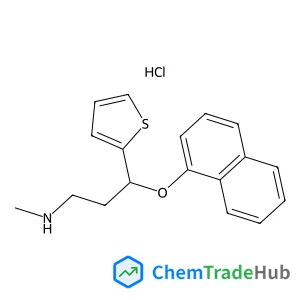
N-Methyl-3-(1-naphthyloxy)-3-(2-thienyl)-1-propanamine hydrochloride (1:1)
CAS Number:
1188266-11-6
Molecular Formula:
C18H20ClNOS
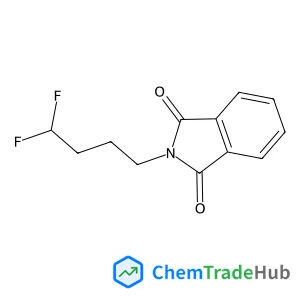
2-(4,4-Difluorobutyl)-1H-isoindole-1,3(2H)-dione
CAS Number:
1265341-14-7
Molecular Formula:
C12H11F2NO2
Recommended Suppliers






Disclaimer
This page provides academic journal information for reference and research purposes only. We are not affiliated with any journal publishers and do not handle publication submissions. For publication-related inquiries, please contact the respective journal publishers directly.
If you notice any inaccuracies in the information displayed, please contact us at support@chemtradehub.com. We will promptly review and address your concerns.