












Rhodium(iii)-catalyzed [3 + 3] annulation reactions of N-nitrosoanilines and cyclopropenones: an approach to functionalized 4-quinolones
Literature Information
Publication Date
2019-11-01
DOI
10.1039/C9QO01250H
Impact Factor
5.281
Authors
Yafeng Liu, Yuan Tian, Kexin Su, Peigen Wang, Xin Guo, Baohua Chen
View Original
Abstract
We report Rh(III)-catalyzed [3 + 3] annulation reactions for the preparation of functionalized 4-quinolones from N-nitrosoanilines and cyclopropenones. This reaction allows C–C bond cleavage and the construction of C–C and C–N bonds via N-nitroso-directed C–H activation. Good regioselectivity is achieved by using unsymmetrical meta-substituted N-nitrosoanilines. With this method, a variety of 4-quinolone derivatives were prepared in moderate to good yields under mild conditions.
Recommended Journals
Related Literature
A new method for α-specific glucosylation and its application to the one-pot synthesis of a branched α-glucan
Yanxin Zhang, Shihao Zhou, Xiaohan Wang, Han Zhang, Jian Gao
2019-01-30
Research Article
DOI: 10.1039/C8QO01177J
Using light to control the inhibition of Karstedt's catalyst
Brahmjot Kaur, Rameez Raza, Mitchell J. Stashick, Neil R. Branda
2019-03-26
Research Article
DOI: 10.1039/C9QO00221A
Iron-catalyzed reductive cyclization reaction of 1,6-enynes for the synthesis of 3-acylbenzofurans and thiophenes
Xiao-Feng Xia, Wei He, Guo-Wei Zhang, Dawei Wang
2018-12-14
Research Article
DOI: 10.1039/C8QO01190G
Efficient synthesis of tetrasubstituted 2,3-allenoates and preliminary studies on bioactivities
Yuan Yao, Guirong Zhu, Qin Chen, Hui Qian
2018-12-11
Research Article
DOI: 10.1039/C8QO01202D
Carbene-catalyzed oxidative acylation promoted by an unprecedented oxidant CCl3CN
Zijun Wu, Di Jiang, Jian Wang
2019-01-25
Research Article
DOI: 10.1039/C8QO01420E
Transition-metal-free decarboxylative C3-difluoroarylmethylation of quinoxalin-2(1H)-ones with α,α-difluoroarylacetic acids
Jinwei Yuan, Junhao Fu, Guoyong Pan, Zhengwang Wang, Liangru Yang, Yongmei Xiao, Pu Mao, Xiangmin Zhang
2019-02-27
Research Article
DOI: 10.1039/C9QO00105K
Diastereoselective Rh-catalyzed decarboxylative allylation to form quaternary stereocenters using sulfinimine as the directing group
Tongtong Liu, Yunhao Luo, Shende Jiang, Guang Yang
2019-01-24
Research Article
DOI: 10.1039/C8QO01258J
Tunable enforced cavities inside self-assembled capsules‡
Takeshi Maehara, Ryo Sekiya, Kentaro Harada, Takeharu Haino
2019-01-31
Research Article
DOI: 10.1039/C9QO00010K
A radical-chain reaction of isocyanides with selenosulfonates and water: facile synthesis of selenocarbamates under metal-free conditions
Yi Fang, Can Liu, Fei Wang, Rao Ding, Shun-Yi Wang, Shun-Jun Ji
2019-01-22
Research Article
DOI: 10.1039/C8QO01364K
You might also like
Compound Q&A
How should waste containing (6-Bromo-2-naphthyl)oxy](dimethyl)(2-methyl-2-propanyl)silane be handled?
Waste containing (6-Bromo-2-naphthyl)oxy](dimethyl)(2-methyl-2-propanyl)silane (...
100751-65-3[(6-Bromo-2-naphthyl...
Compound Q&A
How is 7-Fluoro-4-isoquinolinecarboxylic acid (CAS: 1841081-40-0) typically synthesized?
7-Fluoro-4-isoquinolinecarboxylic acid can be synthesized via a multi-step proce...
1841081-40-07-Fluoro-4-isoquinol...
Compound Q&A
What are the physical and chemical properties of 2,3,5,6-Tetrabromothieno[3,2-b]thiophene (CAS: 124638-53-5)?
2,3,5,6-Tetrabromothieno[3,2-b]thiophene is a crystalline compound with a high m...
124638-53-52,3,5,6-Tetrabromoth...
Compound Q&A
Is 1-[4-(Benzylamino)-7,8-dihydro-5H-pyrano[4,3-d]pyrimidin-2-yl]-2-methyl-1H-indole-4-carboxamide (CAS: 1542705-92-9) safe?
1-[4-(Benzylamino)-7,8-dihydro-5H-pyrano[4,3-d]pyrimidin-2-yl]-2-methyl-1H-indol...
1542705-92-91-[4-(Benzylamino)-7...
Compound Q&A
What is the market or research trend for imidazo[5,1-d]-1,2,3,5-tetrazine-8-carboxylic acid, 3,4-dihydro-3-methyl-4-oxo- (CAS: 113942-30-6)?
The market for imidazo[5,1-d]-1,2,3,5-tetrazine-8-carboxylic acid, 3,4-dihydro-3...
113942-30-6Imidazo[5,1-d]-1,2,3...
Compound Q&A
What is 3-(Triisopropylsilyl)propiolaldehyde (CAS: 163271-80-5)?
3-(Triisopropylsilyl)propiolaldehyde is a synthetic organic compound with the CA...
163271-80-53-(Triisopropylsilyl...
Compound Q&A
What regulatory guidelines apply to 6-Nitro-2H-1,4-benzoxazin-3(4H)-one (CAS: 81721-87-1)?
6-Nitro-2H-1,4-benzoxazin-3(4H)-one (CAS: 81721-87-1) is subject to various regu...
81721-87-16-Nitro-2H-1,4-benzo...
Compound Q&A
How should waste containing (3-Fluorophenyl)(4-{[(2-methyl-2-propanyl)oxy]carbonyl}-1-piperazinyl)acetic acid (CAS: 885272-91-3) be handled?
Waste containing (3-Fluorophenyl)(4-{[(2-methyl-2-propanyl)oxy]carbonyl}-1-piper...
885272-91-3(3-Fluorophenyl)(4-{...
Compound Q&A
What are the physical and chemical properties of N,N'-4,4'-Biphenyldiyldiisonicotinamide (CAS: 55119-40-9)?
N,N'-4,4'-Biphenyldiyldiisonicotinamide is a white crystalline solid with a mole...
55119-40-9N,N'-4,4'-Biphenyldi...
Compound Q&A
What industries use 6-Bromo-8-fluoro-2-quinazolinol (CAS: 1036756-15-6)?
6-Bromo-8-fluoro-2-quinazolinol is primarily used in the pharmaceutical industry...
1036756-15-66-Bromo-8-fluoro-2-q...
Source Journal
Organic Chemistry Frontiers

CiteScore:
7.8
Self-citation Rate:
8.7%
Articles per Year:
724
Organic Chemistry Frontiers publishes high-quality research from across organic chemistry. Emphases are placed on studies that make significant contributions to the field of organic chemistry by reporting either new or significantly improved protocols or methodologies. Topics include, but are not limited to the following: Organic synthesis Development of synthetic methodologies Catalysis Natural products Functional organic materials Supramolecular and macromolecular chemistry Physical and computational organic chemistry
Recommended Compounds
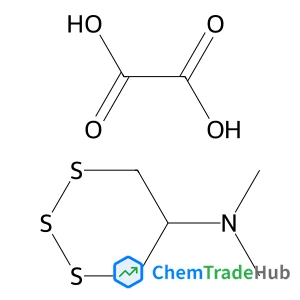
Oxalic acid compound with cyclohexylsulfamothioic O-acid (11)
CAS Number:
31895-22-4
Molecular Formula:
C7H13NO4S3
Recommended Suppliers





Disclaimer
This page provides academic journal information for reference and research purposes only. We are not affiliated with any journal publishers and do not handle publication submissions. For publication-related inquiries, please contact the respective journal publishers directly.
If you notice any inaccuracies in the information displayed, please contact us at support@chemtradehub.com. We will promptly review and address your concerns.