












Diastereoselective Rh-catalyzed decarboxylative allylation to form quaternary stereocenters using sulfinimine as the directing group
Literature Information
Publication Date
2019-01-24
DOI
10.1039/C8QO01258J
Impact Factor
5.281
Authors
Tongtong Liu, Yunhao Luo, Shende Jiang, Guang Yang
View Original
Abstract
In this paper, we reported for the first time that the diastereoselective Rh-catalyzed decarboxylative allylation of chiral sulfinimines could be used to form quaternary stereocenters. The key factor in giving rise to the successful development of this method was the application of the commercially available and achiral Wilkinson's Rh catalyst. Explained by a plausible mechanism, the sulfinimine group might be a potent directing group chelated with Rh to construct intramolecular steric hindrance. In addition, broad functional group tolerance was observed, and we subsequently revealed the various transformations verifying the utility of this method for rapidly accessing complex enantio-enriched polycyclic compounds.
Related Literature
Pure rotational spectra of LuF and LuCl
Stephen A. Cooke, Christine Krumrey, Michael C. L. Gerry
2005-05-31
Paper
DOI: 10.1039/B502683K
Side-hole to anti-hole conversion in time-resolved transient spectral hole-burning of emerald: ground state level versus excited state population storage in low magnetic fields
Brendan F. Hayward, Hans Riesen
2005-06-09
Paper
DOI: 10.1039/B502079D
New insight into selective catalytic reduction of nitrogen oxides by ammonia over H-form zeolites: a theoretical study
Jun Li, Shuhua Li
2007-05-18
Paper
DOI: 10.1039/B700161D
Impurity enhancement effects in the frame of the five-frequency model
István A. Szabó, Dezső L. Beke
2004-06-10
Paper
DOI: 10.1039/B316764J
Reply to the ‘Comment on “The thermal unimolecular decomposition of HCO: effects of state specific rate constants on the thermal rate constant” ’ by L. N. Krasnoperov, Phys. Chem. Chem. Phys., 2005, 7, DOI: 10.1039/b418813f
H. Hippler, N. Krasteva, F. Striebel
2005-04-01
Comment
DOI: 10.1039/B501415H
Amphoteric behaviour of Er3+ dopants in BaTiO3: an Er–LIII edge EXAFS assessment
M. T. Buscaglia, V. Buscaglia, P. Ghigna, M. Viviani, G. Spinolo, A. Testino, P. Nanni
2004-05-10
Paper
DOI: 10.1039/B402859G
SIMS study of transition metal transport in single crystalline yttria stabilised zirconia
Christos Argirusis, Marcela A. Taylor, Martin Kilo, Günter Borchardt, François Jomard, Bernard Lesage, Odile Kaïtasov
2004-06-03
Paper
DOI: 10.1039/B315294D
Indices for predicting the quality of leaving groups
Paul W. Ayers, James S. M. Anderson, Juan I. Rodriguez, Zobia Jawed
2005-04-05
Paper
DOI: 10.1039/B500996K
Rate coefficients for the OH + CFH2CH2OH reaction between 238 and 355 K
James B. Burkholder, R. W. Portmann, A. R. Ravishankara
2005-05-24
Paper
DOI: 10.1039/B503332B
You might also like
Compound Q&A
How should waste containing (6-Bromo-2-naphthyl)oxy](dimethyl)(2-methyl-2-propanyl)silane be handled?
Waste containing (6-Bromo-2-naphthyl)oxy](dimethyl)(2-methyl-2-propanyl)silane (...
100751-65-3[(6-Bromo-2-naphthyl...
Compound Q&A
How is 7-Fluoro-4-isoquinolinecarboxylic acid (CAS: 1841081-40-0) typically synthesized?
7-Fluoro-4-isoquinolinecarboxylic acid can be synthesized via a multi-step proce...
1841081-40-07-Fluoro-4-isoquinol...
Compound Q&A
What are the physical and chemical properties of 2,3,5,6-Tetrabromothieno[3,2-b]thiophene (CAS: 124638-53-5)?
2,3,5,6-Tetrabromothieno[3,2-b]thiophene is a crystalline compound with a high m...
124638-53-52,3,5,6-Tetrabromoth...
Compound Q&A
Is 1-[4-(Benzylamino)-7,8-dihydro-5H-pyrano[4,3-d]pyrimidin-2-yl]-2-methyl-1H-indole-4-carboxamide (CAS: 1542705-92-9) safe?
1-[4-(Benzylamino)-7,8-dihydro-5H-pyrano[4,3-d]pyrimidin-2-yl]-2-methyl-1H-indol...
1542705-92-91-[4-(Benzylamino)-7...
Compound Q&A
What is the market or research trend for imidazo[5,1-d]-1,2,3,5-tetrazine-8-carboxylic acid, 3,4-dihydro-3-methyl-4-oxo- (CAS: 113942-30-6)?
The market for imidazo[5,1-d]-1,2,3,5-tetrazine-8-carboxylic acid, 3,4-dihydro-3...
113942-30-6Imidazo[5,1-d]-1,2,3...
Compound Q&A
What is 3-(Triisopropylsilyl)propiolaldehyde (CAS: 163271-80-5)?
3-(Triisopropylsilyl)propiolaldehyde is a synthetic organic compound with the CA...
163271-80-53-(Triisopropylsilyl...
Compound Q&A
What regulatory guidelines apply to 6-Nitro-2H-1,4-benzoxazin-3(4H)-one (CAS: 81721-87-1)?
6-Nitro-2H-1,4-benzoxazin-3(4H)-one (CAS: 81721-87-1) is subject to various regu...
81721-87-16-Nitro-2H-1,4-benzo...
Compound Q&A
How should waste containing (3-Fluorophenyl)(4-{[(2-methyl-2-propanyl)oxy]carbonyl}-1-piperazinyl)acetic acid (CAS: 885272-91-3) be handled?
Waste containing (3-Fluorophenyl)(4-{[(2-methyl-2-propanyl)oxy]carbonyl}-1-piper...
885272-91-3(3-Fluorophenyl)(4-{...
Compound Q&A
What are the physical and chemical properties of N,N'-4,4'-Biphenyldiyldiisonicotinamide (CAS: 55119-40-9)?
N,N'-4,4'-Biphenyldiyldiisonicotinamide is a white crystalline solid with a mole...
55119-40-9N,N'-4,4'-Biphenyldi...
Compound Q&A
What industries use 6-Bromo-8-fluoro-2-quinazolinol (CAS: 1036756-15-6)?
6-Bromo-8-fluoro-2-quinazolinol is primarily used in the pharmaceutical industry...
1036756-15-66-Bromo-8-fluoro-2-q...
Source Journal
Organic Chemistry Frontiers

CiteScore:
7.8
Self-citation Rate:
8.7%
Articles per Year:
724
Organic Chemistry Frontiers publishes high-quality research from across organic chemistry. Emphases are placed on studies that make significant contributions to the field of organic chemistry by reporting either new or significantly improved protocols or methodologies. Topics include, but are not limited to the following: Organic synthesis Development of synthetic methodologies Catalysis Natural products Functional organic materials Supramolecular and macromolecular chemistry Physical and computational organic chemistry
Recommended Compounds
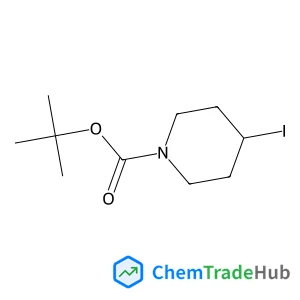
2-Methyl-2-propanyl 4-iodo-1-piperidinecarboxylate
CAS Number:
301673-14-3
Molecular Formula:
C10H18INO2

Recommended Suppliers




Disclaimer
This page provides academic journal information for reference and research purposes only. We are not affiliated with any journal publishers and do not handle publication submissions. For publication-related inquiries, please contact the respective journal publishers directly.
If you notice any inaccuracies in the information displayed, please contact us at support@chemtradehub.com. We will promptly review and address your concerns.