












A radical-chain reaction of isocyanides with selenosulfonates and water: facile synthesis of selenocarbamates under metal-free conditions
Literature Information
Publication Date
2019-01-22
DOI
10.1039/C8QO01364K
Impact Factor
5.281
Authors
Yi Fang, Can Liu, Fei Wang, Rao Ding, Shun-Yi Wang, Shun-Jun Ji
View Original
Abstract
A facile synthesis of secondary selenocarbamates through metal-free multicomponent reactions of isocyanides, selenosulfonates and water is reported here. The reaction is easy to handle and proceeds smoothly under mild conditions. The desired products are isolated in good yields with broad tolerance of functional groups. Detailed investigation of the mechanism is conducted and a radical-chain reaction model is also proposed.
Related Literature
Electrochemical control of glucose oxidase-catalyzed redox reaction using an oil/water interface
Takayasu Sugihara, Hiroki Hotta, Toshiyuki Osakai
2004-05-06
Paper
DOI: 10.1039/B400338A
Kinetics of electron–hole pair trapping via photoionization of biphenyl occluded in aluminium-rich ZSM-5 zeolites. Effects of extra-framework cations
Isabelle Gener, Alain Moissette, Claude Brémard
2004-05-10
Paper
DOI: 10.1039/B401816H
In-situ spin trap electron paramagnetic resonance study of fuel cell processes
Alexander Panchenko, Herbert Dilger, Jochen Kerres, Martin Hein, Andreas Ullrich, Till Kaz, Emil Roduner
2004-04-28
Communication
DOI: 10.1039/B404253K
The influence of a sugar-phosphate backbone on the cisplatin-bridged BpB′ models of DNA purine bases. Quantum chemical calculations of Pt(ii) bonding characteristics
Michal Zeizinger, Jaroslav V. Burda, Jerzy Leszczynski
2004-04-29
Paper
DOI: 10.1039/B317052G
Ab initio studies on the photophysics of the guanine–cytosine base pair
Andrzej L. Sobolewski, Wolfgang Domcke
2004-01-28
Paper
DOI: 10.1039/B314419D
A hierarchy of global coupling induced cluster patterns during the oscillatory H2-electrooxidation reaction on a Pt ring-electrode
Hamilton Varela, Carsten Beta, Antoine Bonnefont
2005-05-13
Paper
DOI: 10.1039/B502027A
Thermal and physical properties of an archetypal organic ionic plastic crystal electrolyte
Steven J. Pas, Jennifer M. Pringle, Maria Forsyth, Douglas R. MacFarlane
2004-04-23
Paper
DOI: 10.1039/B400452C
A theoretical study of water clusters: the relation between hydrogen-bond topology and interaction energy from quantum-chemical computations for clusters with up to 22 molecules
Annika Lenz, Lars Ojamäe
2005-04-12
Paper
DOI: 10.1039/B502109J
You might also like
Compound Q&A
How should waste containing (6-Bromo-2-naphthyl)oxy](dimethyl)(2-methyl-2-propanyl)silane be handled?
Waste containing (6-Bromo-2-naphthyl)oxy](dimethyl)(2-methyl-2-propanyl)silane (...
100751-65-3[(6-Bromo-2-naphthyl...
Compound Q&A
How is 7-Fluoro-4-isoquinolinecarboxylic acid (CAS: 1841081-40-0) typically synthesized?
7-Fluoro-4-isoquinolinecarboxylic acid can be synthesized via a multi-step proce...
1841081-40-07-Fluoro-4-isoquinol...
Compound Q&A
What are the physical and chemical properties of 2,3,5,6-Tetrabromothieno[3,2-b]thiophene (CAS: 124638-53-5)?
2,3,5,6-Tetrabromothieno[3,2-b]thiophene is a crystalline compound with a high m...
124638-53-52,3,5,6-Tetrabromoth...
Compound Q&A
Is 1-[4-(Benzylamino)-7,8-dihydro-5H-pyrano[4,3-d]pyrimidin-2-yl]-2-methyl-1H-indole-4-carboxamide (CAS: 1542705-92-9) safe?
1-[4-(Benzylamino)-7,8-dihydro-5H-pyrano[4,3-d]pyrimidin-2-yl]-2-methyl-1H-indol...
1542705-92-91-[4-(Benzylamino)-7...
Compound Q&A
What is the market or research trend for imidazo[5,1-d]-1,2,3,5-tetrazine-8-carboxylic acid, 3,4-dihydro-3-methyl-4-oxo- (CAS: 113942-30-6)?
The market for imidazo[5,1-d]-1,2,3,5-tetrazine-8-carboxylic acid, 3,4-dihydro-3...
113942-30-6Imidazo[5,1-d]-1,2,3...
Compound Q&A
What is 3-(Triisopropylsilyl)propiolaldehyde (CAS: 163271-80-5)?
3-(Triisopropylsilyl)propiolaldehyde is a synthetic organic compound with the CA...
163271-80-53-(Triisopropylsilyl...
Compound Q&A
What regulatory guidelines apply to 6-Nitro-2H-1,4-benzoxazin-3(4H)-one (CAS: 81721-87-1)?
6-Nitro-2H-1,4-benzoxazin-3(4H)-one (CAS: 81721-87-1) is subject to various regu...
81721-87-16-Nitro-2H-1,4-benzo...
Compound Q&A
How should waste containing (3-Fluorophenyl)(4-{[(2-methyl-2-propanyl)oxy]carbonyl}-1-piperazinyl)acetic acid (CAS: 885272-91-3) be handled?
Waste containing (3-Fluorophenyl)(4-{[(2-methyl-2-propanyl)oxy]carbonyl}-1-piper...
885272-91-3(3-Fluorophenyl)(4-{...
Compound Q&A
What are the physical and chemical properties of N,N'-4,4'-Biphenyldiyldiisonicotinamide (CAS: 55119-40-9)?
N,N'-4,4'-Biphenyldiyldiisonicotinamide is a white crystalline solid with a mole...
55119-40-9N,N'-4,4'-Biphenyldi...
Compound Q&A
What industries use 6-Bromo-8-fluoro-2-quinazolinol (CAS: 1036756-15-6)?
6-Bromo-8-fluoro-2-quinazolinol is primarily used in the pharmaceutical industry...
1036756-15-66-Bromo-8-fluoro-2-q...
Source Journal
Organic Chemistry Frontiers

CiteScore:
7.8
Self-citation Rate:
8.7%
Articles per Year:
724
Organic Chemistry Frontiers publishes high-quality research from across organic chemistry. Emphases are placed on studies that make significant contributions to the field of organic chemistry by reporting either new or significantly improved protocols or methodologies. Topics include, but are not limited to the following: Organic synthesis Development of synthetic methodologies Catalysis Natural products Functional organic materials Supramolecular and macromolecular chemistry Physical and computational organic chemistry
Recommended Compounds
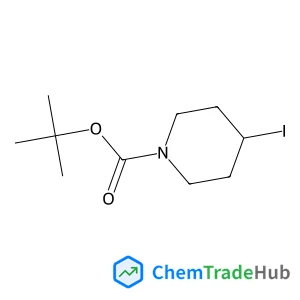
2-Methyl-2-propanyl 4-iodo-1-piperidinecarboxylate
CAS Number:
301673-14-3
Molecular Formula:
C10H18INO2
![2,9-Dichloro-5,12-dihydroquinolino[2,3-b]acridine-7,14-dione structure](https://static.chemtradehub.com/structs/308/3089-17-6-750b.webp "2,9-Dichloro-5,12-dihydroquinolino[2,3-b]acridine-7,14-dione structure")
2,9-Dichloro-5,12-dihydroquinolino[2,3-b]acridine-7,14-dione
CAS Number:
3089-17-6
Molecular Formula:
C20H10Cl2N2O2

Recommended Suppliers




Disclaimer
This page provides academic journal information for reference and research purposes only. We are not affiliated with any journal publishers and do not handle publication submissions. For publication-related inquiries, please contact the respective journal publishers directly.
If you notice any inaccuracies in the information displayed, please contact us at support@chemtradehub.com. We will promptly review and address your concerns.