












Iron-catalyzed reductive cyclization reaction of 1,6-enynes for the synthesis of 3-acylbenzofurans and thiophenes
Literature Information
Publication Date
2018-12-14
DOI
10.1039/C8QO01190G
Impact Factor
5.281
Authors
Xiao-Feng Xia, Wei He, Guo-Wei Zhang, Dawei Wang
View Original
Abstract
A facile synthesis of 3-acylbenzofurans and thiophenes via iron(II)-catalyzed reductive cyclization of 1,6-enynes has been developed. A sequence involving hydrogen atom transfer (HAT)/cyclization and oxygen insertion has been proposed and confirmed by isotope experiments. This benign strategy provides a viable synthetic approach to valuable carbonylated heteroaromatic compounds using ethanol as the solvent and dioxygen as the oxidant.
Related Literature
Cation environments and spatial distribution in Na2O–B2O3 glasses: New results from solid state NMR
Jan Dirk Epping, Wenzel Strojek, Hellmut Eckert
2005-05-03
Paper
DOI: 10.1039/B502265G
Modeling molecular diffusion in channel networks via displacements between the channel segments
Sergey Vasenkov, Jörg Kärger
2004-04-06
Paper
DOI: 10.1039/B316174A
Side-hole to anti-hole conversion in time-resolved transient spectral hole-burning of emerald: ground state level versus excited state population storage in low magnetic fields
Brendan F. Hayward, Hans Riesen
2005-06-09
Paper
DOI: 10.1039/B502079D
Molecular dynamics simulation of the squarate anion in acetonitrile solution
Ary O. Cavalcante, Sérgio M. Urahata, Mauro C. C. Ribeiro
2004-04-14
Paper
DOI: 10.1039/B402413C
The role of surface electrification on the growth and structural features of titania nanoparticles
Tzvetanka Boiadjieva, Giuseppe Cappelletti, Silvia Ardizzone, Sandra Rondinini, Alberto Vertova
2004-05-03
Paper
DOI: 10.1039/B402370F
Femtosecond investigations on the ultrafast photo-dissociation dynamics of CpMn(CO)3 and its fragment ions
Cosmin Lupulescu, Štefan Vajda, Albrecht Lindinger, Andrea Merli, Ludger Wöste
2004-05-11
Paper
DOI: 10.1039/B402246G
Vibrational analysis of capped [Leu]enkephalin
Tim M. Watson, Jonathan D. Hirst
2004-02-23
Paper
DOI: 10.1039/B315501C
New insight into selective catalytic reduction of nitrogen oxides by ammonia over H-form zeolites: a theoretical study
Jun Li, Shuhua Li
2007-05-18
Paper
DOI: 10.1039/B700161D
You might also like
Compound Q&A
How should waste containing (6-Bromo-2-naphthyl)oxy](dimethyl)(2-methyl-2-propanyl)silane be handled?
Waste containing (6-Bromo-2-naphthyl)oxy](dimethyl)(2-methyl-2-propanyl)silane (...
100751-65-3[(6-Bromo-2-naphthyl...
Compound Q&A
How is 7-Fluoro-4-isoquinolinecarboxylic acid (CAS: 1841081-40-0) typically synthesized?
7-Fluoro-4-isoquinolinecarboxylic acid can be synthesized via a multi-step proce...
1841081-40-07-Fluoro-4-isoquinol...
Compound Q&A
What are the physical and chemical properties of 2,3,5,6-Tetrabromothieno[3,2-b]thiophene (CAS: 124638-53-5)?
2,3,5,6-Tetrabromothieno[3,2-b]thiophene is a crystalline compound with a high m...
124638-53-52,3,5,6-Tetrabromoth...
Compound Q&A
Is 1-[4-(Benzylamino)-7,8-dihydro-5H-pyrano[4,3-d]pyrimidin-2-yl]-2-methyl-1H-indole-4-carboxamide (CAS: 1542705-92-9) safe?
1-[4-(Benzylamino)-7,8-dihydro-5H-pyrano[4,3-d]pyrimidin-2-yl]-2-methyl-1H-indol...
1542705-92-91-[4-(Benzylamino)-7...
Compound Q&A
What is the market or research trend for imidazo[5,1-d]-1,2,3,5-tetrazine-8-carboxylic acid, 3,4-dihydro-3-methyl-4-oxo- (CAS: 113942-30-6)?
The market for imidazo[5,1-d]-1,2,3,5-tetrazine-8-carboxylic acid, 3,4-dihydro-3...
113942-30-6Imidazo[5,1-d]-1,2,3...
Compound Q&A
What is 3-(Triisopropylsilyl)propiolaldehyde (CAS: 163271-80-5)?
3-(Triisopropylsilyl)propiolaldehyde is a synthetic organic compound with the CA...
163271-80-53-(Triisopropylsilyl...
Compound Q&A
What regulatory guidelines apply to 6-Nitro-2H-1,4-benzoxazin-3(4H)-one (CAS: 81721-87-1)?
6-Nitro-2H-1,4-benzoxazin-3(4H)-one (CAS: 81721-87-1) is subject to various regu...
81721-87-16-Nitro-2H-1,4-benzo...
Compound Q&A
How should waste containing (3-Fluorophenyl)(4-{[(2-methyl-2-propanyl)oxy]carbonyl}-1-piperazinyl)acetic acid (CAS: 885272-91-3) be handled?
Waste containing (3-Fluorophenyl)(4-{[(2-methyl-2-propanyl)oxy]carbonyl}-1-piper...
885272-91-3(3-Fluorophenyl)(4-{...
Compound Q&A
What are the physical and chemical properties of N,N'-4,4'-Biphenyldiyldiisonicotinamide (CAS: 55119-40-9)?
N,N'-4,4'-Biphenyldiyldiisonicotinamide is a white crystalline solid with a mole...
55119-40-9N,N'-4,4'-Biphenyldi...
Compound Q&A
What industries use 6-Bromo-8-fluoro-2-quinazolinol (CAS: 1036756-15-6)?
6-Bromo-8-fluoro-2-quinazolinol is primarily used in the pharmaceutical industry...
1036756-15-66-Bromo-8-fluoro-2-q...
Source Journal
Organic Chemistry Frontiers

CiteScore:
7.8
Self-citation Rate:
8.7%
Articles per Year:
724
Organic Chemistry Frontiers publishes high-quality research from across organic chemistry. Emphases are placed on studies that make significant contributions to the field of organic chemistry by reporting either new or significantly improved protocols or methodologies. Topics include, but are not limited to the following: Organic synthesis Development of synthetic methodologies Catalysis Natural products Functional organic materials Supramolecular and macromolecular chemistry Physical and computational organic chemistry
Recommended Compounds

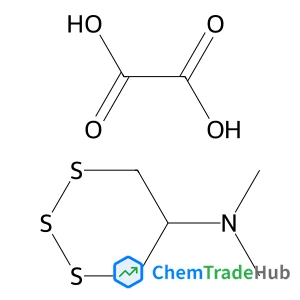
Oxalic acid compound with cyclohexylsulfamothioic O-acid (11)
CAS Number:
31895-22-4
Molecular Formula:
C7H13NO4S3
Recommended Suppliers






Disclaimer
This page provides academic journal information for reference and research purposes only. We are not affiliated with any journal publishers and do not handle publication submissions. For publication-related inquiries, please contact the respective journal publishers directly.
If you notice any inaccuracies in the information displayed, please contact us at support@chemtradehub.com. We will promptly review and address your concerns.