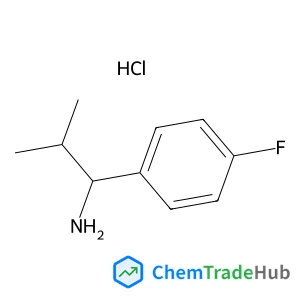
(1R)-1-(4-Fluorophenyl)-2-methyl-1-propanamine hydrochloride (1:1)
CAS Number:
1213329-40-8
Molecular Formula:
C10H15ClFN
Huabing Shu, Ying Wang, Minglei Sun
Type-II heterostructures are appealing for application in optoelectronics due to their effective separation of photogenerated charge carriers. Based on density functional and many-body perturbation theories, we investigate the MoSe2/blue phosphorene (MoSe2/Blue-P) heterobilayer with three representative stacking configurations. Our calculations indicate that the AA-stacking structure has more thermodynamic and dynamic stability. And it possesses a type-II band alignment with significant band offsets. The band offsets together with an interlayer polarized field will efficiently separate the photogenerated holes and electrons. More interestingly, compared with the MoSe2 monolayer, the MoSe2/Blue-P heterobilayer exhibits a significant enhancement of optical absorption in the range of near-ultraviolet and visible light. Also, the observed interlayer exciton has an impressive binding energy (∼670 meV), suggesting that the radiative recombination can be suppressed by the formation of an interlayer exciton. The predicted maximum energy conversion efficiency of MoSe2/Blue-P can achieve a value as large as 14.3%. These prominent electronic and optical properties provide the MoSe2/Blue-P heterobilayer with great potential in optoelectronics.
Veronica Esposito, Antonella Virgilio, Antonio Randazzo, Aldo Galeone, Luciano Mayol
DOI: 10.1039/B504455C
Jae-Woo Kim, Sang H. Choi, Peter T. Lillehei, Sang-Hyon Chu, Glen C. King, Gerald D. Watt
DOI: 10.1039/B505097A
Joseph B. Carroll, Graeme Cooke, James F. Garety, Brian J. Jordan, Suhil Mabruk, Vincent M. Rotello
DOI: 10.1039/B505215G
Sengodagounder Muthusamy, Janagiraman Krishnamurthi, Munirathnam Nethaji
DOI: 10.1039/B504692K
Naoyoshi Maezaki, Hiroaki Sawamoto, Hiroyuki Ishihara, Tetsuaki Tanaka
DOI: 10.1039/B506375B
Masato Ohsumi, Tuyoshi Fukaminato, Masahiro Irie
DOI: 10.1039/B506801K
Yun Liu, Xabier Lopez, Darrin M. York
DOI: 10.1039/B502568K
Luigi Casella, Nick Hadjiliadis, Enrico Monzani, Nikolaos Kourkoumelis, John C. Plakatouras
DOI: 10.1039/B502788H
Giannis S. Papaefstathiou, Ivan G. Georgiev, Tomislav Friščić, Leonard R. MacGillivray
DOI: 10.1039/B504477D
3-(2-Bromoimidazo[2,1-b]thiazol-6-yl)propanoic acid hydrochloride is typically s...
2-Isopropyl-1,3-dioxane-5-carboxylic acid is typically synthesized by the carbox...
Alisporivir (CAS: 254435-95-5) is an antiviral medication used in the treatment ...
[1,2,4]triazolo[3,4-a]phthalazine (CAS: 234-80-0) is a crystalline compound with...
Regulatory guidelines for (2S)-5-Hydroxy-2-(4-hydroxyphenyl)-4-oxo-3,4-dihydro-2...
2,2-Difluorocyclohexanamine hydrochloride is generally safe when handled under p...
3-Nitro-2-phenylthiophene is primarily used in the synthesis of other organic co...
1-(Trifluoroacetyl)-4-piperidinecarbonitrile (CAS: 77940-79-5) is a colorless to...
Research and market trends for 1,3,6,8-Tetranitro-9H-carbazole (CAS: 4543-33-3) ...
Waste containing Dibenzo[b,d]thiophen-1-ylboronic acid (CAS: 1245943-60-5) shoul...

Physical Chemistry Chemical Physics (PCCP) is an international journal co-owned by 19 physical chemistry and physics societies from around the world. This journal publishes original, cutting-edge research in physical chemistry, chemical physics and biophysical chemistry. To be suitable for publication in PCCP, articles must include significant innovation and/or insight into physical chemistry; this is the most important criterion that reviewers and Editors will judge against when evaluating submissions. The journal has a broad scope and welcomes contributions spanning experiment, theory, computation and data science. Topical coverage includes spectroscopy, dynamics, kinetics, statistical mechanics, thermodynamics, electrochemistry, catalysis, surface science, quantum mechanics, quantum computing and machine learning. Interdisciplinary research areas such as polymers and soft matter, materials, nanoscience, energy, surfaces/interfaces, and biophysical chemistry are welcomed if they demonstrate significant innovation and/or insight into physical chemistry. Joined experimental/theoretical studies are particularly appreciated when complementary and based on up-to-date approaches.