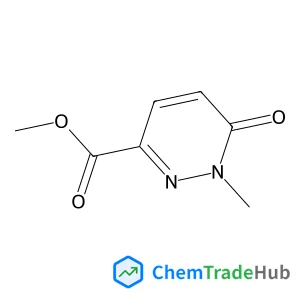
Methyl 1-methyl-6-oxo-1,6-dihydro-3-pyridazinecarboxylate
CAS Number:
74173-58-3
Molecular Formula:
C7H8N2O3
F. Rafael Castiello, James Porter, Paresa Modarres
With the aim of improving the reproducibility of capacitive immunosensors, we performed a comparative study of four different insulating/immobilization chemistries. Each chemistry targeted different areas of an interdigitated electrode including an alkyl thiol monolayer on the electrode surface, an amino silane monolayer on the gaps between electrodes, and conformal coatings via passive adsorption of the probe and a spin-coated layer of poly(methyl methacrylate) (PMMA). We analyzed the dielectric properties of these chemistries by comparing their capacitive behavior through equivalent circuit modeling and correlate the observed behavior with their surface characteristics by using atomic force microscopy and finite element modeling. We found that surface binding events occurring in the interdigitated electrode gaps play a major role in the overall change in capacitance. This was confirmed via finite element modeling showing an increased electric field intensity in the electrode gaps by 14%, compared to directly above the electrodes. Among the investigated surface chemistries, PMMA conformal coating produced a smooth surface (Rq roughness = 0.21 ± 0.02 nm) providing the most reproducible and stable capacitance change (15.6 ± 0.4%) in response to specific antigen–antibody binding.
Wen Li, Weifeng Bu, Haolong Li, Lixin Wu, Min Li
DOI: 10.1039/B503550C
Jyongsik Jang, Kyung Jin Lee, Younggeun Kim
DOI: 10.1039/B503831F
Naoyoshi Maezaki, Hiroaki Sawamoto, Hiroyuki Ishihara, Tetsuaki Tanaka
DOI: 10.1039/B506375B
Joseph B. Carroll, Graeme Cooke, James F. Garety, Brian J. Jordan, Suhil Mabruk, Vincent M. Rotello
DOI: 10.1039/B505215G
Meng Tack Ng, Chris Boothroyd, Jagadese J. Vittal
DOI: 10.1039/B506203A
Xin-Rong Zhang, Lu-Cun Wang, Yong Cao, Wei-Lin Dai, He-Yong He, Kang-Nian Fan
DOI: 10.1039/B502997J
Ryoichi Kuwano, Naoki Ishida, Masahiro Murakami
DOI: 10.1039/B505105C
Balaji Sitharaman, Kyle R. Kissell, Keith B. Hartman, Lesa A. Tran, Andrei Baikalov, Irene Rusakova, Yanyi Sun, Htet A. Khant, Steven J. Ludtke, Wah Chiu, Sabrina Laus, Éva Tóth, Lothar Helm, André E. Merbach, Lon J. Wilson
DOI: 10.1039/B504435A
3-(2-Bromoimidazo[2,1-b]thiazol-6-yl)propanoic acid hydrochloride is typically s...
2-Isopropyl-1,3-dioxane-5-carboxylic acid is typically synthesized by the carbox...
Alisporivir (CAS: 254435-95-5) is an antiviral medication used in the treatment ...
[1,2,4]triazolo[3,4-a]phthalazine (CAS: 234-80-0) is a crystalline compound with...
Regulatory guidelines for (2S)-5-Hydroxy-2-(4-hydroxyphenyl)-4-oxo-3,4-dihydro-2...
2,2-Difluorocyclohexanamine hydrochloride is generally safe when handled under p...
3-Nitro-2-phenylthiophene is primarily used in the synthesis of other organic co...
1-(Trifluoroacetyl)-4-piperidinecarbonitrile (CAS: 77940-79-5) is a colorless to...
Research and market trends for 1,3,6,8-Tetranitro-9H-carbazole (CAS: 4543-33-3) ...
Waste containing Dibenzo[b,d]thiophen-1-ylboronic acid (CAS: 1245943-60-5) shoul...

Physical Chemistry Chemical Physics (PCCP) is an international journal co-owned by 19 physical chemistry and physics societies from around the world. This journal publishes original, cutting-edge research in physical chemistry, chemical physics and biophysical chemistry. To be suitable for publication in PCCP, articles must include significant innovation and/or insight into physical chemistry; this is the most important criterion that reviewers and Editors will judge against when evaluating submissions. The journal has a broad scope and welcomes contributions spanning experiment, theory, computation and data science. Topical coverage includes spectroscopy, dynamics, kinetics, statistical mechanics, thermodynamics, electrochemistry, catalysis, surface science, quantum mechanics, quantum computing and machine learning. Interdisciplinary research areas such as polymers and soft matter, materials, nanoscience, energy, surfaces/interfaces, and biophysical chemistry are welcomed if they demonstrate significant innovation and/or insight into physical chemistry. Joined experimental/theoretical studies are particularly appreciated when complementary and based on up-to-date approaches.