


Heavy carbon nanodots: a new phosphorescent carbon nanostructure
Literature Information
Publication Date
2018-05-16
DOI
10.1039/C8CP02675K
Impact Factor
3.676
Authors
Rachael Knoblauch, Brian Bui, Ammar Raza, Chris D. Geddes
View Original
Abstract
Carbon nanodots are nanometer sized fluorescent particles studied for their distinct photoluminescent properties and biocompatibility. Although extensive literature reports the modification and application of carbon nanodot fluorescence, little has been published pertaining to phosphorescence emission from carbon nanodots. The use of phosphors in biological imaging can lead to clearer detection, as the long lifetimes of phosphorescent emission permit off-gated collection that avoids noise from biological autofluorescence. Carbon nanodots present a desirable scaffold for this application, with advantageous qualities ranging from photostability to multi-color emission. This research reports the generation of a novel phosphorescent “heavy carbon” nanodot via halogenation of the carbon nanodot structure. By employing a collection pathway that effectively incorporates bromine into the nanostructure, T1 triplet character is introduced, and subsequently phosphorescence is observed in liquid media at room temperature for the first time in the nanodot literature. Further experiments are reported characterizing the conditions of observed phosphorescence and its pH-dependence. Our approach for producing “heavy carbon nanodots” is a low-cost and relatively simple method for generating the phosphorescent nanodots, which sets the foundation for its potential future use as a phosphorescent probe in application.
Recommended Journals

Science Progress

Journal of Catalysis

Pharmacological Reviews

Journal of Organometallic Chemistry

Journal of Physics and Chemistry of Solids

Molecular Pharmacology

Planta Medica

European Journal of Wood and Wood Products

Proceedings of the National Academy of Sciences of the United States of America

Journal of Medicinal Chemistry
Related Literature
Strongly subspectral pairs in C50+10n and C60+12n fullerenes via a common generic graph
Paper
DOI: 10.1039/A902553G
The partial molar volumes of some tetra- and pentapeptides in aqueous solution: a test of amino acid side-chain group additivity for unfolded proteins
Marko Häckel, Hans-Jürgen Hinz, Gavin R. Hedwig
2000-07-06
Paper
DOI: 10.1039/B003034L
Two desorption components of product CO2 in steady-state CO oxidation on Pd(110)
Paper
DOI: 10.1039/A903458G
Photophysical and photochemical properties of bis-silylated C60 derivatives
Paper
DOI: 10.1039/A902939G
Spectroscopic properties of Mg-chlorin, Mg-porphin and chlorophyllsa, b, c1, c2, c3 and d studied by semi-empirical and ab initio MO/CI methods
Juha Linnanto, Jouko Korppi-Tommola
2000-10-05
Paper
DOI: 10.1039/B004998K
The glass transition relaxation in a side-chain liquid crystalline polymer studied by modulated temperature differential scanning calorimetry
Cristina Alvarez, Joaquim J. Moura-Ramos
2000-09-29
Paper
DOI: 10.1039/B004133P
Laser induced ionisation/dissociation of cyclopentanone in the 320–370 nm region
Paper
DOI: 10.1039/A902027F
Kinetics of excited-state Cr(a5S2, a5DJ, a5GJ) depletion by simple hydrocarbons
Paper
DOI: 10.1039/A902886B
Temperature-dependent phase behaviour of dihydroxy octadecanoic acid methyl esters: Influence of stereochemistry and position of the second polar moiety
Marina Fix, Manfred Sieber, Michael Overs, Hans J. Schäfer, Hans-Joachim Galla
2000-09-29
Paper
DOI: 10.1039/B003996I
You might also like
Compound Q&A
What precautions should be taken when handling 4-(2-Furylmethyl)thiomorpholine 1,1-dioxide (CAS: 79206-94-3)?
When handling 4-(2-Furylmethyl)thiomorpholine 1,1-dioxide (CAS: 79206-94-3), it ...
79206-94-34-(2-Furylmethyl)thi...
Compound Q&A
What precautions should be taken when handling 4-Chloro-N-[2-(4-morpholinyl)ethyl]benzamide (CAS: 71320-77-9)?
When handling 4-Chloro-N-[2-(4-morpholinyl)ethyl]benzamide (CAS: 71320-77-9), it...
71320-77-94-Chloro-N-[2-(4-mor...
Compound Q&A
How should waste containing 2-[2-(2-Methoxyethoxy)ethoxy]ethyl 4-methylbenzenesulfonate (CAS: 62921-74-8) be handled?
Waste containing this compound (CAS: 62921-74-8) should be handled according to ...
62921-74-82-[2-(2-Methoxyethox...
Compound Q&A
How should waste containing (S)-Methyl 2-amino-3-cyclohexylpropanoate be handled?
Waste containing (S)-Methyl 2-amino-3-cyclohexylpropanoate should be collected i...
40056-18-6(S)-Methyl 2-amino-3...
Compound Q&A
How is 5-({4-[(2S,4R)-4-Hydroxy-2-methyltetrahydro-2H-pyran-4-yl]-2-thienyl}sulfanyl)-1-methyl-1,3-dihydro-2H-indol-2-one (CAS: 166882-70-8) typically synthesized?
This compound can be synthesized using a multi-step process involving the conjug...
166882-70-85-({4-[(2S,4R)-4-Hyd...
Compound Q&A
Are there alternatives to (2E)-3-(3,4-Dichlorophenyl)acrylic acid (CAS: 7312-27-8) in synthesis?
There are several alternatives to (2E)-3-(3,4-Dichlorophenyl)acrylic acid in syn...
7312-27-8(2E)-3-(3,4-Dichloro...
Compound Q&A
How should Ethyl 6-(2-nitrophenyl)imidazo[2,1-b][1,3]thiazole-3-carboxylate (CAS: 925437-84-9) be stored?
Ethyl 6-(2-nitrophenyl)imidazo[2,1-b][1,3]thiazole-3-carboxylate (CAS: 925437-84...
925437-84-9Ethyl 6-(2-nitrophen...
Compound Q&A
How should waste containing 2-(1,3-Thiazol-2-yl)ethanamine (CAS: 18453-07-1) be handled?
Waste containing 2-(1,3-Thiazol-2-yl)ethanamine (CAS: 18453-07-1) should be coll...
18453-07-12-(1,3-Thiazol-2-yl)...
Compound Q&A
How is Methyl 5-iodo-2-methylbenzoate (CAS: 103440-54-6) typically synthesized?
Methyl 5-iodo-2-methylbenzoate can be synthesized through the iodination of meth...
103440-54-6Methyl 5-iodo-2-meth...
Compound Q&A
How is 5-Chloro[1,2,4]triazolo[1,5-a]pyridine (CAS: 1427399-34-5) typically synthesized?
5-Chloro[1,2,4]triazolo[1,5-a]pyridine is commonly synthesized via the condensat...
1427399-34-55-Chloro[1,2,4]triaz...
Source Journal
Physical Chemistry Chemical Physics

CiteScore:
5.5
Self-citation Rate:
10.3%
Articles per Year:
3036
Physical Chemistry Chemical Physics (PCCP) is an international journal co-owned by 19 physical chemistry and physics societies from around the world. This journal publishes original, cutting-edge research in physical chemistry, chemical physics and biophysical chemistry. To be suitable for publication in PCCP, articles must include significant innovation and/or insight into physical chemistry; this is the most important criterion that reviewers and Editors will judge against when evaluating submissions. The journal has a broad scope and welcomes contributions spanning experiment, theory, computation and data science. Topical coverage includes spectroscopy, dynamics, kinetics, statistical mechanics, thermodynamics, electrochemistry, catalysis, surface science, quantum mechanics, quantum computing and machine learning. Interdisciplinary research areas such as polymers and soft matter, materials, nanoscience, energy, surfaces/interfaces, and biophysical chemistry are welcomed if they demonstrate significant innovation and/or insight into physical chemistry. Joined experimental/theoretical studies are particularly appreciated when complementary and based on up-to-date approaches.
Recommended Compounds

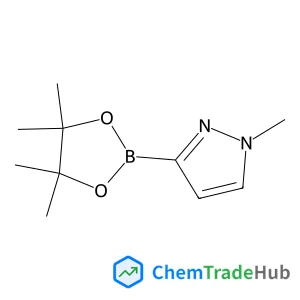
1-Methyl-3-(4,4,5,5-tetramethyl-1,3,2-dioxaborolan-2-yl)-1H-pyrazole
CAS Number:
1020174-04-2
Molecular Formula:
C10H17BN2O2

Recommended Suppliers





Disclaimer
This page provides academic journal information for reference and research purposes only. We are not affiliated with any journal publishers and do not handle publication submissions. For publication-related inquiries, please contact the respective journal publishers directly.
If you notice any inaccuracies in the information displayed, please contact us at support@chemtradehub.com. We will promptly review and address your concerns.