












Photophysical and photochemical properties of bis-silylated C60 derivatives
Literature Information
Publication Date
DOI
10.1039/A902939G
Impact Factor
3.676
Authors
View Original
Abstract
Photophysical and photochemical properties of bis-silylated C60 derivatives have been examined using steady-state and time-resolved spectroscopies. Absorption band edges of 1,2- and 1,4-bis-silylated C60 derivatives ranged to about 800 nm. Fluorescence quantum yields of 1,2- and 1,16-adducts were slightly larger than that of C60, while 1,4-adducts did not show fluorescence. By laser irradiation to the bis-silylated C60 derivatives, transient absorption bands due to their triplet excited states were confirmed in the visible and near-IR regions. Photoinduced electron transfer from electron donor to excited triplet states of bis-silylated C60 derivatives was also confirmed in transient absorption spectra. The acceptor-abilities of the excited triplet states changed with the position of the C60-silicon bonds, which can be explained mainly on the basis of reduction potentials and triplet energies of the bis-silylated C60 derivatives.
Related Literature
Fraction of the CoMoS phases accessible to NO in Co–Mo hydrodesulfurization catalysts
Yasuaki Okamoto, Masatoshi Kawano, Takeshi Kubota
2003-04-07
Communication
DOI: 10.1039/B301487H
Zn-Proline catalyzed direct aldol reaction in aqueous media
Tamis Darbre, Miguel Machuqueiro
2003-03-31
Communication
DOI: 10.1039/B301117H
Polyoxometalate-catalysed epoxidation of 1-octene with hydrogen peroxide in microemulsions coupled with ultrafiltration
Arnold Lambert, Pawel Plucinski, Ivan V. Kozhevnikov
2003-02-17
Communication
DOI: 10.1039/B300494P
A new dark quencher for use in genetic analysis
Jonathan P. May, Lynda J. Brown, Ivo Rudloff, Tom Brown
2003-03-18
Communication
DOI: 10.1039/B300934C
Novel and efficient chiral sulfideoxathiane ligands for palladium-catalyzed asymmetric allylic alkylation
Yuko Okuyama, Hiroto Nakano, Kouichi Takahashi, Hiroshi Hongo, Chizuko Kabuto
2003-01-17
Communication
DOI: 10.1039/B211031H
A highly active K-Co-Mo/C catalyst for mixed alcohol synthesis from CO + H2
Jun Bao, YiLu Fu, ZhongHai Sun, Chen Gao
2003-02-25
Communication
DOI: 10.1039/B212504H
Reversible C–C bond formation: solid state structure of the aldol-like addition product of adamantanone to a 1,5-diazapentadienyllithium, and its solution state retro-aldol dissociation
Lee-Jon Ball, Anthony P. Dickie, Francis S. Mair, David A. Middleton, Robin G. Pritchard
2003-02-19
Communication
DOI: 10.1039/B211745B
Ion-exchange synthesis and magneto-optical spectra of colored magnetic thin films composed of metal(ii) hexacyanochromate(iii)
Masanori Tozawa, Norimichi Kojima, Kazuhito Hashimoto
2003-04-22
Communication
DOI: 10.1039/B212861F
A simple and efficient method for synthesis of 5-substituted 2′-deoxyuridine nucleosides using metal–halogen exchange reaction of 5-iodo-2′-deoxyuridine sodium salt
Mariko Aso, Toshiyuki Kaneko, Morihide Nakamura, Noboru Koga, Hiroshi Suemune
2003-04-02
Communication
DOI: 10.1039/B301425H
Asymmetric protonation of lithium enolates of α-amino acid derivatives with α-amino acid-based chiral Brønsted acids
Kentaro Futatsugi, Akira Yanagisawa, Hisashi Yamamoto
2003-01-30
Communication
DOI: 10.1039/B211523A
You might also like
Compound Q&A
What precautions should be taken when handling 4-(2-Furylmethyl)thiomorpholine 1,1-dioxide (CAS: 79206-94-3)?
When handling 4-(2-Furylmethyl)thiomorpholine 1,1-dioxide (CAS: 79206-94-3), it ...
79206-94-34-(2-Furylmethyl)thi...
Compound Q&A
What precautions should be taken when handling 4-Chloro-N-[2-(4-morpholinyl)ethyl]benzamide (CAS: 71320-77-9)?
When handling 4-Chloro-N-[2-(4-morpholinyl)ethyl]benzamide (CAS: 71320-77-9), it...
71320-77-94-Chloro-N-[2-(4-mor...
Compound Q&A
How should waste containing 2-[2-(2-Methoxyethoxy)ethoxy]ethyl 4-methylbenzenesulfonate (CAS: 62921-74-8) be handled?
Waste containing this compound (CAS: 62921-74-8) should be handled according to ...
62921-74-82-[2-(2-Methoxyethox...
Compound Q&A
How should waste containing (S)-Methyl 2-amino-3-cyclohexylpropanoate be handled?
Waste containing (S)-Methyl 2-amino-3-cyclohexylpropanoate should be collected i...
40056-18-6(S)-Methyl 2-amino-3...
Compound Q&A
How is 5-({4-[(2S,4R)-4-Hydroxy-2-methyltetrahydro-2H-pyran-4-yl]-2-thienyl}sulfanyl)-1-methyl-1,3-dihydro-2H-indol-2-one (CAS: 166882-70-8) typically synthesized?
This compound can be synthesized using a multi-step process involving the conjug...
166882-70-85-({4-[(2S,4R)-4-Hyd...
Compound Q&A
Are there alternatives to (2E)-3-(3,4-Dichlorophenyl)acrylic acid (CAS: 7312-27-8) in synthesis?
There are several alternatives to (2E)-3-(3,4-Dichlorophenyl)acrylic acid in syn...
7312-27-8(2E)-3-(3,4-Dichloro...
Compound Q&A
How should Ethyl 6-(2-nitrophenyl)imidazo[2,1-b][1,3]thiazole-3-carboxylate (CAS: 925437-84-9) be stored?
Ethyl 6-(2-nitrophenyl)imidazo[2,1-b][1,3]thiazole-3-carboxylate (CAS: 925437-84...
925437-84-9Ethyl 6-(2-nitrophen...
Compound Q&A
How should waste containing 2-(1,3-Thiazol-2-yl)ethanamine (CAS: 18453-07-1) be handled?
Waste containing 2-(1,3-Thiazol-2-yl)ethanamine (CAS: 18453-07-1) should be coll...
18453-07-12-(1,3-Thiazol-2-yl)...
Compound Q&A
How is Methyl 5-iodo-2-methylbenzoate (CAS: 103440-54-6) typically synthesized?
Methyl 5-iodo-2-methylbenzoate can be synthesized through the iodination of meth...
103440-54-6Methyl 5-iodo-2-meth...
Compound Q&A
How is 5-Chloro[1,2,4]triazolo[1,5-a]pyridine (CAS: 1427399-34-5) typically synthesized?
5-Chloro[1,2,4]triazolo[1,5-a]pyridine is commonly synthesized via the condensat...
1427399-34-55-Chloro[1,2,4]triaz...
Source Journal
Physical Chemistry Chemical Physics

CiteScore:
5.5
Self-citation Rate:
10.3%
Articles per Year:
3036
Physical Chemistry Chemical Physics (PCCP) is an international journal co-owned by 19 physical chemistry and physics societies from around the world. This journal publishes original, cutting-edge research in physical chemistry, chemical physics and biophysical chemistry. To be suitable for publication in PCCP, articles must include significant innovation and/or insight into physical chemistry; this is the most important criterion that reviewers and Editors will judge against when evaluating submissions. The journal has a broad scope and welcomes contributions spanning experiment, theory, computation and data science. Topical coverage includes spectroscopy, dynamics, kinetics, statistical mechanics, thermodynamics, electrochemistry, catalysis, surface science, quantum mechanics, quantum computing and machine learning. Interdisciplinary research areas such as polymers and soft matter, materials, nanoscience, energy, surfaces/interfaces, and biophysical chemistry are welcomed if they demonstrate significant innovation and/or insight into physical chemistry. Joined experimental/theoretical studies are particularly appreciated when complementary and based on up-to-date approaches.
Recommended Compounds
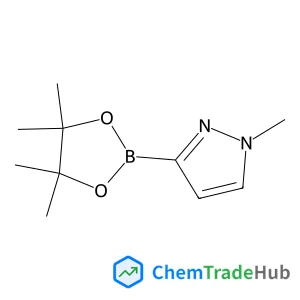
1-Methyl-3-(4,4,5,5-tetramethyl-1,3,2-dioxaborolan-2-yl)-1H-pyrazole
CAS Number:
1020174-04-2
Molecular Formula:
C10H17BN2O2

Recommended Suppliers





Disclaimer
This page provides academic journal information for reference and research purposes only. We are not affiliated with any journal publishers and do not handle publication submissions. For publication-related inquiries, please contact the respective journal publishers directly.
If you notice any inaccuracies in the information displayed, please contact us at support@chemtradehub.com. We will promptly review and address your concerns.