












The partial molar volumes of some tetra- and pentapeptides in aqueous solution: a test of amino acid side-chain group additivity for unfolded proteins
Literature Information
Publication Date
2000-07-06
DOI
10.1039/B003034L
Impact Factor
3.676
Authors
Marko Häckel, Hans-Jürgen Hinz, Gavin R. Hedwig
View Original
Abstract
Ten new peptides with the amino acid sequences glycyl-X-Y-glycine and glycyl-X-Y-Z-glycine, where X, Y and Z are amino acids with neutral side-chains, have been synthesized and the partial molar volumes at infinite dilution, V2°, have been determined for all these peptides in aqueous solution at 298.15 K. For several of the peptides, V2° data have also been obtained over the temperature range 283.15 to 363.15 K using a scanning densimetric method. The V2° results obtained are compared with those calculated using the principle of group additivity and the group partial molar volumes we have derived in earlier work. We have shown that our group partial molar volumes can be used to reliably predict the partial molar volumes over a wide temperature range of polypeptides that have neutral amino acid side-chains.
Related Literature
Self-organized formation of a hierarchical self-similar structure with calcium carbonate
Hiroaki Imai, Tomohiro Terada, Satoshi Yamabi
2003-01-24
Communication
DOI: 10.1039/B211240J
Asymmetric protonation of lithium enolates of α-amino acid derivatives with α-amino acid-based chiral Brønsted acids
Kentaro Futatsugi, Akira Yanagisawa, Hisashi Yamamoto
2003-01-30
Communication
DOI: 10.1039/B211523A
Synthesis and characterization of highly ordered functional mesoporous silica thin films with positively chargeable –NH2 groups
Nanguo Liu, Roger A. Assink, Bernd Smarsly
2003-04-16
Communication
DOI: 10.1039/B301910A
Preparation of ZnO nanocrystalsvia ultrasonic irradiation
Dong Qian, J.Z. Jiang, Poul Lenvig Hansen
2003-03-28
Communication
DOI: 10.1039/B301504A
Soluble polymer-supported convergent parallel library synthesis
Jung-Mo Ahn, Paul Wentworth Jr., Kim D. Janda
2003-01-27
Communication
DOI: 10.1039/B210696E
Reductive cleavage of the C–O bond of acetals and orthoesters: reduction by silane in the presence of a Rh–PPh3 complex
Tetsuo Ohta, Tsugumi Michibata, Kazuyuki Yamada, Ryohei Omori, Isao Furukawa
2003-04-17
Communication
DOI: 10.1039/B302124F
Pyridine–sugar conjugates as potent inhibitors of enzyme-catalysed glycosidehydrolysis
Peter A. Nkansah, Alan H. Haines, N. Patrick J. Stamford
2003-02-20
Communication
DOI: 10.1039/B211399F
A new organic superconductor, (DODHT)2BF4·H2O
Hiroyuki Nishikawa, Asami Machida, Takanobu Morimoto, Koichi Kikuchi, Takeshi Kodama, Isao Ikemoto, Jun-ichi Yamada, Harukazu Yoshino, Keizo Murata
2003-01-27
Communication
DOI: 10.1039/B211275B
High temperature synthesis of a noncentrosymmetric site-ordered cobalt aluminophosphate related to the pollucite structure
P. Bishop
2003-02-17
Communication
DOI: 10.1039/B300037K
Photoluminescent supramolecular networks from metal-mediated assembly of polythia conjugated dieneyne
Yuan-Te Fu, Vincent M. Lynch, Richard J. Lagow
2003-03-31
Communication
DOI: 10.1039/B212789J
You might also like
Compound Q&A
What precautions should be taken when handling 4-(2-Furylmethyl)thiomorpholine 1,1-dioxide (CAS: 79206-94-3)?
When handling 4-(2-Furylmethyl)thiomorpholine 1,1-dioxide (CAS: 79206-94-3), it ...
79206-94-34-(2-Furylmethyl)thi...
Compound Q&A
What precautions should be taken when handling 4-Chloro-N-[2-(4-morpholinyl)ethyl]benzamide (CAS: 71320-77-9)?
When handling 4-Chloro-N-[2-(4-morpholinyl)ethyl]benzamide (CAS: 71320-77-9), it...
71320-77-94-Chloro-N-[2-(4-mor...
Compound Q&A
How should waste containing 2-[2-(2-Methoxyethoxy)ethoxy]ethyl 4-methylbenzenesulfonate (CAS: 62921-74-8) be handled?
Waste containing this compound (CAS: 62921-74-8) should be handled according to ...
62921-74-82-[2-(2-Methoxyethox...
Compound Q&A
How should waste containing (S)-Methyl 2-amino-3-cyclohexylpropanoate be handled?
Waste containing (S)-Methyl 2-amino-3-cyclohexylpropanoate should be collected i...
40056-18-6(S)-Methyl 2-amino-3...
Compound Q&A
How is 5-({4-[(2S,4R)-4-Hydroxy-2-methyltetrahydro-2H-pyran-4-yl]-2-thienyl}sulfanyl)-1-methyl-1,3-dihydro-2H-indol-2-one (CAS: 166882-70-8) typically synthesized?
This compound can be synthesized using a multi-step process involving the conjug...
166882-70-85-({4-[(2S,4R)-4-Hyd...
Compound Q&A
Are there alternatives to (2E)-3-(3,4-Dichlorophenyl)acrylic acid (CAS: 7312-27-8) in synthesis?
There are several alternatives to (2E)-3-(3,4-Dichlorophenyl)acrylic acid in syn...
7312-27-8(2E)-3-(3,4-Dichloro...
Compound Q&A
How should Ethyl 6-(2-nitrophenyl)imidazo[2,1-b][1,3]thiazole-3-carboxylate (CAS: 925437-84-9) be stored?
Ethyl 6-(2-nitrophenyl)imidazo[2,1-b][1,3]thiazole-3-carboxylate (CAS: 925437-84...
925437-84-9Ethyl 6-(2-nitrophen...
Compound Q&A
How should waste containing 2-(1,3-Thiazol-2-yl)ethanamine (CAS: 18453-07-1) be handled?
Waste containing 2-(1,3-Thiazol-2-yl)ethanamine (CAS: 18453-07-1) should be coll...
18453-07-12-(1,3-Thiazol-2-yl)...
Compound Q&A
How is Methyl 5-iodo-2-methylbenzoate (CAS: 103440-54-6) typically synthesized?
Methyl 5-iodo-2-methylbenzoate can be synthesized through the iodination of meth...
103440-54-6Methyl 5-iodo-2-meth...
Compound Q&A
How is 5-Chloro[1,2,4]triazolo[1,5-a]pyridine (CAS: 1427399-34-5) typically synthesized?
5-Chloro[1,2,4]triazolo[1,5-a]pyridine is commonly synthesized via the condensat...
1427399-34-55-Chloro[1,2,4]triaz...
Source Journal
Physical Chemistry Chemical Physics

CiteScore:
5.5
Self-citation Rate:
10.3%
Articles per Year:
3036
Physical Chemistry Chemical Physics (PCCP) is an international journal co-owned by 19 physical chemistry and physics societies from around the world. This journal publishes original, cutting-edge research in physical chemistry, chemical physics and biophysical chemistry. To be suitable for publication in PCCP, articles must include significant innovation and/or insight into physical chemistry; this is the most important criterion that reviewers and Editors will judge against when evaluating submissions. The journal has a broad scope and welcomes contributions spanning experiment, theory, computation and data science. Topical coverage includes spectroscopy, dynamics, kinetics, statistical mechanics, thermodynamics, electrochemistry, catalysis, surface science, quantum mechanics, quantum computing and machine learning. Interdisciplinary research areas such as polymers and soft matter, materials, nanoscience, energy, surfaces/interfaces, and biophysical chemistry are welcomed if they demonstrate significant innovation and/or insight into physical chemistry. Joined experimental/theoretical studies are particularly appreciated when complementary and based on up-to-date approaches.
Recommended Compounds
![1,2-Diphenyl-4-[2-(phenylsulfinyl)ethyl]-3,5-pyrazolidinedione structure](https://static.chemtradehub.com/structs/57-/57-96-5-efcc.webp "1,2-Diphenyl-4-[2-(phenylsulfinyl)ethyl]-3,5-pyrazolidinedione structure")
1,2-Diphenyl-4-[2-(phenylsulfinyl)ethyl]-3,5-pyrazolidinedione
CAS Number:
57-96-5
Molecular Formula:
C23H20N2O3S

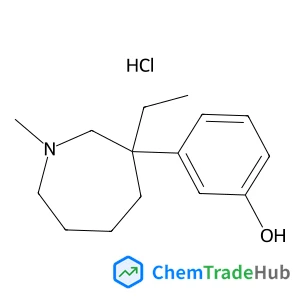
3-(3-Ethyl-1-methyl-3-azepanyl)phenol hydrochloride (1:1)
CAS Number:
59263-76-2
Molecular Formula:
C15H24ClNO
Recommended Suppliers





Disclaimer
This page provides academic journal information for reference and research purposes only. We are not affiliated with any journal publishers and do not handle publication submissions. For publication-related inquiries, please contact the respective journal publishers directly.
If you notice any inaccuracies in the information displayed, please contact us at support@chemtradehub.com. We will promptly review and address your concerns.