













Laser induced ionisation/dissociation of cyclopentanone in the 320–370 nm region
Literature Information
Publication Date
DOI
10.1039/A902027F
Impact Factor
3.676
Authors
View Original
Abstract
The two-photon excitation of the 3p and 3d Rydberg states of cyclopentanone in a jet-cooled molecular beam has been investigated by resonance enhanced multiphoton ionisation in a time-of-flight mass spectrometer. The three 3px,y,z components are clearly resolved while the 3di excitations are obscured by the S1(nπ*) one-photon resonance. The ns laser induced mass spectra are analysed and compared with those induced by fs laser and 70 eV electron impact.
Related Literature
Electrochemically tuneable hydrogen bonding interactions between a phenyl-urea terminated dendrimer and phenanthrenequinone
Graeme Cooke, Vladimir Sindelar, Vincent M. Rotello
2003-02-20
Communication
DOI: 10.1039/B211370H
High temperature synthesis of a noncentrosymmetric site-ordered cobalt aluminophosphate related to the pollucite structure
P. Bishop
2003-02-17
Communication
DOI: 10.1039/B300037K
Palladium(0) catalyzed regioselective carbonyl propargylation across tetragonal tin(ii) oxidevia redox transmetallation
Moloy Banerjee, Sujit Roy
2003-01-15
Communication
DOI: 10.1039/B211555G
A novel and efficient method for the Pd-catalysed oxidative carbonylation of amines to symmetrically and unsymmetrically substituted ureas
Bartolo Gabriele, Raffaella Mancuso, Giuseppe Salerno, Mirco Costa
2003-01-24
Communication
DOI: 10.1039/B211740A
Halogen-induced selectivity in heterogeneous epoxidation is an electronic effect—fluorine, chlorine, bromine and iodine in the Ag-catalysed selective oxidation of ethene
Richard M. Lambert, Rachael L. Cropley, Alifiya Husain, Mintcho S. Tikhov
2003-04-16
Communication
DOI: 10.1039/B302620E
A highly active K-Co-Mo/C catalyst for mixed alcohol synthesis from CO + H2
Jun Bao, YiLu Fu, ZhongHai Sun, Chen Gao
2003-02-25
Communication
DOI: 10.1039/B212504H
Probing DNA selectivity of ruthenium metallointercalators using ESI mass spectrometry
Jennifer L. Beck, Rajesh Gupta, Thitima Urathamakul, Nyree L. Williamson, Margaret M. Sheil, Janice R. Aldrich-Wright, Stephen F. Ralph
2003-02-10
Communication
DOI: 10.1039/B212132H
Structural characterization of the first hydrothermally synthesized plutonium compound, PuO2(IO3)2·H2O
Wolfgang Runde, Thomas E. Albrecht-Schmitt, Brian L. Scott
2003-01-16
Communication
DOI: 10.1039/B211018K
Controlled synthesis of homopolymers and block copolymers based on 2-(acetoacetoxy)ethyl methacrylatevia RAFT radical polymerisation
Theodora Krasia, Rémi Soula, Hans G. Börner, Helmut Schlaad
2003-01-27
Communication
DOI: 10.1039/B212634F
You might also like
Compound Q&A
What precautions should be taken when handling 4-(2-Furylmethyl)thiomorpholine 1,1-dioxide (CAS: 79206-94-3)?
When handling 4-(2-Furylmethyl)thiomorpholine 1,1-dioxide (CAS: 79206-94-3), it ...
79206-94-34-(2-Furylmethyl)thi...
Compound Q&A
What precautions should be taken when handling 4-Chloro-N-[2-(4-morpholinyl)ethyl]benzamide (CAS: 71320-77-9)?
When handling 4-Chloro-N-[2-(4-morpholinyl)ethyl]benzamide (CAS: 71320-77-9), it...
71320-77-94-Chloro-N-[2-(4-mor...
Compound Q&A
How should waste containing 2-[2-(2-Methoxyethoxy)ethoxy]ethyl 4-methylbenzenesulfonate (CAS: 62921-74-8) be handled?
Waste containing this compound (CAS: 62921-74-8) should be handled according to ...
62921-74-82-[2-(2-Methoxyethox...
Compound Q&A
How should waste containing (S)-Methyl 2-amino-3-cyclohexylpropanoate be handled?
Waste containing (S)-Methyl 2-amino-3-cyclohexylpropanoate should be collected i...
40056-18-6(S)-Methyl 2-amino-3...
Compound Q&A
How is 5-({4-[(2S,4R)-4-Hydroxy-2-methyltetrahydro-2H-pyran-4-yl]-2-thienyl}sulfanyl)-1-methyl-1,3-dihydro-2H-indol-2-one (CAS: 166882-70-8) typically synthesized?
This compound can be synthesized using a multi-step process involving the conjug...
166882-70-85-({4-[(2S,4R)-4-Hyd...
Compound Q&A
Are there alternatives to (2E)-3-(3,4-Dichlorophenyl)acrylic acid (CAS: 7312-27-8) in synthesis?
There are several alternatives to (2E)-3-(3,4-Dichlorophenyl)acrylic acid in syn...
7312-27-8(2E)-3-(3,4-Dichloro...
Compound Q&A
How should Ethyl 6-(2-nitrophenyl)imidazo[2,1-b][1,3]thiazole-3-carboxylate (CAS: 925437-84-9) be stored?
Ethyl 6-(2-nitrophenyl)imidazo[2,1-b][1,3]thiazole-3-carboxylate (CAS: 925437-84...
925437-84-9Ethyl 6-(2-nitrophen...
Compound Q&A
How should waste containing 2-(1,3-Thiazol-2-yl)ethanamine (CAS: 18453-07-1) be handled?
Waste containing 2-(1,3-Thiazol-2-yl)ethanamine (CAS: 18453-07-1) should be coll...
18453-07-12-(1,3-Thiazol-2-yl)...
Compound Q&A
How is Methyl 5-iodo-2-methylbenzoate (CAS: 103440-54-6) typically synthesized?
Methyl 5-iodo-2-methylbenzoate can be synthesized through the iodination of meth...
103440-54-6Methyl 5-iodo-2-meth...
Compound Q&A
How is 5-Chloro[1,2,4]triazolo[1,5-a]pyridine (CAS: 1427399-34-5) typically synthesized?
5-Chloro[1,2,4]triazolo[1,5-a]pyridine is commonly synthesized via the condensat...
1427399-34-55-Chloro[1,2,4]triaz...
Source Journal
Physical Chemistry Chemical Physics

CiteScore:
5.5
Self-citation Rate:
10.3%
Articles per Year:
3036
Physical Chemistry Chemical Physics (PCCP) is an international journal co-owned by 19 physical chemistry and physics societies from around the world. This journal publishes original, cutting-edge research in physical chemistry, chemical physics and biophysical chemistry. To be suitable for publication in PCCP, articles must include significant innovation and/or insight into physical chemistry; this is the most important criterion that reviewers and Editors will judge against when evaluating submissions. The journal has a broad scope and welcomes contributions spanning experiment, theory, computation and data science. Topical coverage includes spectroscopy, dynamics, kinetics, statistical mechanics, thermodynamics, electrochemistry, catalysis, surface science, quantum mechanics, quantum computing and machine learning. Interdisciplinary research areas such as polymers and soft matter, materials, nanoscience, energy, surfaces/interfaces, and biophysical chemistry are welcomed if they demonstrate significant innovation and/or insight into physical chemistry. Joined experimental/theoretical studies are particularly appreciated when complementary and based on up-to-date approaches.
Recommended Compounds
![[4-(Heptyloxy)phenyl]boronic acid structure](https://static.chemtradehub.com/structs/136/136370-19-9-ad33.webp "[4-(Heptyloxy)phenyl]boronic acid structure")


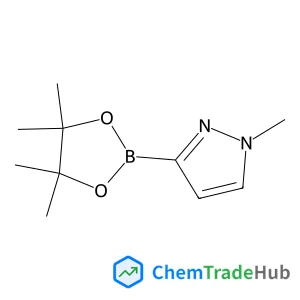
1-Methyl-3-(4,4,5,5-tetramethyl-1,3,2-dioxaborolan-2-yl)-1H-pyrazole
CAS Number:
1020174-04-2
Molecular Formula:
C10H17BN2O2
Recommended Suppliers




Disclaimer
This page provides academic journal information for reference and research purposes only. We are not affiliated with any journal publishers and do not handle publication submissions. For publication-related inquiries, please contact the respective journal publishers directly.
If you notice any inaccuracies in the information displayed, please contact us at support@chemtradehub.com. We will promptly review and address your concerns.