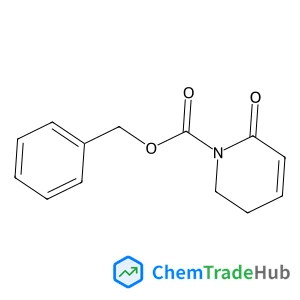
Benzyl 6-oxo-3,6-dihydro-1(2H)-pyridinecarboxylate
CAS Number:
725746-35-0
Molecular Formula:
C13H13NO3
Fei Gao, Su-Yuan Xie, Rong-Bin Huang, Lan-Sun Zheng
Addition of a small quantity (∼3%) of CCl4 to the He atmosphere of the graphite arc-discharge reaction revealed a marked increase in fullerene yield.
Yuesheng Wang, Pin Liu, Lin Gu, Yong-Sheng Hu, Hong Li, George P. Demopoulos, Liquan Chen
DOI: 10.1039/C4CP02957G
Marie Humbert-Droz, Patric Oulevey, Latévi Max Lawson Daku, Sandra Luber, Hans Hagemann, Thomas Bürgi
DOI: 10.1039/C4CP02145B
Kinga Góra-Marek, Adam Stępniewski, Mariusz Radoń, Ewa Broclawik
DOI: 10.1039/C4CP03350G
Yongfeng Li, Meng Li, Liqing Jiang, Lin Lin, Lili Cui, Xingquan He
DOI: 10.1039/C4CP02528H
Jinlian Hu, Haibo Zeng, Cong Wang, Zhigang Li, Caixia Kan, Youwen Liu
DOI: 10.1039/C4CP02299H
Dorit Shemesh, Sandra L. Blair, Sergey A. Nizkorodov
DOI: 10.1039/C4CP03130J
Arnaldo F. Silva, Wagner E. Richter, Helen G. C. Meneses, Roy E. Bruns
DOI: 10.1039/C4CP02922D
Miquel Planells, Maddalena Pizzotti, Gary S. Nichol, Francesca Tessore, Neil Robertson
DOI: 10.1039/C4CP03509G
Jiandong Wu, Guohua Gao, Guangming Wu, Bo Liu, Huiyu Yang, Xiaowei Zhou, Jichao Wang
DOI: 10.1039/C4CP03176H
N-(4-Methoxybenzyl)-2-pyridinamine (CAS: 52818-63-0) is increasingly being used ...
When handling Ethyl 4-(2-chlorophenyl)-1,3-thiazole-2-carboxylate, appropriate p...
Diethyldiselane (CAS: 628-39-7) is classified under the Globally Harmonized Syst...
The market for oxocopper (CAS: 12053-18-8) is primarily driven by its use in cat...
The market for 5-{[(2-Methyl-2-propanyl)oxy]carbonyl}-5-azaspiro[2.4]heptane-7-c...
2-(1-Pyrrolidinyl)-4-pyridinamine is a chemical compound with the CAS number 359...
2-(3-Pyridinyl)-1-azabicyclo[2.2.2]octane (CAS: 91556-75-1) is a crystalline sol...
(S)-Alpha-allyl-proline hydrochloride is usually synthesized via a Wittig reacti...
3-Methyl-1,2-oxazole-5-carboxylic acid (CAS: 4857-42-5) is an organic compound w...
Lys-SMCC-DM1 is synthesized via a multi-step process involving the coupling of S...

ChemComm publishes urgent research which is of outstanding significance and interest to experts in the field, while also appealing to the journal’s broad chemistry readership. Our communication format is ideally suited to short, urgent studies that are of such importance that they require accelerated publication. Our scope covers all topics in chemistry, and research at the interface of chemistry and other disciplines (such as materials science, nanoscience, physics, engineering and biology) where there is a significant novelty in the chemistry aspects. Major topic areas covered include: Analytical Chemistry Catalysis Chemical Biology and medicinal chemistry Computational Chemistry and Machine Learning Energy and sustainable chemistry Environmental Chemistry Green Chemistry Inorganic Chemistry Materials Chemistry Nanoscience Organic Chemistry Physical Chemistry Polymer Chemistry Supramolecular Chemistry