












How silver segregation stabilizes 1D surface gold oxide: a cluster expansion study combined with ab initio MD simulations
Literature Information
Publication Date
2017-05-09
DOI
10.1039/C7CP02221B
Impact Factor
3.676
Authors
Sandra Hoppe, Yong Li, Lyudmila V. Moskaleva, Stefan Müller
View Original
Abstract
Gold has many unique properties, some of which continue to be uncovered, such as the rich chemistry of gold at the nanoscale. In this study, gold surprises us again by the unusual stability of one-dimensional gold oxide structures on the surface of gold, which enhances in the presence of silver impurities. We employ first-principles calculations to investigate the surface segregation of silver in the presence of atomic-oxygen adsorbates arranged in chains on the Au(321) surface. Such 1D oxide chains have previously been suggested as the most stable form of adsorbed oxygen on gold. Although Ag–O bonds are expected to be generally stronger than Au–O bonds, we show that this does not hold for 1D oxide chains, where Au–O bonds seem to be at least as strong as Ag–O bonds. Remarkably, we find that up to very high surface concentrations of silver, the Ag atoms do not occupy positions within the oxide chain, but prefer locations next to it. Ab initio molecular dynamics simulations support this picture and reveal how oxide chains and silver atoms rearrange on the surface toward a lower-energy configuration.
Recommended Journals
Related Literature
Homolysis/mesolysis of alkoxyamines activated by chemical oxidation and photochemical-triggered radical reactions at room temperature
Gérard Audran, Mitchell T. Blyth, Michelle L. Coote, Georg Gescheidt, Micael Hardy, Jeffrey Havot, Maxence Holzritter, Samuel Jacoutot, Jean-Patrick Joly, Sylvain R. A. Marque, Tataye Moussounda Moussounda Koumba, Dmytro Neshchadin, Enzo Vaiedelich
2021-10-14
Research Article
DOI: 10.1039/D1QO01276B
Alkylsulfonium salts for the photochemical desulphurizative functionalization of heteroarenes
Xiaolong Zhu, Xuan Li, Enjie Zhu, Qirong Deng, Xiuyan Song, Jian Lv
2021-11-24
Research Article
DOI: 10.1039/D1QO01570B
Palladium-catalyzed direct construction of oxazoline-containing polycyclic scaffolds via tandem addition/cyclization of nitriles and arylboronic acids
Shu-Qiang Cui, Na Cheng, Qian-Qian Ma, Zhong-Lin Wei
2021-11-15
Research Article
DOI: 10.1039/D1QO01260F
Mixed carboxylic–sulfonic anhydride in reaction with imines: a straightforward route to water-soluble β-lactams via a Staudinger-type reaction
Olga Bakulina, Dmitry Dar'in, Mikhail Krasavin
2018-05-08
Paper
DOI: 10.1039/C8OB00768C
Divergent synthesis of new α-glucosidase inhibitors obtained through a vinyl Grignard-mediated carbocyclisation
Ida M. B. Knudsen, Christinne Hedberg, Daisuke Ide, Anne Brinkø, Espen Z. Eikeland, Atsushi Kato, Henrik H. Jensen
2018-08-07
Paper
DOI: 10.1039/C8OB01433G
Rh(iii)-Catalyzed C–H allylation/annulative Markovnikov addition with 5-methylene-1,3-dioxan-2-one: formation of isoquinolinones containing a C3 quaternary centre
Xinghua Li, Jintong Bai, Zhaoyu Huang, Minhai Yin, Jiarong Sheng
2021-10-05
Research Article
DOI: 10.1039/D1QO01232K
Fissisternoids A and B, two 2′,5′-quinodihydrochalcone-based meroterpenoid enantiomers with unusual carbon skeletons from Fissistigma bracteolatum
Gui-Min Xue, Chen-Guang Zhao, Jin-Feng Xue, Hui Chen, Zhen-Zhu Zhao, Ying-Ying Si, Kun Du, Yan-Le Zhi, Wei-Sheng Feng
2021-11-19
Research Article
DOI: 10.1039/D1QO01404H
A mild electroassisted synthesis of (hetero)arylphosphonates
Stéphane Sengmany, Anthony Ollivier, Erwan Le Gall, Eric Léonel
2018-06-01
Paper
DOI: 10.1039/C8OB00500A
Figure-eight arylene ethynylene macrocycles: facile synthesis and specific binding behavior toward Hg2+
Hui Nie, Qian-Hui Li, Siqi Zhang, Chuan-Ming Wang, Wen-Hui Lin, Ke Deng, Li-Jin Shu, Qing-Dao Zeng, Jun-Hua Wan
2021-09-29
Research Article
DOI: 10.1039/D1QO00812A
A desulphurization strategy for Sonogashira couplings by visible light/copper catalysis
Xuan Li, Xiaolong Zhu, Xiuyan Song, Qirong Deng, Jian Lv
2021-12-02
Research Article
DOI: 10.1039/D1QO01548F
You might also like
Compound Q&A
What industries use (1R,3S)-1,3-Cyclopentanediol (CAS: 16326-97-9)?
(1R,3S)-1,3-Cyclopentanediol finds applications in various industries. In the ph...
16326-97-9(1R,3S)-1,3-Cyclopen...
Compound Q&A
What precautions should be taken when handling N'-[4-(Dimethylamino)phenyl]-N,N-dimethyl-1,4-benzenediamine (CAS: 637-31-0)?
When handling N'-[4-(Dimethylamino)phenyl]-N,N-dimethyl-1,4-benzenediamine, it i...
637-31-0N'-[4-(Dimethylamino...
Compound Q&A
Are there alternatives to 5-(2,4-Difluorophenyl)-2-methoxypyrimidine (CAS: 1352318-16-1) in synthesis?
There are several alternatives to 5-(2,4-Difluorophenyl)-2-methoxypyrimidine in ...
1352318-16-15-(2,4-Difluoropheny...
Compound Q&A
What regulatory guidelines apply to 1-(3-Methoxyphenoxy)propan-2-ol (CAS: 382141-68-6)?
1-(3-Methoxyphenoxy)propan-2-ol (CAS: 382141-68-6) must comply with the Globally...
382141-68-61-(3-Methoxyphenoxy)...
Compound Q&A
Is Tetrodotoxin Citrate (CAS: 18660-81-6) safe?
Tetrodotoxin Citrate is extremely dangerous and should be handled with extreme c...
18660-81-6Tetrodotoxin Citrate
Compound Q&A
What are the main uses of 2-Methyl-2-propanyl [(1R,3S)-3-hydroxycyclopentyl]carbamate (CAS: 225641-84-9)?
2-Methyl-2-propanyl [(1R,3S)-3-hydroxycyclopentyl]carbamate (CAS: 225641-84-9) i...
225641-84-92-Methyl-2-propanyl ...
Compound Q&A
How should waste containing 4-(2-Hydroxyhexafluoroisopropyl)Benzoic Acid (CAS: 16261-80-6) be handled?
Waste containing 4-(2-Hydroxyhexafluoroisopropyl)Benzoic Acid (CAS: 16261-80-6) ...
16261-80-64-(2-Hydroxyhexafluo...
Compound Q&A
How is 2-Methyl-2-proanyl {(2S)-1-[(benzyloxy)amino]-3-hydroxy-3-methyl-1-oxo-2-butanyl}carbamate (CAS: 102507-19-7) typically synthesized?
2-Methyl-2-proanyl {(2S)-1-[(benzyloxy)amino]-3-hydroxy-3-methyl-1-oxo-2-butanyl...
102507-19-72-Methyl-2-propanyl ...
Compound Q&A
What is Benzeneethanamine, α-ethyl-, hydrochloride (1:1) (CAS: 20735-15-3)?
Benzeneethanamine, α-ethyl-, hydrochloride (1:1) is an organic compound with the...
20735-15-3Benzeneethanamine, α...
Compound Q&A
Are there alternatives to 3-{(E)-[4-(Dimethylamino)phenyl]diazenyl}benzoic acid (CAS: 20691-84-3) in synthesis?
In the synthesis of compounds similar to 3-{(E)-[4-(Dimethylamino)phenyl]diazeny...
20691-84-33-{(E)-[4-(Dimethyla...
Source Journal
Physical Chemistry Chemical Physics

CiteScore:
5.5
Self-citation Rate:
10.3%
Articles per Year:
3036
Physical Chemistry Chemical Physics (PCCP) is an international journal co-owned by 19 physical chemistry and physics societies from around the world. This journal publishes original, cutting-edge research in physical chemistry, chemical physics and biophysical chemistry. To be suitable for publication in PCCP, articles must include significant innovation and/or insight into physical chemistry; this is the most important criterion that reviewers and Editors will judge against when evaluating submissions. The journal has a broad scope and welcomes contributions spanning experiment, theory, computation and data science. Topical coverage includes spectroscopy, dynamics, kinetics, statistical mechanics, thermodynamics, electrochemistry, catalysis, surface science, quantum mechanics, quantum computing and machine learning. Interdisciplinary research areas such as polymers and soft matter, materials, nanoscience, energy, surfaces/interfaces, and biophysical chemistry are welcomed if they demonstrate significant innovation and/or insight into physical chemistry. Joined experimental/theoretical studies are particularly appreciated when complementary and based on up-to-date approaches.
Recommended Compounds
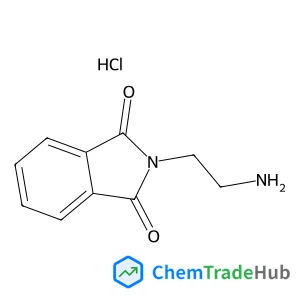
2-(2-Aminoethyl)-1H-isoindole-1,3(2H)-dione hydrochloride (1:1)
CAS Number:
30250-67-0
Molecular Formula:
C10H11ClN2O2
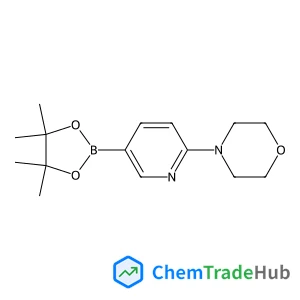
4-(5-(4,4,5,5-tetramethyl-1,3,2-dioxaborolan-2-yl)pyridin-2-yl)morpholine
CAS Number:
485799-04-0
Molecular Formula:
C15H23BN2O3
Recommended Suppliers






Disclaimer
This page provides academic journal information for reference and research purposes only. We are not affiliated with any journal publishers and do not handle publication submissions. For publication-related inquiries, please contact the respective journal publishers directly.
If you notice any inaccuracies in the information displayed, please contact us at support@chemtradehub.com. We will promptly review and address your concerns.