












A mild electroassisted synthesis of (hetero)arylphosphonates
Literature Information
Publication Date
2018-06-01
DOI
10.1039/C8OB00500A
Impact Factor
3.876
Authors
Stéphane Sengmany, Anthony Ollivier, Erwan Le Gall, Eric Léonel
View Original
Abstract
The electrochemically-assisted synthesis of (hetero)arylphosphonates from (hetero)aryl halides and dimethyl phosphite is described. Very mild and simple conditions are employed as the cross-coupling is carried out in galvanostatic mode, in an undivided cell at room temperature, using NiBr2bpy as the easily available pre-catalyst and acetonitrile as the solvent. In addition, both aryl bromides and iodides can be used as well, providing the corresponding (hetero)arylphosphonates in generally good yields. A mechanism involving the in situ generation of a Ni ate complex is proposed.
Related Literature
Imidazole carbamate probes for affinity guided azide-transfer to metal-binding proteins
Johan Palmfeldt
2019-01-16
Communication
DOI: 10.1039/C8OB03017K
Asymmetric organocatalytic double 1,6-addition: rapid access to chiral chromans with molecular complexity
Sourav Roy, Suman Pradhan, Krishan Kumar, Indranil Chatterjee
2020-04-28
Research Article
DOI: 10.1039/D0QO00354A
Chemiluminescence molecular probe with a linear chain reaction amplification mechanism
Samer Gnaim, Doron Shabat
2019-01-21
Communication
DOI: 10.1039/C8OB03042A
HKOCl-4: a rhodol-based yellow fluorescent probe for the detection of hypochlorous acid in living cells and tissues
Xiaoyu Bai, Bowei Yang, Hansen Chen, Jiangang Shen, Dan Yang
2020-03-10
Research Article
DOI: 10.1039/D0QO00081G
Iron-catalyzed asymmetric intramolecular cyclopropanation reactions using chiral tetramethyl-1,1′-spirobiindane-based bisoxazoline (TMSI-BOX) ligands
Haorui Gu, Shaoying Huang, Xufeng Lin
2019-01-09
Paper
DOI: 10.1039/C8OB03065K
Palladium-catalyzed enantioselective [5 + 4] annulation of ortho-quinone methides and vinylethylene carbonates
Chao Xia, Dong-Chao Wang, Gui-Rong Qu
2020-05-08
Research Article
DOI: 10.1039/D0QO00128G
Direct organocatalytic asymmetric Michael reaction of fluorine hemiaminal-type nucleophile to 4-nitro-5-styrylisoxazoles
Luyao Li, Bo Zhu, Huihui Fan, Zhiyong Jiang, Junbiao Chang
2020-04-17
Research Article
DOI: 10.1039/D0QO00348D
Aryltrifluoromethylative cyclization of unactivated alkenes by the use of PhICF3Cl under catalyst-free conditions
Jia Guo, Cong Xu, Xiaowei Liu
2019-01-24
Paper
DOI: 10.1039/C8OB03189D
Biosynthesis of bioactive natural products from Basidiomycota
Yit-Heng Chooi
2018-12-14
Review Article
DOI: 10.1039/C8OB02774A
You might also like
Compound Q&A
What industries use (1R,3S)-1,3-Cyclopentanediol (CAS: 16326-97-9)?
(1R,3S)-1,3-Cyclopentanediol finds applications in various industries. In the ph...
16326-97-9(1R,3S)-1,3-Cyclopen...
Compound Q&A
What precautions should be taken when handling N'-[4-(Dimethylamino)phenyl]-N,N-dimethyl-1,4-benzenediamine (CAS: 637-31-0)?
When handling N'-[4-(Dimethylamino)phenyl]-N,N-dimethyl-1,4-benzenediamine, it i...
637-31-0N'-[4-(Dimethylamino...
Compound Q&A
Are there alternatives to 5-(2,4-Difluorophenyl)-2-methoxypyrimidine (CAS: 1352318-16-1) in synthesis?
There are several alternatives to 5-(2,4-Difluorophenyl)-2-methoxypyrimidine in ...
1352318-16-15-(2,4-Difluoropheny...
Compound Q&A
What regulatory guidelines apply to 1-(3-Methoxyphenoxy)propan-2-ol (CAS: 382141-68-6)?
1-(3-Methoxyphenoxy)propan-2-ol (CAS: 382141-68-6) must comply with the Globally...
382141-68-61-(3-Methoxyphenoxy)...
Compound Q&A
Is Tetrodotoxin Citrate (CAS: 18660-81-6) safe?
Tetrodotoxin Citrate is extremely dangerous and should be handled with extreme c...
18660-81-6Tetrodotoxin Citrate
Compound Q&A
What are the main uses of 2-Methyl-2-propanyl [(1R,3S)-3-hydroxycyclopentyl]carbamate (CAS: 225641-84-9)?
2-Methyl-2-propanyl [(1R,3S)-3-hydroxycyclopentyl]carbamate (CAS: 225641-84-9) i...
225641-84-92-Methyl-2-propanyl ...
Compound Q&A
How should waste containing 4-(2-Hydroxyhexafluoroisopropyl)Benzoic Acid (CAS: 16261-80-6) be handled?
Waste containing 4-(2-Hydroxyhexafluoroisopropyl)Benzoic Acid (CAS: 16261-80-6) ...
16261-80-64-(2-Hydroxyhexafluo...
Compound Q&A
How is 2-Methyl-2-proanyl {(2S)-1-[(benzyloxy)amino]-3-hydroxy-3-methyl-1-oxo-2-butanyl}carbamate (CAS: 102507-19-7) typically synthesized?
2-Methyl-2-proanyl {(2S)-1-[(benzyloxy)amino]-3-hydroxy-3-methyl-1-oxo-2-butanyl...
102507-19-72-Methyl-2-propanyl ...
Compound Q&A
What is Benzeneethanamine, α-ethyl-, hydrochloride (1:1) (CAS: 20735-15-3)?
Benzeneethanamine, α-ethyl-, hydrochloride (1:1) is an organic compound with the...
20735-15-3Benzeneethanamine, α...
Compound Q&A
Are there alternatives to 3-{(E)-[4-(Dimethylamino)phenyl]diazenyl}benzoic acid (CAS: 20691-84-3) in synthesis?
In the synthesis of compounds similar to 3-{(E)-[4-(Dimethylamino)phenyl]diazeny...
20691-84-33-{(E)-[4-(Dimethyla...
Source Journal
Organic & Biomolecular Chemistry

CiteScore:
3.4
Self-citation Rate:
10.3%
Articles per Year:
1041
Organic & Biomolecular Chemistry (OBC) publishes original and high impact research and reviews in organic chemistry. We welcome research that shows new or significantly improved protocols or methodologies in total synthesis, synthetic methodology or physical and theoretical organic chemistry as well as research that shows a significant advance in the organic chemistry or molecular design aspects of chemical biology, catalysis, supramolecular and macromolecular chemistry, theoretical chemistry, mechanism-oriented physical organic chemistry, medicinal chemistry or natural products. Articles published in the journal should report new work which makes a highly-significant impact in the field. Routine and incremental work is generally not suitable for publication in the journal. More details about key areas of our scope are below. In all cases authors should include in their article clear rationale for why their research has been carried out.
Recommended Compounds
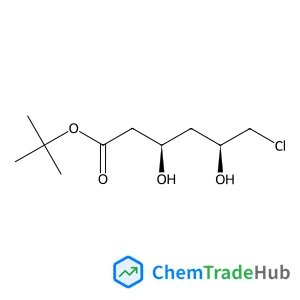
2-Methyl-2-propanyl (3R,5S)-6-chloro-3,5-dihydroxyhexanoate
CAS Number:
154026-93-4
Molecular Formula:
C10H19ClO4
Recommended Suppliers



Disclaimer
This page provides academic journal information for reference and research purposes only. We are not affiliated with any journal publishers and do not handle publication submissions. For publication-related inquiries, please contact the respective journal publishers directly.
If you notice any inaccuracies in the information displayed, please contact us at support@chemtradehub.com. We will promptly review and address your concerns.