












Tough and degradable photopolymers derived from alkyne monomers for 3D printing of biomedical materials
Literature Information
Publication Date
2016-07-25
DOI
10.1039/C6PY01132B
Impact Factor
5.582
Authors
Andreas Oesterreicher, Johannes Wiener, Meinhart Roth, Andreas Moser, Robert Gmeiner, Matthias Edler, Gerald Pinter, Thomas Griesser
View Original
Abstract
This contribution deals with the synthesis and exploration of alkyne carbonate derivatives as biocompatible building blocks in the thiol–yne photopolymerisation reaction with the aim to facilitate the fabrication of tailor made medical devices by UV based additive manufacturing technologies. It turned out that the investigated alkyne carbonates offer curing rates similar to comparable acrylates, while providing much higher conversion and lower monomer cytotoxicity. Curing the synthesized building blocks in combination with the commercially available thiol pentaerythritol tetra(3-mercaptopropionate) (PETMP) leads to networks that degrade in aqueous alkaline and acidic media in a surface erosion manner. Additionally, a selective adjustment of the degradability is feasible by the choice and content of thiol monomers. Notably, monomers containing a tricyclo[5.2.1.02,6]decane-4,8-dimethanol backbone provide decent thermo-mechanical properties and appropriate impact strengths similar to polylactic acid (PLA). Most importantly, selected thiol–yne formulations were printed successfully with an accuracy of 40 × 40 μm, which seems to be sufficiently high to prints medical devices in appropriate resolution.
Related Literature
Precursor-route ZnO films from a mixed casting solvent for high performance aqueous electrolyte-gated transistors
Talal M. Althagafi, Saud A. Algarni, Abdullah Al Naim, Javed Mazher, Martin Grell
2015-10-26
Paper
DOI: 10.1039/C5CP03326H
Counterintuitive issues in the charge transport through molecular junctions
Ioan Bâldea
2015-10-30
Paper
DOI: 10.1039/C5CP05476A
Electrochemistry and speciation of Au+ in a deep eutectic solvent: growth and morphology of galvanic immersion coatings
Andrew D. Ballantyne, Gregory C. H. Forrest, Gero Frisch, Jennifer M. Hartley, Karl S. Ryder
2015-10-27
Paper
DOI: 10.1039/C5CP05748E
Transient low-barrier hydrogen bond in the photoactive state of green fluorescent protein
Marc Nadal-Ferret, Ricard Gelabert, Miquel Moreno
2015-04-24
Paper
DOI: 10.1039/C5CP01067E
Unraveling the interplay between hydrogen bonding and rotational energy barrier to fine-tune the properties of triazine molecular glasses
Audrey Laventure, Guillaume De Grandpré, Armand Soldera, Olivier Lebel, Christian Pellerin
2015-12-07
Paper
DOI: 10.1039/C5CP06630A
Self-assembly of block copolymers on lithographically patterned template with ordered posts
Dan Xu, Yao-Hong Xue, Yan-Bo Sun
2015-11-03
Paper
DOI: 10.1039/C5CP05449D
Understanding the fundamentals of redox mediators in Li–O2 batteries: a case study on nitroxides
Benjamin J. Bergner, Christine Hofmann, Adrian Schürmann, Daniel Schröder, Klaus Peppler, Peter R. Schreiner, Jürgen Janek
2015-10-26
Paper
DOI: 10.1039/C5CP04505C
Exceptional H2 sorption characteristics in a Mg2+-based metal–organic framework with small pores: insights from experimental and theoretical studies
Tony Pham, Katherine A. Forrest, Eduardo H. L. Falcão, Juergen Eckert, Brian Space
2015-12-17
Paper
DOI: 10.1039/C5CP05906B
Correction: Quantifying transient interactions between amide groups and the guanidinium cation
V. Balos, M. Bonn, J. Hunger
2015-12-14
Correction
DOI: 10.1039/C5CP90226F
A new perspective: imaging the stereochemistry of molecular collisions
F. J. Aoiz, M. Brouard, S. D. S. Gordon, B. Nichols, V. Walpole
2015-08-17
Perspective
DOI: 10.1039/C5CP03273C
You might also like
Compound Q&A
What is 3-Fluoro-2-methylbenzylamine (CAS: 771573-36-5)?
3-Fluoro-2-methylbenzylamine is an organic compound with the CAS number 771573-3...
771573-36-53-Fluoro-2-methylben...
Compound Q&A
Is Tert-butyl 2-(oxetan-3-ylidene)acetate (CAS: 1207175-03-8) safe?
Tert-butyl 2-(oxetan-3-ylidene)acetate is considered safe for its intended uses ...
1207175-03-8Tert-butyl 2-(oxetan...
Compound Q&A
What precautions should be taken when handling 4-Acetyl-2-fluorobenzonitrile (CAS: 214760-18-6)?
Proper personal protective equipment (PPE) such as gloves, goggles, and a lab co...
214760-18-64-Acetyl-2-fluoroben...
Compound Q&A
How is 2-Ethyl-4-methyl-1,3-thiazole (CAS: 15679-12-6) typically synthesized?
2-Ethyl-4-methyl-1,3-thiazole is commonly synthesized via the reaction of thiour...
15679-12-62-Ethyl-4-methyl-1,3...
Compound Q&A
How should 5',5''-([2,2'-Bithiophene]-5,5'-diyl)bis(([1,1':3',1''-terphenyl]-4,4''-dicarboxylic acid)) (CAS: 1227780-71-3) be stored?
This compound should be stored in a cool, dry place away from direct sunlight an...
1227780-71-35',5''''-([2,2'-Bith...
Compound Q&A
What regulatory guidelines apply to L-Lysine Acetate Salt (CAS: 52315-92-1)?
L-Lysine Acetate Salt (CAS: 52315-92-1) is subject to various regulatory guideli...
52315-92-1L-LYSINE ACETATE SAL...
Compound Q&A
Is 6-Fluoro-3-hydroxy-2-pyrazinecarboxamide (CAS: 259793-96-9) safe?
6-Fluoro-3-hydroxy-2-pyrazinecarboxamide (CAS: 259793-96-9) is generally conside...
259793-96-96-Fluoro-3-hydroxy-2...
Compound Q&A
What are the physical and chemical properties of 1,1'-Sulfonylbis(1H-imidazole) (CAS: 7189-69-7)?
1,1'-Sulfonylbis(1H-imidazole) is a crystalline solid with a molecular weight of...
7189-69-71,1'-Sulfonylbis(1H-...
Compound Q&A
What industries use 4-methyl-7-nitro-1H-indole-3-carbonitrile (CAS: 289483-82-5)?
4-Methyl-7-nitro-1H-indole-3-carbonitrile (CAS: 289483-82-5) is primarily used i...
289483-82-54-methyl-7-nitro-1H-...
Compound Q&A
How should waste containing 5-Bromo-3-indolyl-beta-galactoside (CAS: 97753-82-7) be handled?
Waste containing 5-Bromo-3-indolyl-beta-galactoside (CAS: 97753-82-7) should be ...
97753-82-75-Bromo-3-indolyl-be...
Source Journal
Polymer Chemistry

CiteScore:
8.6
Self-citation Rate:
7.3%
Articles per Year:
457
Polymer Chemistry welcomes submissions in all areas of polymer science that have a strong focus on macromolecular chemistry. Manuscripts may cover a broad range of fields, yet no direct application focus is required.
Recommended Compounds
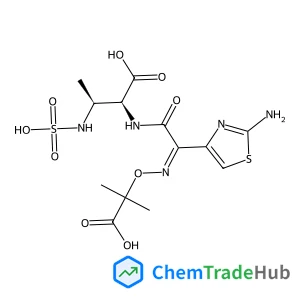
Aztreonam USP Related Compound A (Open-ring Aztreonam)
CAS Number:
87500-74-1
Molecular Formula:
C13H19N5O9S2
![[4-Chloro-3-(diethylcarbamoyl)phenyl]boronic acid structure](https://static.chemtradehub.com/structs/871/871332-68-2-0e3b.webp "[4-Chloro-3-(diethylcarbamoyl)phenyl]boronic acid structure")
[4-Chloro-3-(diethylcarbamoyl)phenyl]boronic acid
CAS Number:
871332-68-2
Molecular Formula:
C11H15BClNO3
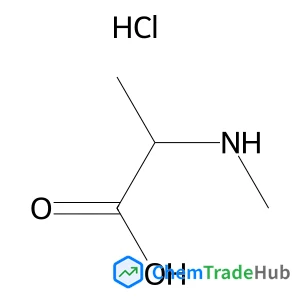
(R)-2-(Methylamino)propanoic acid hydrochloride
CAS Number:
1155878-14-0
Molecular Formula:
C4H10ClNO2
Recommended Suppliers





Disclaimer
This page provides academic journal information for reference and research purposes only. We are not affiliated with any journal publishers and do not handle publication submissions. For publication-related inquiries, please contact the respective journal publishers directly.
If you notice any inaccuracies in the information displayed, please contact us at support@chemtradehub.com. We will promptly review and address your concerns.