












Electrochemistry and speciation of Au+ in a deep eutectic solvent: growth and morphology of galvanic immersion coatings
Literature Information
Publication Date
2015-10-27
DOI
10.1039/C5CP05748E
Impact Factor
3.676
Authors
Andrew D. Ballantyne, Gregory C. H. Forrest, Gero Frisch, Jennifer M. Hartley, Karl S. Ryder
View Original
Abstract
In this study we compare the electrochemical and structural properties of three gold salts AuCl, AuCN and KAu(CN)2 in a Deep Eutectic Solvent (DES) electrolyte (Ethaline 200) in order to elucidate factors affecting the galvanic deposition of gold coatings on nickel substrates. A chemically reversible diffusion limited response was observed for AuCl, whereas AuCN and KAu(CN)2 showed much more complicated, kinetically limited responses. Galvanic exchange reactions were performed on nickel substrates from DES solutions of the three gold salts; the AuCN gave a bright gold coating, the KAu(CN)2 solution give a visibly thin coating, whilst the coating from AuCl was dull, friable and poorly adhesive. This behaviour was rationalised by the differing speciation for each of these compounds, as evidenced by EXAFS methods. Analysis of EXAFS data shows that AuCl forms the chlorido-complex [AuCl2]−, AuCN forms a mixed [AuCl(CN)]− species, whereas KAu(CN)2 maintains its [Au(CN)2]− structure. The more labile Cl− enables easier reduction of Au when compared to the tightly bound cyanide species, hence leading to slower kinetics of deposition and differing electrochemical behaviour. We conclude that metal speciation in DESs is a function of the initial metal salt and that this has a strong influence on the mechanism and rate of growth, as well as on the morphology of the metal deposit obtained. In addition, these coatings are also extremely promising from a technological perspective as Electroless Nickel Immersion Gold (ENIG) finishes in the printed circuit board (PCB) industry, where the elimination of acid in gold plating formulation could potentially lead to more reliable coatings. Consequently, these results are both significant and timely.
Related Literature
From α-keto acids to nitrile oxides enabled by copper nitrate: a facile access to fused isoxazolines
Yuping Zhu, Tianqi Liu, Bingxin Liu, Houguang Shi, Qitao Tan
2021-12-10
Research Article
DOI: 10.1039/D1QO01574E
A convergent approach to the marine natural product eleutherobin: synthesis of key intermediates and attempts to produce the basic skeleton
Gaia Scalabrino, Xiao-Wen Sun, John Mann, Anne Baron
2002-12-13
Paper
DOI: 10.1039/B207800G
Metal-free synthesis of N-sulfonylformamidines via skeletal reconstruction of sulfonyl oximonitriles
Feng Li, Ziyan Wu, Jingjing Wang, Siyuan Zhang, Jiaxin Yu, Zhen Yuan, Jingya Liu, Renzeng Shen, Yao Zhou
2021-12-02
Research Article
DOI: 10.1039/D1QO01665B
Dependence of selective enclathration on types of cholic acid crystals
Nungruethai Yoswathananont, Kazuki Sada, Mikiji Miyata, Shigendo Akita, Kazunori Nakano
2002-11-29
Paper
DOI: 10.1039/B210544F
Preferential precipitation of C70 over C60 with p-halohomooxacalix[3]arenes
Naoki Komatsu
2002-11-27
Paper
DOI: 10.1039/B208107E
Synthesis of functionalized 2,5-dihydropyrrole derivatives via a convenient [3 + 2] annulation of azomethine ylides with allenoates
Zhusheng Huang, Zonghao Dai, Jin Zhu, Fulai Yang, Qingfa Zhou
2018-08-28
Communication
DOI: 10.1039/C8OB01946K
Optimized synthesis and indium complex formation with the bifunctional chelator NODIA-Me
Jason P. Holland, Harald Scherer, Stephan Maus, Tobias Stemler, Hendrik Bohnenberger, Samer Ezziddin, Philipp Kurz
2018-09-24
Paper
DOI: 10.1039/C8OB01981A
Dual function of amino acid ionic liquids (Bmim[AA]) on the degradation of the organophosphorus pesticide, Paraoxon®
Javiera I. Morales, Roberto Figueroa, Mabel Rojas, Daniela Millán, Ricardo A. Tapia, Paulina Pavez
2018-09-18
Paper
DOI: 10.1039/C8OB01928B
You might also like
Compound Q&A
Is 6-(3-Fluorophenyl)picolinic acid (CAS: 887982-40-3) safe?
6-(3-Fluorophenyl)picolinic acid is generally considered safe for laboratory use...
887982-40-36-(3-Fluorophenyl)pi...
Compound Q&A
What industries use (3R)-3-Pyrrolidinol (CAS: 2799-21-5)?
(3R)-3-Pyrrolidinol is used in the pharmaceutical industry as a precursor for dr...
2799-21-5(3R)-3-Pyrrolidinol
Compound Q&A
What precautions should be taken when handling (4R,5R)-4,5-Diethoxycarbonyl-2,2-dimethyldioxolane (CAS: 59779-75-8)?
When handling (4R,5R)-4,5-Diethoxycarbonyl-2,2-dimethyldioxolane (CAS: 59779-75-...
59779-75-8(4R,5R)-4,5-Diethoxy...
Compound Q&A
How is 1-(6-Chloroimidazo[1,2-b]pyridazin-3-yl)ethanone (CAS: 90734-71-7) typically synthesized?
1-(6-Chloroimidazo[1,2-b]pyridazin-3-yl)ethanone is often synthesized via a mult...
90734-71-71-(6-Chloroimidazo[1...
Compound Q&A
What is the market or research trend for N-Ethyl-3,4-dimethylbenzylamine (CAS: 39180-83-1)?
The market for N-Ethyl-3,4-dimethylbenzylamine (CAS: 39180-83-1) remains steady,...
39180-83-1N-Ethyl-3,4-dimethyl...
Compound Q&A
What is Tert-butyl 3-(pyrrolidin-1-yl)azetidine-1-carboxylate (CAS: 1019008-21-9)?
Tert-butyl 3-(pyrrolidin-1-yl)azetidine-1-carboxylate is a chemical compound wit...
1019008-21-9Tert-butyl 3-(pyrrol...
Compound Q&A
What regulatory guidelines apply to 1-Bromo-3-chloro-2,4-dimethoxybenzene (CAS: 1228956-93-1)?
1-Bromo-3-chloro-2,4-dimethoxybenzene (CAS: 1228956-93-1) falls under the classi...
1228956-93-11-Bromo-3-chloro-2,4...
Compound Q&A
Is 8-Bromo-2-methyl-3,4-dihydroisoquinolin-1(2H)-one (CAS: 1368622-07-4) safe?
The safety of 8-Bromo-2-methyl-3,4-dihydroisoquinolin-1(2H)-one (CAS: 1368622-07...
1368622-07-48-Bromo-2-methyl-3,4...
Compound Q&A
Is Benzyl [(3S)-2,6-dioxo-3-piperidinyl]carbamate (CAS: 22785-43-9) safe?
Benzyl [(3S)-2,6-dioxo-3-piperidinyl]carbamate is generally safe when handled wi...
22785-43-9Benzyl [(3S)-2,6-dio...
Compound Q&A
How should 1-{[4-(4,4,5,5-Tetramethyl-1,3,2-dioxaborolan-2-yl)phenyl]sulfonyl}pyrrolidine (CAS: 928657-21-0) be stored?
1-{[4-(4,4,5,5-Tetramethyl-1,3,2-dioxaborolan-2-yl)phenyl]sulfonyl}pyrrolidine s...
928657-21-01-{[4-(4,4,5,5-Tetra...
Source Journal
Physical Chemistry Chemical Physics

CiteScore:
5.5
Self-citation Rate:
10.3%
Articles per Year:
3036
Physical Chemistry Chemical Physics (PCCP) is an international journal co-owned by 19 physical chemistry and physics societies from around the world. This journal publishes original, cutting-edge research in physical chemistry, chemical physics and biophysical chemistry. To be suitable for publication in PCCP, articles must include significant innovation and/or insight into physical chemistry; this is the most important criterion that reviewers and Editors will judge against when evaluating submissions. The journal has a broad scope and welcomes contributions spanning experiment, theory, computation and data science. Topical coverage includes spectroscopy, dynamics, kinetics, statistical mechanics, thermodynamics, electrochemistry, catalysis, surface science, quantum mechanics, quantum computing and machine learning. Interdisciplinary research areas such as polymers and soft matter, materials, nanoscience, energy, surfaces/interfaces, and biophysical chemistry are welcomed if they demonstrate significant innovation and/or insight into physical chemistry. Joined experimental/theoretical studies are particularly appreciated when complementary and based on up-to-date approaches.
Recommended Compounds
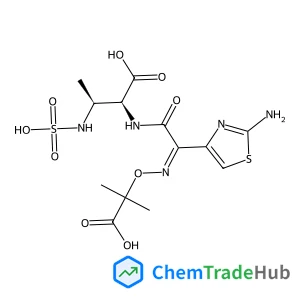
Aztreonam USP Related Compound A (Open-ring Aztreonam)
CAS Number:
87500-74-1
Molecular Formula:
C13H19N5O9S2
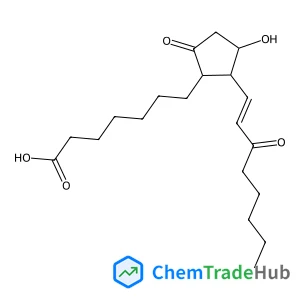
(11alpha,13E)-11-Hydroxy-9,15-dioxoprost-13-en-1-oic acid
CAS Number:
22973-19-9
Molecular Formula:
C20H32O5

Recommended Suppliers






Disclaimer
This page provides academic journal information for reference and research purposes only. We are not affiliated with any journal publishers and do not handle publication submissions. For publication-related inquiries, please contact the respective journal publishers directly.
If you notice any inaccuracies in the information displayed, please contact us at support@chemtradehub.com. We will promptly review and address your concerns.