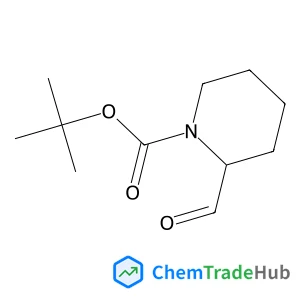
2-Methyl-2-propanyl (2R)-2-formyl-1-piperidinecarboxylate
CAS Number:
134526-69-5
Molecular Formula:
C11H19NO3
V. Balos, M. Bonn, J. Hunger
Correction for ‘Quantifying transient interactions between amide groups and the guanidinium cation’ by V. Balos et al., Phys. Chem. Chem. Phys., 2015, 17, 28539–28543.
Yun Lu, Yixing Zhao, Kishan L. Handoo, Vernon D. Parker
DOI: 10.1039/B208186E
Leilei Cao, Liliang Huang, Xianjun Xu
DOI: 10.1039/D1QO01358K
Yuping Zhu, Tianqi Liu, Bingxin Liu, Houguang Shi, Qitao Tan
DOI: 10.1039/D1QO01574E
Bastian Mechsner
DOI: 10.1039/C8OB02113A
Paola Baiocco, Anna Maria Barreca, Maura Fabbrini, Carlo Galli, Patrizia Gentili
DOI: 10.1039/B208951C
Vijay Gupta, Satish K. Pandey, Ravi P. Singh
DOI: 10.1039/C8OB01930D
Naoki Komatsu
DOI: 10.1039/B208107E
Michael Harding, Robert Hodgson, Tahir Majid, Kenneth J. McDowall
DOI: 10.1039/B208781B
Rhys B. Murphy, Duc-Truc Pham, Jonathan M. White, Stephen F. Lincoln, Martin R. Johnston
DOI: 10.1039/C8OB00944A
6-(3-Fluorophenyl)picolinic acid is generally considered safe for laboratory use...
(3R)-3-Pyrrolidinol is used in the pharmaceutical industry as a precursor for dr...
When handling (4R,5R)-4,5-Diethoxycarbonyl-2,2-dimethyldioxolane (CAS: 59779-75-...
1-(6-Chloroimidazo[1,2-b]pyridazin-3-yl)ethanone is often synthesized via a mult...
The market for N-Ethyl-3,4-dimethylbenzylamine (CAS: 39180-83-1) remains steady,...
Tert-butyl 3-(pyrrolidin-1-yl)azetidine-1-carboxylate is a chemical compound wit...
1-Bromo-3-chloro-2,4-dimethoxybenzene (CAS: 1228956-93-1) falls under the classi...
The safety of 8-Bromo-2-methyl-3,4-dihydroisoquinolin-1(2H)-one (CAS: 1368622-07...
Benzyl [(3S)-2,6-dioxo-3-piperidinyl]carbamate is generally safe when handled wi...
1-{[4-(4,4,5,5-Tetramethyl-1,3,2-dioxaborolan-2-yl)phenyl]sulfonyl}pyrrolidine s...

Physical Chemistry Chemical Physics (PCCP) is an international journal co-owned by 19 physical chemistry and physics societies from around the world. This journal publishes original, cutting-edge research in physical chemistry, chemical physics and biophysical chemistry. To be suitable for publication in PCCP, articles must include significant innovation and/or insight into physical chemistry; this is the most important criterion that reviewers and Editors will judge against when evaluating submissions. The journal has a broad scope and welcomes contributions spanning experiment, theory, computation and data science. Topical coverage includes spectroscopy, dynamics, kinetics, statistical mechanics, thermodynamics, electrochemistry, catalysis, surface science, quantum mechanics, quantum computing and machine learning. Interdisciplinary research areas such as polymers and soft matter, materials, nanoscience, energy, surfaces/interfaces, and biophysical chemistry are welcomed if they demonstrate significant innovation and/or insight into physical chemistry. Joined experimental/theoretical studies are particularly appreciated when complementary and based on up-to-date approaches.