












Precursor-route ZnO films from a mixed casting solvent for high performance aqueous electrolyte-gated transistors
Literature Information
Publication Date
2015-10-26
DOI
10.1039/C5CP03326H
Impact Factor
3.676
Authors
Talal M. Althagafi, Saud A. Algarni, Abdullah Al Naim, Javed Mazher, Martin Grell
View Original
Abstract
We significantly improved the performance of precursor-route semiconducting zinc oxide (ZnO) films in electrolyte-gated thin film transistors (TFTs). We find that the organic precursor to ZnO, zinc acetate (ZnAc), dissolves more readily in a 1 : 1 mixture of ethanol (EtOH) and acetone than in pure EtOH, pure acetone, or pure isopropanol. XPS and SEM characterisation show improved morphology of ZnO films converted from a mixed solvent cast ZnAc precursor compared to the EtOH cast precursor. When gated with a biocompatible electrolyte, phosphate buffered saline (PBS), ZnO thin film transistors (TFTs) derived from mixed solvent cast ZnAc give 4 times larger field effect current than similar films derived from ZnAc cast from pure EtOH. The sheet resistance at VG = VD = 1 V is 30 kΩ □−1, lower than for any organic TFT, and lower than for any electrolyte-gated ZnO TFT reported to date.
Related Literature
Spontaneous emulsification of detergent solubilized reaction center: protein conformational changes precede droplet growth
Gerardo Palazzo, Antonia Mallardi, Francesco Francia, Manuela Dezi, Giovanni Venturoli, Matteo Pierno, Emanuele Vignati, Roberto Piazza
2004-03-01
Paper
DOI: 10.1039/B314588N
UV induced local heating effects in TiO2nanocrystals
Thomas Berger, Oliver Diwald, Erich Knözinger, Martin Sterrer, John T. Yates Jr
2006-03-02
Paper
DOI: 10.1039/B517107E
Urethane cross-linked poly(oxyethylene)/siliceous nanohybrids doped with Eu3+ ions Part 2. Ionic association
Verónica de Zea Bermudez, Denis Ostrovskii, Sergei Lavoryk, M. Cristina Gonçalves, Luís D. Carlos
2004-01-12
Paper
DOI: 10.1039/B308202D
Dynamic mobility of concentrated suspensions. Comparison between different calculations
F. J. Arroyo, F. Carrique, S. Ahualli, A. V. Delgado
2004-03-10
Paper
DOI: 10.1039/B312839C
The HOOH–HOO complex. A matrix isolation study
Anders Engdahl, Bengt Nelander
2004-01-12
Paper
DOI: 10.1039/B309964D
Shape resonances in molecular clusters: the 2t2g shape resonances in S 2p-excited sulfur hexafluoride clusters
A. A. Pavlychev, X. O. Brykalova, R. Flesch, E. Rühl
2006-03-24
Paper
DOI: 10.1039/B517967J
Molecular simulation of adsorption of alkanes in sodium MOR-type zeolites using a new force field
2006-02-24
Paper
DOI: 10.1039/B517774J
You might also like
Compound Q&A
Is 6-(3-Fluorophenyl)picolinic acid (CAS: 887982-40-3) safe?
6-(3-Fluorophenyl)picolinic acid is generally considered safe for laboratory use...
887982-40-36-(3-Fluorophenyl)pi...
Compound Q&A
What industries use (3R)-3-Pyrrolidinol (CAS: 2799-21-5)?
(3R)-3-Pyrrolidinol is used in the pharmaceutical industry as a precursor for dr...
2799-21-5(3R)-3-Pyrrolidinol
Compound Q&A
What precautions should be taken when handling (4R,5R)-4,5-Diethoxycarbonyl-2,2-dimethyldioxolane (CAS: 59779-75-8)?
When handling (4R,5R)-4,5-Diethoxycarbonyl-2,2-dimethyldioxolane (CAS: 59779-75-...
59779-75-8(4R,5R)-4,5-Diethoxy...
Compound Q&A
How is 1-(6-Chloroimidazo[1,2-b]pyridazin-3-yl)ethanone (CAS: 90734-71-7) typically synthesized?
1-(6-Chloroimidazo[1,2-b]pyridazin-3-yl)ethanone is often synthesized via a mult...
90734-71-71-(6-Chloroimidazo[1...
Compound Q&A
What is the market or research trend for N-Ethyl-3,4-dimethylbenzylamine (CAS: 39180-83-1)?
The market for N-Ethyl-3,4-dimethylbenzylamine (CAS: 39180-83-1) remains steady,...
39180-83-1N-Ethyl-3,4-dimethyl...
Compound Q&A
What is Tert-butyl 3-(pyrrolidin-1-yl)azetidine-1-carboxylate (CAS: 1019008-21-9)?
Tert-butyl 3-(pyrrolidin-1-yl)azetidine-1-carboxylate is a chemical compound wit...
1019008-21-9Tert-butyl 3-(pyrrol...
Compound Q&A
What regulatory guidelines apply to 1-Bromo-3-chloro-2,4-dimethoxybenzene (CAS: 1228956-93-1)?
1-Bromo-3-chloro-2,4-dimethoxybenzene (CAS: 1228956-93-1) falls under the classi...
1228956-93-11-Bromo-3-chloro-2,4...
Compound Q&A
Is 8-Bromo-2-methyl-3,4-dihydroisoquinolin-1(2H)-one (CAS: 1368622-07-4) safe?
The safety of 8-Bromo-2-methyl-3,4-dihydroisoquinolin-1(2H)-one (CAS: 1368622-07...
1368622-07-48-Bromo-2-methyl-3,4...
Compound Q&A
Is Benzyl [(3S)-2,6-dioxo-3-piperidinyl]carbamate (CAS: 22785-43-9) safe?
Benzyl [(3S)-2,6-dioxo-3-piperidinyl]carbamate is generally safe when handled wi...
22785-43-9Benzyl [(3S)-2,6-dio...
Compound Q&A
How should 1-{[4-(4,4,5,5-Tetramethyl-1,3,2-dioxaborolan-2-yl)phenyl]sulfonyl}pyrrolidine (CAS: 928657-21-0) be stored?
1-{[4-(4,4,5,5-Tetramethyl-1,3,2-dioxaborolan-2-yl)phenyl]sulfonyl}pyrrolidine s...
928657-21-01-{[4-(4,4,5,5-Tetra...
Source Journal
Physical Chemistry Chemical Physics

CiteScore:
5.5
Self-citation Rate:
10.3%
Articles per Year:
3036
Physical Chemistry Chemical Physics (PCCP) is an international journal co-owned by 19 physical chemistry and physics societies from around the world. This journal publishes original, cutting-edge research in physical chemistry, chemical physics and biophysical chemistry. To be suitable for publication in PCCP, articles must include significant innovation and/or insight into physical chemistry; this is the most important criterion that reviewers and Editors will judge against when evaluating submissions. The journal has a broad scope and welcomes contributions spanning experiment, theory, computation and data science. Topical coverage includes spectroscopy, dynamics, kinetics, statistical mechanics, thermodynamics, electrochemistry, catalysis, surface science, quantum mechanics, quantum computing and machine learning. Interdisciplinary research areas such as polymers and soft matter, materials, nanoscience, energy, surfaces/interfaces, and biophysical chemistry are welcomed if they demonstrate significant innovation and/or insight into physical chemistry. Joined experimental/theoretical studies are particularly appreciated when complementary and based on up-to-date approaches.
Recommended Compounds

4-Cyclohexene-1,2-dicarboxylic acid, 1,2-dimethyl ester, (1R,2R)-rel-
CAS Number:
17673-68-6
Molecular Formula:
C10H14O4
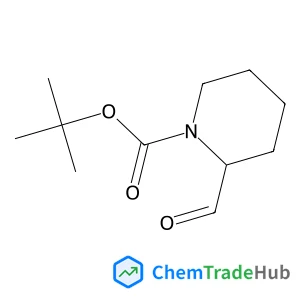
2-Methyl-2-propanyl (2R)-2-formyl-1-piperidinecarboxylate
CAS Number:
134526-69-5
Molecular Formula:
C11H19NO3
Recommended Suppliers




Disclaimer
This page provides academic journal information for reference and research purposes only. We are not affiliated with any journal publishers and do not handle publication submissions. For publication-related inquiries, please contact the respective journal publishers directly.
If you notice any inaccuracies in the information displayed, please contact us at support@chemtradehub.com. We will promptly review and address your concerns.