












Local electric fields and molecular properties in heterogeneous environments through polarizable embedding
Literature Information
Publication Date
2016-02-25
DOI
10.1039/C6CP00669H
Impact Factor
3.676
Authors
Nanna Holmgaard List, Hans Jørgen Aagaard Jensen, Jacob Kongsted
View Original
Abstract
In spectroscopies, the local field experienced by a molecule embedded in an environment will be different from the externally applied electromagnetic field, and this difference may significantly alter the response and transition properties of the molecule. The polarizable embedding (PE) model has previously been developed to model the local field contribution stemming from the direct molecule-environment coupling of the electromagnetic response properties of molecules in solution as well as in heterogeneous environments, such as proteins. Here we present an extension of this approach to address the additional effective external field effect, i.e., the manifestations of the environment polarization induced by the external field, which allows for the calculation of properties defined in terms of the external field. Within a response framework, we report calculations of the one- and two-photon absorption (1PA and 2PA, respectively) properties of PRODAN–methanol clusters as well as the fluorescent protein DsRed. Our results demonstrate the necessity of accounting for both the dynamical reaction field and effective external field contributions to the local field in order to reproduce full quantum chemical reference calculations. For the lowest π → π* transition in DsRed, inclusion of effective external field effects gives rise to a 1.9- and 3.5-fold reduction in the 1PA and 2PA cross-sections, respectively. The effective external field is, however, strongly influenced by the heterogeneity of the protein matrix, and the resulting effect can lead to either screening or enhancement depending on the nature of the transition under consideration.
Related Literature
Digital de-waxing on FTIR images
Fabrício Augusto de Lima, Cyril Gobinet, Ganesh Sockalingum, Sérgio Britto Garcia, Michel Manfait, Valérie Untereiner, Olivier Piot, Luciano Bachmann
2016-12-07
Paper
DOI: 10.1039/C6AN01975G
The effect of common anticoagulants in detection and quantification of malaria parasitemia in human red blood cells by ATR-FTIR spectroscopy
Miguela Martin, David Perez-Guaita, Dean W. Andrew, Bayden R. Wood
2016-11-28
Paper
DOI: 10.1039/C6AN02075E
Detection of chemical warfare agent simulants and hydrolysis products in biological samples by paper spray mass spectrometry
Josiah McKenna, Elizabeth S. Dhummakupt, Theresa Connell, Paul S. Demond, Dennis B. Miller, J. Michael Nilles, Nicholas E. Manicke, Trevor Glaros
2017-03-17
Paper
DOI: 10.1039/C7AN00144D
Monitoring the biochemical alterations in hypertension affected salivary gland tissues using Fourier transform infrared hyperspectral imaging
Shaiju S. Nazeer, Rarinthorn Samrid, David Perez-Guaita, Parichat Prachaney, Kowit Chaisiwamongkol, Poungrat Pakdeechote, Bayden R. Wood
2017-01-25
Paper
DOI: 10.1039/C6AN02074G
A reusable cyanide sensor via activation of C–H group: trifluoromethylcarbinol-directed meta-C–H cyanomethylation of naphthalimide
Yayun Chen, Xiaoxue Hu, Caihui Rao, Zheyao Li, Lu Chen, Chao Fu, Chuanxiang Liu
2018-08-20
Paper
DOI: 10.1039/C8AN00718G
Raman spectroscopy and multivariate analysis for the non invasive diagnosis of clinically inconclusive vulval lichen sclerosus
Linmarie Ludeman, Kathryn Hillaby, Robert Gornall, Gavin Lloyd, Catherine Kendall, Angela C. Shore, Nick Stone
2016-11-03
Paper
DOI: 10.1039/C6AN02009G
Quantitative NMR of quadrupolar nucleus as a novel analytical method: hydrolysis behaviour analysis of aluminum ion
Genki Sakata, Minoru Mizuhata
2017-04-19
Paper
DOI: 10.1039/C7AN00067G
Effects of nilotinib on leukaemia cells using vibrational microspectroscopy and cell cloning
M. R. Siddique, A. V. Rutter, K. Wehbe, G. Cinque, G. Bellisola
2016-12-08
Paper
DOI: 10.1039/C6AN01914E
A facile AuNPs@aptamer-modified mercaptosiloxane-based hybrid affinity monolith with an unusually high coverage density of aptamer for on-column selective extraction of ochratoxin A
Maolin Chen, Lijun Deng, Xucong Lin, Zenghong Xie
2018-09-14
Paper
DOI: 10.1039/C8AN01531G
You might also like
Compound Q&A
What is the market or research trend for N-(4-Methoxybenzyl)-2-pyridinamine (CAS: 52818-63-0)?
N-(4-Methoxybenzyl)-2-pyridinamine (CAS: 52818-63-0) is increasingly being used ...
52818-63-0N-(4-Methoxybenzyl)-...
Compound Q&A
What precautions should be taken when handling Ethyl 4-(2-chlorophenyl)-1,3-thiazole-2-carboxylate (CAS: 1050507-06-6)?
When handling Ethyl 4-(2-chlorophenyl)-1,3-thiazole-2-carboxylate, appropriate p...
1050507-06-6Ethyl 4-(2-chlorophe...
Compound Q&A
What regulatory guidelines apply to diethyldiselane (CAS: 628-39-7)?
Diethyldiselane (CAS: 628-39-7) is classified under the Globally Harmonized Syst...
628-39-7Diethyldiselane
Compound Q&A
What is the market or research trend for oxocopper (CAS: 12053-18-8)?
The market for oxocopper (CAS: 12053-18-8) is primarily driven by its use in cat...
12053-18-8oxocopper; oxo-(oxoc...
Compound Q&A
What is the market or research trend for 5-{[(2-Methyl-2-propanyl)oxy]carbonyl}-5-azaspiro[2.4]heptane-7-carboxylic acid?
The market for 5-{[(2-Methyl-2-propanyl)oxy]carbonyl}-5-azaspiro[2.4]heptane-7-c...
1268519-54-55-{[(2-Methyl-2-prop...
Compound Q&A
What is 2-(1-Pyrrolidinyl)-4-pyridinamine (CAS: 35981-63-6)?
2-(1-Pyrrolidinyl)-4-pyridinamine is a chemical compound with the CAS number 359...
35981-63-62-(1-Pyrrolidinyl)-4...
Compound Q&A
What are the physical and chemical properties of 2-(3-Pyridinyl)-1-azabicyclo[2.2.2]octane (CAS: 91556-75-1)?
2-(3-Pyridinyl)-1-azabicyclo[2.2.2]octane (CAS: 91556-75-1) is a crystalline sol...
91556-75-12-(3-Pyridinyl)-1-az...
Compound Q&A
How is (S)-Alpha-allyl-proline hydrochloride (CAS: 129704-91-2) typically synthesized?
(S)-Alpha-allyl-proline hydrochloride is usually synthesized via a Wittig reacti...
129704-91-2(S)-Alpha-allyl-prol...
Compound Q&A
What is 3-Methyl-1,2-oxazole-5-carboxylic acid (CAS: 4857-42-5)?
3-Methyl-1,2-oxazole-5-carboxylic acid (CAS: 4857-42-5) is an organic compound w...
4857-42-53-Methyl-1,2-oxazole...
Compound Q&A
How is Lys-SMCC-DM1 (CAS: 1281816-04-3) typically synthesized?
Lys-SMCC-DM1 is synthesized via a multi-step process involving the coupling of S...
1281816-04-3Lys-SMCC-DM1
Source Journal
Physical Chemistry Chemical Physics

CiteScore:
5.5
Self-citation Rate:
10.3%
Articles per Year:
3036
Physical Chemistry Chemical Physics (PCCP) is an international journal co-owned by 19 physical chemistry and physics societies from around the world. This journal publishes original, cutting-edge research in physical chemistry, chemical physics and biophysical chemistry. To be suitable for publication in PCCP, articles must include significant innovation and/or insight into physical chemistry; this is the most important criterion that reviewers and Editors will judge against when evaluating submissions. The journal has a broad scope and welcomes contributions spanning experiment, theory, computation and data science. Topical coverage includes spectroscopy, dynamics, kinetics, statistical mechanics, thermodynamics, electrochemistry, catalysis, surface science, quantum mechanics, quantum computing and machine learning. Interdisciplinary research areas such as polymers and soft matter, materials, nanoscience, energy, surfaces/interfaces, and biophysical chemistry are welcomed if they demonstrate significant innovation and/or insight into physical chemistry. Joined experimental/theoretical studies are particularly appreciated when complementary and based on up-to-date approaches.
Recommended Compounds
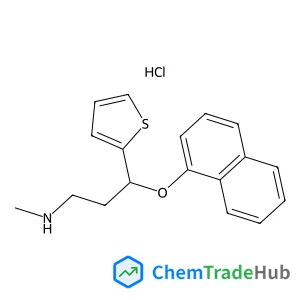
N-Methyl-3-(1-naphthyloxy)-3-(2-thienyl)-1-propanamine hydrochloride (1:1)
CAS Number:
1188266-11-6
Molecular Formula:
C18H20ClNOS
![N-{15-[(2,5-Dioxo-1-pyrrolidinyl)oxy]-15-oxo-3,6,9,12-tetraoxapentadec-1-yl}-2-(2-propyn-1-yloxy)acetamide structure](https://static.chemtradehub.com/structs/210/2101206-92-0-2eb5.webp "N-{15-[(2,5-Dioxo-1-pyrrolidinyl)oxy]-15-oxo-3,6,9,12-tetraoxapentadec-1-yl}-2-(2-propyn-1-yloxy)acetamide structure")
N-{15-[(2,5-Dioxo-1-pyrrolidinyl)oxy]-15-oxo-3,6,9,12-tetraoxapentadec-1-yl}-2-(2-propyn-1-yloxy)acetamide
CAS Number:
2101206-92-0
Molecular Formula:
C20H30N2O10
![(2R,6S)-6-[(Benzyloxy)methyl]-4-{[(2-methyl-2-propanyl)oxy]carbonyl}-2-morpholinecarboxylic acid structure](https://static.chemtradehub.com/structs/109/1093085-91-6-3382.webp "(2R,6S)-6-[(Benzyloxy)methyl]-4-{[(2-methyl-2-propanyl)oxy]carbonyl}-2-morpholinecarboxylic acid structure")
(2R,6S)-6-[(Benzyloxy)methyl]-4-{[(2-methyl-2-propanyl)oxy]carbonyl}-2-morpholinecarboxylic acid
CAS Number:
1093085-91-6
Molecular Formula:
C18H25NO6
Recommended Suppliers






Disclaimer
This page provides academic journal information for reference and research purposes only. We are not affiliated with any journal publishers and do not handle publication submissions. For publication-related inquiries, please contact the respective journal publishers directly.
If you notice any inaccuracies in the information displayed, please contact us at support@chemtradehub.com. We will promptly review and address your concerns.