












Monitoring the biochemical alterations in hypertension affected salivary gland tissues using Fourier transform infrared hyperspectral imaging
Literature Information
Publication Date
2017-01-25
DOI
10.1039/C6AN02074G
Impact Factor
4.616
Authors
Shaiju S. Nazeer, Rarinthorn Samrid, David Perez-Guaita, Parichat Prachaney, Kowit Chaisiwamongkol, Poungrat Pakdeechote, Bayden R. Wood
View Original
Abstract
Fourier transform infrared spectroscopy (FTIR) imaging has been applied to investigate biochemical differences between salivary glands from control and hypertensive rats. Male Sprague–Dawley rats were divided into two groups including a control group and another hypertension group that were treated orally, with N-nitro-L-arginine methyl ester (L-NAME) via drinking water for 3 weeks to develop hypertension. In the control group, rats were treated with only drinking water for 3 weeks. The formalin-fixed paraffin embedded tissue specimens from submandibular and sublingual glands were analysed with a FTIR focal plane array imaging spectrometer and multi-composite images of all tissue sections were analysed simultaneously using Unsupervised Hierarchical Cluster Analysis (UHCA) and the extracted spectra were further analysed using Partial Least Squares Discriminant Analysis (PLS-DA). In general, hypertension affected salivary gland tissues were characterised by higher concentrations of triglycerides as evidenced by an increase in the 1745 cm−1 band. Higher concentrations of carbohydrates and proteins were also observed in the hypertensive group along with a decrease in bands associated with nucleic acids. PLS-DA scores plots provided good differentiation in sublingual gland tissues between control (n = 3734 spectra) and hypertension (n = 4538) and also in submandibular gland tissues between control (n = 5051) and hypertension (n = 4408). We have shown that FTIR imaging can be used to differentiate the macromolecular information between physiological and pathological conditions in tissue biopsy specimens. In the next phase, we will investigate the infrared predictive markers of hypertension in biofluids including serum and saliva using attenuated total refection spectroscopy.
Related Literature
The behavior and origin of the excess wing in DEET (N,N-diethyl-3-methylbenzamide)
S. Hensel-Bielowka, J. R. Sangoro, Z. Wojnarowska, M. Paluch
2013-04-15
Paper
DOI: 10.1039/C3CP50975C
Strong-pump strong-probe spectroscopy: effects of higher excited electronic states
Maxim F. Gelin, Dassia Egorova, Wolfgang Domcke
2013-03-22
Paper
DOI: 10.1039/C3CP44454F
Structural changes in supercooled Al2O3–Y2O3 liquids
Mark Wilson, Chris J. Benmore, J. K. R. Weber, Paul F. McMillan
2013-04-17
Paper
DOI: 10.1039/C3CP51209F
Adsorption of N/S heterocycles in the flexible metal–organic framework MIL-53(FeIII) studied by in situ energy dispersive X-ray diffraction
Ben Van de Voorde, Alexis S. Munn, Nathalie Guillou, Franck Millange, Dirk E. De Vos, Richard I. Walton
2013-02-14
Paper
DOI: 10.1039/C3CP44349C
The chemical sensitivity of X-ray spectroscopy: high energy resolution XANESversusX-ray emission spectroscopy of substituted ferrocenes
Andrew J. Atkins, Matthias Bauer, Christoph R. Jacob
2013-04-12
Paper
DOI: 10.1039/C3CP50999K
Morphology-controlled preparation and enhanced simulated sunlight and visible-light photocatalytic activity of Pt/Bi5Nb3O15 heterostructures
Ling Chen, Wan Guo, Yuxin Yang, Ang Zhang, Shengqu Zhang, Yihang Guo, Yingna Guo
2013-03-25
Paper
DOI: 10.1039/C3CP00084B
Insights into the adsorption and energy transfer of Ag clusters on the AgCl(100) surface
Xiangchao Ma, Ying Dai, Meng Guo, Yingtao Zhu, Baibiao Huang
2013-01-30
Paper
DOI: 10.1039/C3CP44519D
Spectral assignments and NMR parameter–structure relationships in borates using high-resolution 11B NMR and density functional theory
Oliver L. G. Alderman, Dinu Iuga, Andrew P. Howes, Diane Holland, Ray Dupree
2013-04-05
Paper
DOI: 10.1039/C3CP50772F
Nonlinear length dependent electrical resistance of a single crystal zinc oxide micro/nanobelt
Chaolong Tang, Chengming Jiang, Wenqiang Lu, Jinhui Song
2013-04-05
Paper
DOI: 10.1039/C3CP50679G
You might also like
Compound Q&A
What is the market or research trend for N-(4-Methoxybenzyl)-2-pyridinamine (CAS: 52818-63-0)?
N-(4-Methoxybenzyl)-2-pyridinamine (CAS: 52818-63-0) is increasingly being used ...
52818-63-0N-(4-Methoxybenzyl)-...
Compound Q&A
What precautions should be taken when handling Ethyl 4-(2-chlorophenyl)-1,3-thiazole-2-carboxylate (CAS: 1050507-06-6)?
When handling Ethyl 4-(2-chlorophenyl)-1,3-thiazole-2-carboxylate, appropriate p...
1050507-06-6Ethyl 4-(2-chlorophe...
Compound Q&A
What regulatory guidelines apply to diethyldiselane (CAS: 628-39-7)?
Diethyldiselane (CAS: 628-39-7) is classified under the Globally Harmonized Syst...
628-39-7Diethyldiselane
Compound Q&A
What is the market or research trend for oxocopper (CAS: 12053-18-8)?
The market for oxocopper (CAS: 12053-18-8) is primarily driven by its use in cat...
12053-18-8oxocopper; oxo-(oxoc...
Compound Q&A
What is the market or research trend for 5-{[(2-Methyl-2-propanyl)oxy]carbonyl}-5-azaspiro[2.4]heptane-7-carboxylic acid?
The market for 5-{[(2-Methyl-2-propanyl)oxy]carbonyl}-5-azaspiro[2.4]heptane-7-c...
1268519-54-55-{[(2-Methyl-2-prop...
Compound Q&A
What is 2-(1-Pyrrolidinyl)-4-pyridinamine (CAS: 35981-63-6)?
2-(1-Pyrrolidinyl)-4-pyridinamine is a chemical compound with the CAS number 359...
35981-63-62-(1-Pyrrolidinyl)-4...
Compound Q&A
What are the physical and chemical properties of 2-(3-Pyridinyl)-1-azabicyclo[2.2.2]octane (CAS: 91556-75-1)?
2-(3-Pyridinyl)-1-azabicyclo[2.2.2]octane (CAS: 91556-75-1) is a crystalline sol...
91556-75-12-(3-Pyridinyl)-1-az...
Compound Q&A
How is (S)-Alpha-allyl-proline hydrochloride (CAS: 129704-91-2) typically synthesized?
(S)-Alpha-allyl-proline hydrochloride is usually synthesized via a Wittig reacti...
129704-91-2(S)-Alpha-allyl-prol...
Compound Q&A
What is 3-Methyl-1,2-oxazole-5-carboxylic acid (CAS: 4857-42-5)?
3-Methyl-1,2-oxazole-5-carboxylic acid (CAS: 4857-42-5) is an organic compound w...
4857-42-53-Methyl-1,2-oxazole...
Compound Q&A
How is Lys-SMCC-DM1 (CAS: 1281816-04-3) typically synthesized?
Lys-SMCC-DM1 is synthesized via a multi-step process involving the coupling of S...
1281816-04-3Lys-SMCC-DM1
Source Journal
Analyst

CiteScore:
7.8
Self-citation Rate:
5.6%
Articles per Year:
653
Analyst publishes analytical and bioanalytical research that reports premier fundamental discoveries and inventions, and the applications of those discoveries, unconfined by traditional discipline barriers.
Recommended Compounds
![1-{3-[4-Amino-3-(4-phenoxyphenyl)-1H-pyrazolo[3,4-d]pyrimidin-1-yl]-1-piperidinyl}-2,3-dihydroxy-1-propanone structure](https://static.chemtradehub.com/structs/122/1226872-27-0-e037.webp "1-{3-[4-Amino-3-(4-phenoxyphenyl)-1H-pyrazolo[3,4-d]pyrimidin-1-yl]-1-piperidinyl}-2,3-dihydroxy-1-propanone structure")
1-{3-[4-Amino-3-(4-phenoxyphenyl)-1H-pyrazolo[3,4-d]pyrimidin-1-yl]-1-piperidinyl}-2,3-dihydroxy-1-propanone
CAS Number:
1226872-27-0
Molecular Formula:
C25H26N6O4
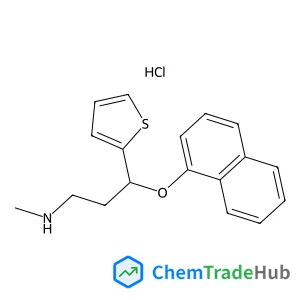
N-Methyl-3-(1-naphthyloxy)-3-(2-thienyl)-1-propanamine hydrochloride (1:1)
CAS Number:
1188266-11-6
Molecular Formula:
C18H20ClNOS
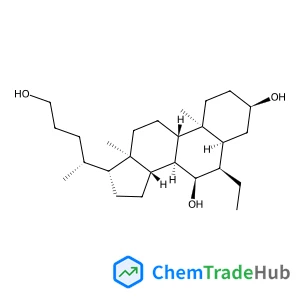
(3alpha,5beta,6alpha,7alpha)-6-Ethylcholane-3,7,24-triol
CAS Number:
1537866-49-1
Molecular Formula:
C26H46O3
![5'-Fluoro-[2,3'-biindolinylidene]-2',3-dione structure](https://static.chemtradehub.com/structs/251/251903-00-1-9cb1.webp "5'-Fluoro-[2,3'-biindolinylidene]-2',3-dione structure")
Recommended Suppliers




Disclaimer
This page provides academic journal information for reference and research purposes only. We are not affiliated with any journal publishers and do not handle publication submissions. For publication-related inquiries, please contact the respective journal publishers directly.
If you notice any inaccuracies in the information displayed, please contact us at support@chemtradehub.com. We will promptly review and address your concerns.