












A facile AuNPs@aptamer-modified mercaptosiloxane-based hybrid affinity monolith with an unusually high coverage density of aptamer for on-column selective extraction of ochratoxin A
Literature Information
Publication Date
2018-09-14
DOI
10.1039/C8AN01531G
Impact Factor
4.616
Authors
Maolin Chen, Lijun Deng, Xucong Lin, Zenghong Xie
View Original
Abstract
A convenient and high-performance AuNPs@aptamer-modified mercaptosiloxane-based hybrid affinity monolithic column with an unusually high coverage density of aptamers was facilely prepared and used for on-column selective recognition of ochratoxin A (OTA). Due to the high surface-to-volume ratio of AuNPs, the robust conjugation of Au-SH and large specific surface area of hybrid-silica monolith, high coverage density of 5′-SH-aptamers up to 3494 pmol μL−1 was achieved, which was 2.5–10 folds higher than that of other previously reported affinity monoliths modified with AuNPs@Apt. Using OTA as the model analyte, the highly selective recognition of OTA was carried out via online coupling with HPLC, and the cross-reactivity towards analogues, such as OTB and aflatoxin B1, was weak. High recovery yields of OTA were achieved at more than 92% (n = 3) even when OTB was added at a high concentration level up to 50 ng mL−1. For sample analysis, efficient discrimination of OTA was successfully obtained with a sensitive detection limit of 25 pg mL−1. The recoveries of OTA with different fortified levels were achieved at 88.6%–94.1% and 88.2%–94.3% for beer and wine samples, respectively. This protocol provides a facile approach for fabricating a desirable affinity monolith modified with abundant aptamers for highly selective and sensitive on-column extraction of target analyte OTA.
Recommended Journals
Related Literature
The interaction of H2S with the ZnO(100) surface
Jakub Goclon, Bernd Meyer
2013-04-26
Paper
DOI: 10.1039/C3CP44546A
Physical and chemical transformations of highly compressed carbon dioxide at bond energies
Choong-Shik Yoo
2013-03-21
Perspective
DOI: 10.1039/C3CP50761K
From solvated ions to ion-pairing: a THz study of lanthanum(iii) hydration
Vinay Sharma, Fabian Böhm, Michael Seitz, Gerhard Schwaab, Martina Havenith
2013-04-10
Paper
DOI: 10.1039/C3CP50865J
Synthesis of chemically pure, luminescent Eu3+ doped HAp nanoparticles: a promising fluorescent probe for in vivo imaging applications
S. Sasanka Kumar, Manoj Komath, Manoj Raama Varma, M. K. Jayaraj, K. Rajeev Kumar
2013-04-12
Paper
DOI: 10.1039/C3CP42648C
Synthesis and acid catalysis of zeolite-templated microporous carbons with SO3H groups
Kiichi Fukuhara, Masaaki Kitano, Shigenobu Hayashi, Michikazu Hara
2013-04-26
Paper
DOI: 10.1039/C3CP43853H
CVD formation of graphene on SiC surface in argon atmosphere
Małgorzata Wierzbowska, Adam Dominiak, Kamil Tokar
2013-04-03
Paper
DOI: 10.1039/C3CP44378G
ZnO nanoparticle based highly efficient CdS/CdSe quantum dot-sensitized solar cells
Chunhui Li, Lei Yang, Junyan Xiao, Yih-Chyng Wu, Martin Søndergaard, Yanhong Luo, Dongmei Li, Qingbo Meng, Bo Brummerstedt Iversen
2013-03-27
Communication
DOI: 10.1039/C3CP50365H
Influence of adsorption thermodynamics on guest diffusivities in nanoporous crystalline materials
Rajamani Krishna, Jasper M. van Baten
2013-03-26
Perspective
DOI: 10.1039/C3CP50449B
Tip enhanced Raman spectroscopy (TERS) as a probe for the buckling distortion in silicene
Deepthi Jose, A. Nijamudheen
2013-04-18
Communication
DOI: 10.1039/C3CP51028J
You might also like
Compound Q&A
What is the market or research trend for N-(4-Methoxybenzyl)-2-pyridinamine (CAS: 52818-63-0)?
N-(4-Methoxybenzyl)-2-pyridinamine (CAS: 52818-63-0) is increasingly being used ...
52818-63-0N-(4-Methoxybenzyl)-...
Compound Q&A
What precautions should be taken when handling Ethyl 4-(2-chlorophenyl)-1,3-thiazole-2-carboxylate (CAS: 1050507-06-6)?
When handling Ethyl 4-(2-chlorophenyl)-1,3-thiazole-2-carboxylate, appropriate p...
1050507-06-6Ethyl 4-(2-chlorophe...
Compound Q&A
What regulatory guidelines apply to diethyldiselane (CAS: 628-39-7)?
Diethyldiselane (CAS: 628-39-7) is classified under the Globally Harmonized Syst...
628-39-7Diethyldiselane
Compound Q&A
What is the market or research trend for oxocopper (CAS: 12053-18-8)?
The market for oxocopper (CAS: 12053-18-8) is primarily driven by its use in cat...
12053-18-8oxocopper; oxo-(oxoc...
Compound Q&A
What is the market or research trend for 5-{[(2-Methyl-2-propanyl)oxy]carbonyl}-5-azaspiro[2.4]heptane-7-carboxylic acid?
The market for 5-{[(2-Methyl-2-propanyl)oxy]carbonyl}-5-azaspiro[2.4]heptane-7-c...
1268519-54-55-{[(2-Methyl-2-prop...
Compound Q&A
What is 2-(1-Pyrrolidinyl)-4-pyridinamine (CAS: 35981-63-6)?
2-(1-Pyrrolidinyl)-4-pyridinamine is a chemical compound with the CAS number 359...
35981-63-62-(1-Pyrrolidinyl)-4...
Compound Q&A
What are the physical and chemical properties of 2-(3-Pyridinyl)-1-azabicyclo[2.2.2]octane (CAS: 91556-75-1)?
2-(3-Pyridinyl)-1-azabicyclo[2.2.2]octane (CAS: 91556-75-1) is a crystalline sol...
91556-75-12-(3-Pyridinyl)-1-az...
Compound Q&A
How is (S)-Alpha-allyl-proline hydrochloride (CAS: 129704-91-2) typically synthesized?
(S)-Alpha-allyl-proline hydrochloride is usually synthesized via a Wittig reacti...
129704-91-2(S)-Alpha-allyl-prol...
Compound Q&A
What is 3-Methyl-1,2-oxazole-5-carboxylic acid (CAS: 4857-42-5)?
3-Methyl-1,2-oxazole-5-carboxylic acid (CAS: 4857-42-5) is an organic compound w...
4857-42-53-Methyl-1,2-oxazole...
Compound Q&A
How is Lys-SMCC-DM1 (CAS: 1281816-04-3) typically synthesized?
Lys-SMCC-DM1 is synthesized via a multi-step process involving the coupling of S...
1281816-04-3Lys-SMCC-DM1
Source Journal
Analyst

CiteScore:
7.8
Self-citation Rate:
5.6%
Articles per Year:
653
Analyst publishes analytical and bioanalytical research that reports premier fundamental discoveries and inventions, and the applications of those discoveries, unconfined by traditional discipline barriers.
Recommended Compounds

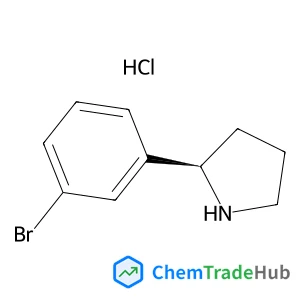
(2R)-2-(3-Bromophenyl)pyrrolidine hydrochloride (1:1)
CAS Number:
1391550-13-2
Molecular Formula:
C10H13BrClN

(3alpha,5beta,6alpha,7alpha)-6-Ethylcholane-3,7,24-triol
CAS Number:
1537866-49-1
Molecular Formula:
C26H46O3
Recommended Suppliers





Disclaimer
This page provides academic journal information for reference and research purposes only. We are not affiliated with any journal publishers and do not handle publication submissions. For publication-related inquiries, please contact the respective journal publishers directly.
If you notice any inaccuracies in the information displayed, please contact us at support@chemtradehub.com. We will promptly review and address your concerns.