


Adsorption efficiency enhancing of electrospun polycaprolactone nanofibers towards acidic polar drugs through the incorporation of a composite of graphene oxide nanosheets and Al30 polyoxocations: a comparative study
Literature Information
Publication Date
2018-09-04
DOI
10.1039/C8AN01066H
Impact Factor
4.616
Authors
View Original
Abstract
The main objective of this study focuses on exploration of the feasibility of Al30 polyoxocations for preparation of a novel sorbent material for a solid-phase extraction (SPE) method by selective adsorption and extraction of a class of compounds considering the type of interactions involved in the adsorption process. Accordingly, first Al30 polyoxocations were synthesized and their composite was prepared with graphene oxide (GO) nanosheets as a suitable substrate to be introduced as a SPE sorbent material. Then, the prepared composite was incorporated into polycaprolactone (PCL) nanofibers via electrospinning to present an alternative sorbent for SPE-based on a GO/Al30 nanocomposite (GO/Al30 NC) creating no need for filtering or centrifuging steps. Intercalation of Al30 polyoxocations into the GO layers and the incorporation of GO/Al30 NC into PCL nanofibers was successfully confirmed through FE-SEM, TEM, EDX, XRD, BET, TGA, IR spectroscopy, and zeta potential determination. For investigating the types of probable interactions involved in the adsorption process of different compounds on the proposed sorbents, four statin drugs, cholesterol-lowering agents with various polarity and ionization properties, were selected as model analytes. Factors affecting the extraction efficiency of dispersive SPE and immersed SPE methods using GO/Al30 NC and GO/Al30 NC-PCL nanofibers, respectively, were investigated and optimized. Under optimal conditions, acceptable analytical figures of merit were obtained for both SPE methods. A comparison of extraction efficiencies of the target drugs by the two proposed sorbents, as well as GO nanosheets and PCL nanofibers, was accomplished to study the types of interactions as well as the adsorption mechanism. The results revealed that GO/Al30 NC, having many polar and anion exchange sites caused by Al30 polyoxocations, is a good selective sorbent for acidic polar compounds which their extraction by nonpolar sorbents is not desirable. Additionally, GO/Al30 NC-PCL nanofibers exhibited extraction capability for a wide range of compounds from acidic polar to nonpolar and nonionizable ones.
Recommended Journals

Kinetics and Catalysis

Russian Chemical Reviews

Journal of Organometallic Chemistry

Nature

Proceedings of the National Academy of Sciences of the United States of America

Fibre Chemistry

Journal of Physics and Chemistry of Solids

Planta Medica

European Journal of Wood and Wood Products

Helvetica Chimica Acta
Related Literature
Electronic structure analysis of multistate reactivity in transition metal catalyzed reactions: the case of C–H bond activation by non-heme iron(iv)–oxo cores
Shengfa Ye, Cai-Yun Geng, Sason Shaik, Frank Neese
2013-05-01
Perspective
DOI: 10.1039/C3CP00080J
Ultrafast spectroscopy of linear carbon chains: the case of dinaphthylpolyynes
D. Fazzi, A. Milani, D. Brida, C. Manzoni, E. Cinquanta, M. Devetta, L. Ravagnan, P. Milani, F. Cataldo, L. Lüer, R. Wannemacher, J. Cabanillas-Gonzalez, M. Negro, S. Stagira, C. Vozzi
2013-04-19
Paper
DOI: 10.1039/C3CP50508A
Spectromicroscopy of pulses transporting alkali metal in a surface reaction
S. Günther, Hong Liu, T. O. Menteş, A. Locatelli, R. Imbihl
2013-04-03
Paper
DOI: 10.1039/C3CP44478C
Assessment of density functional methods with correct asymptotic behavior
Chen-Wei Tsai, Yu-Chuan Su, Guan-De Li
2013-03-28
Paper
DOI: 10.1039/C3CP50441G
C60fullerene aggregation in aqueous solution
Yuriy I. Prylutskyy, Anatoly S. Buchelnikov, Dmitry P. Voronin, Viktor V. Kostjukov, Uwe Ritter, John A. Parkinson, Maxim P. Evstigneev
2013-04-16
Paper
DOI: 10.1039/C3CP50187F
The interaction of H2S with the ZnO(100) surface
Jakub Goclon, Bernd Meyer
2013-04-26
Paper
DOI: 10.1039/C3CP44546A
Synthesis and acid catalysis of zeolite-templated microporous carbons with SO3H groups
Kiichi Fukuhara, Masaaki Kitano, Shigenobu Hayashi, Michikazu Hara
2013-04-26
Paper
DOI: 10.1039/C3CP43853H
Ultra-slow dynamics in low density amorphous ice revealed by deuteron NMR: indication of a glass transition
Florian Löw, Katrin Amann-Winkel, Thomas Loerting, Franz Fujara, Burkhard Geil
2013-05-10
Paper
DOI: 10.1039/C3CP50818H
The electronic structure of pyracene: a spectroscopic and computational study
Johannes Auerswald, Bernd Engels, Ingo Fischer, Thiemo Gerbich, Jörg Herterich, Anke Krueger, Melanie Lang, Hans-Christian Schmitt, Christof Schon, Christof Walter
2013-03-27
Paper
DOI: 10.1039/C3CP44271C
You might also like
Compound Q&A
What is the market or research trend for N-(4-Methoxybenzyl)-2-pyridinamine (CAS: 52818-63-0)?
N-(4-Methoxybenzyl)-2-pyridinamine (CAS: 52818-63-0) is increasingly being used ...
52818-63-0N-(4-Methoxybenzyl)-...
Compound Q&A
What precautions should be taken when handling Ethyl 4-(2-chlorophenyl)-1,3-thiazole-2-carboxylate (CAS: 1050507-06-6)?
When handling Ethyl 4-(2-chlorophenyl)-1,3-thiazole-2-carboxylate, appropriate p...
1050507-06-6Ethyl 4-(2-chlorophe...
Compound Q&A
What regulatory guidelines apply to diethyldiselane (CAS: 628-39-7)?
Diethyldiselane (CAS: 628-39-7) is classified under the Globally Harmonized Syst...
628-39-7Diethyldiselane
Compound Q&A
What is the market or research trend for oxocopper (CAS: 12053-18-8)?
The market for oxocopper (CAS: 12053-18-8) is primarily driven by its use in cat...
12053-18-8oxocopper; oxo-(oxoc...
Compound Q&A
What is the market or research trend for 5-{[(2-Methyl-2-propanyl)oxy]carbonyl}-5-azaspiro[2.4]heptane-7-carboxylic acid?
The market for 5-{[(2-Methyl-2-propanyl)oxy]carbonyl}-5-azaspiro[2.4]heptane-7-c...
1268519-54-55-{[(2-Methyl-2-prop...
Compound Q&A
What is 2-(1-Pyrrolidinyl)-4-pyridinamine (CAS: 35981-63-6)?
2-(1-Pyrrolidinyl)-4-pyridinamine is a chemical compound with the CAS number 359...
35981-63-62-(1-Pyrrolidinyl)-4...
Compound Q&A
What are the physical and chemical properties of 2-(3-Pyridinyl)-1-azabicyclo[2.2.2]octane (CAS: 91556-75-1)?
2-(3-Pyridinyl)-1-azabicyclo[2.2.2]octane (CAS: 91556-75-1) is a crystalline sol...
91556-75-12-(3-Pyridinyl)-1-az...
Compound Q&A
How is (S)-Alpha-allyl-proline hydrochloride (CAS: 129704-91-2) typically synthesized?
(S)-Alpha-allyl-proline hydrochloride is usually synthesized via a Wittig reacti...
129704-91-2(S)-Alpha-allyl-prol...
Compound Q&A
What is 3-Methyl-1,2-oxazole-5-carboxylic acid (CAS: 4857-42-5)?
3-Methyl-1,2-oxazole-5-carboxylic acid (CAS: 4857-42-5) is an organic compound w...
4857-42-53-Methyl-1,2-oxazole...
Compound Q&A
How is Lys-SMCC-DM1 (CAS: 1281816-04-3) typically synthesized?
Lys-SMCC-DM1 is synthesized via a multi-step process involving the coupling of S...
1281816-04-3Lys-SMCC-DM1
Source Journal
Analyst

CiteScore:
7.8
Self-citation Rate:
5.6%
Articles per Year:
653
Analyst publishes analytical and bioanalytical research that reports premier fundamental discoveries and inventions, and the applications of those discoveries, unconfined by traditional discipline barriers.
Recommended Compounds
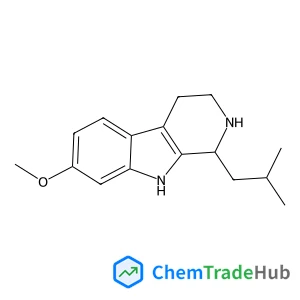
1-Isobutyl-7-methoxy-2,3,4,9-tetrahydro-1H-beta-carboline
CAS Number:
175975-76-5
Molecular Formula:
C16H22N2O
Recommended Suppliers





Disclaimer
This page provides academic journal information for reference and research purposes only. We are not affiliated with any journal publishers and do not handle publication submissions. For publication-related inquiries, please contact the respective journal publishers directly.
If you notice any inaccuracies in the information displayed, please contact us at support@chemtradehub.com. We will promptly review and address your concerns.