












A reusable cyanide sensor via activation of C–H group: trifluoromethylcarbinol-directed meta-C–H cyanomethylation of naphthalimide
Literature Information
Publication Date
2018-08-20
DOI
10.1039/C8AN00718G
Impact Factor
4.616
Authors
Yayun Chen, Xiaoxue Hu, Caihui Rao, Zheyao Li, Lu Chen, Chao Fu, Chuanxiang Liu
View Original
Abstract
A fluorescent and colorimetric anion sensor based on the activated C–H group has been developed, and its reusability and ability to selectively detect cyanides have been demonstrated. The system utilizes trifluoromethylcarbinol-directed C–H regioselective cyanomethylation for direct C–C bond formation between the fluorophore and acetonitrile. The present paper also describes a novel strategy for the enhancement of carbanion stability by a potential intramolecular CO⋯H–C hydrogen bonding system, thus providing a new way to develop activated CH-based anion receptors.
Related Literature
Characterization and control of the electronic properties of a NiO based dye sensitized photocathode
Idan Hod, Zion Tachan, Menny Shalom, Arie Zaban
2013-03-21
Paper
DOI: 10.1039/C3CP50242B
Ultrahigh-efficiency photocatalysts based on mesoporous Pt–WO3 nanohybrids
Zhuang Liu, Hao Zhang, Jinghong Li, Junhong Chen
2013-04-02
Communication
DOI: 10.1039/C3CP50647A
Analysis of visible-light-active Sn(ii)–TiO2 photocatalysts
Venkata Bharat Ram Boppana, Feng Jiao, Dave Newby, Jr., Jude Laverock, Kevin E. Smith, Jean Claude Jumas, Greg Hutchings, Raul F. Lobo
2013-03-13
Communication
DOI: 10.1039/C3CP44635B
In situ high pressure NMR study of the direct synthesis of NaAlH4
Terry D. Humphries, Derek Birkmire, Bjørn C. Hauback, G. Sean McGrady, Craig M. Jensen
2013-03-04
Communication
DOI: 10.1039/C3CP50777G
QM/MM simulations of vibrational spectra of bacteriorhodopsin and channelrhodopsin-2
Kai Welke, Hiroshi C. Watanabe, Tino Wolter, Marcus Elstner
2013-01-17
Paper
DOI: 10.1039/C3CP44181D
Complementary mechanistic properties of Fe- and Mn-doped aluminophosphates in the catalytic aerobic oxidation of hydrocarbons
Luis Gómez-Hortigüela, Furio Corà, C. Richard A. Catlow
2013-03-14
Paper
DOI: 10.1039/C3CP51079D
“Benzation” of graphene upon addition of monovalent chemical species
Ivan A. Popov, Yafei Li, Zhongfang Chen, Alexander I. Boldyrev
2013-03-08
Paper
DOI: 10.1039/C3CP43921F
Reliable contact fabrication on nanostructured Bi2Te3-based thermoelectric materials
Shien-Ping Feng, Ya-Huei Chang, Jian Yang, Bed Poudel, Bo Yu, Zhifeng Ren, Gang Chen
2013-03-15
Communication
DOI: 10.1039/C3CP50993A
Origin of electrolyte-dopant dependent sulfur poisoning of SOFC anodes
ZhenHua Zeng, Mårten E. Björketun, Sune Ebbesen, Mogens B. Mogensen, Jan Rossmeisl
2013-03-14
Communication
DOI: 10.1039/C3CP51099A
Photovoltaic devices and characterization of a dodecyloxybenzothiadiazole-based copolymer
Purna P. Maharjan, Qiliang Chen, Lianjie Zhang, Olusegun Adebanjo, Nirmal Adhikari, Swaminathan Venkatesan, Prajwal Adhikary, Bjorn Vaagensmith, Qiquan Qiao
2013-03-14
Paper
DOI: 10.1039/C3CP51070K
You might also like
Compound Q&A
What is the market or research trend for N-(4-Methoxybenzyl)-2-pyridinamine (CAS: 52818-63-0)?
N-(4-Methoxybenzyl)-2-pyridinamine (CAS: 52818-63-0) is increasingly being used ...
52818-63-0N-(4-Methoxybenzyl)-...
Compound Q&A
What precautions should be taken when handling Ethyl 4-(2-chlorophenyl)-1,3-thiazole-2-carboxylate (CAS: 1050507-06-6)?
When handling Ethyl 4-(2-chlorophenyl)-1,3-thiazole-2-carboxylate, appropriate p...
1050507-06-6Ethyl 4-(2-chlorophe...
Compound Q&A
What regulatory guidelines apply to diethyldiselane (CAS: 628-39-7)?
Diethyldiselane (CAS: 628-39-7) is classified under the Globally Harmonized Syst...
628-39-7Diethyldiselane
Compound Q&A
What is the market or research trend for oxocopper (CAS: 12053-18-8)?
The market for oxocopper (CAS: 12053-18-8) is primarily driven by its use in cat...
12053-18-8oxocopper; oxo-(oxoc...
Compound Q&A
What is the market or research trend for 5-{[(2-Methyl-2-propanyl)oxy]carbonyl}-5-azaspiro[2.4]heptane-7-carboxylic acid?
The market for 5-{[(2-Methyl-2-propanyl)oxy]carbonyl}-5-azaspiro[2.4]heptane-7-c...
1268519-54-55-{[(2-Methyl-2-prop...
Compound Q&A
What is 2-(1-Pyrrolidinyl)-4-pyridinamine (CAS: 35981-63-6)?
2-(1-Pyrrolidinyl)-4-pyridinamine is a chemical compound with the CAS number 359...
35981-63-62-(1-Pyrrolidinyl)-4...
Compound Q&A
What are the physical and chemical properties of 2-(3-Pyridinyl)-1-azabicyclo[2.2.2]octane (CAS: 91556-75-1)?
2-(3-Pyridinyl)-1-azabicyclo[2.2.2]octane (CAS: 91556-75-1) is a crystalline sol...
91556-75-12-(3-Pyridinyl)-1-az...
Compound Q&A
How is (S)-Alpha-allyl-proline hydrochloride (CAS: 129704-91-2) typically synthesized?
(S)-Alpha-allyl-proline hydrochloride is usually synthesized via a Wittig reacti...
129704-91-2(S)-Alpha-allyl-prol...
Compound Q&A
What is 3-Methyl-1,2-oxazole-5-carboxylic acid (CAS: 4857-42-5)?
3-Methyl-1,2-oxazole-5-carboxylic acid (CAS: 4857-42-5) is an organic compound w...
4857-42-53-Methyl-1,2-oxazole...
Compound Q&A
How is Lys-SMCC-DM1 (CAS: 1281816-04-3) typically synthesized?
Lys-SMCC-DM1 is synthesized via a multi-step process involving the coupling of S...
1281816-04-3Lys-SMCC-DM1
Source Journal
Analyst

CiteScore:
7.8
Self-citation Rate:
5.6%
Articles per Year:
653
Analyst publishes analytical and bioanalytical research that reports premier fundamental discoveries and inventions, and the applications of those discoveries, unconfined by traditional discipline barriers.
Recommended Compounds
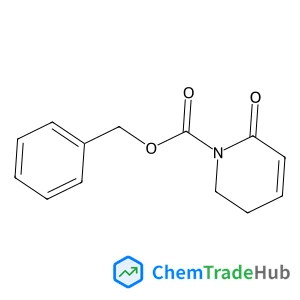
Benzyl 6-oxo-3,6-dihydro-1(2H)-pyridinecarboxylate
CAS Number:
725746-35-0
Molecular Formula:
C13H13NO3

![N-{[(2-Methyl-2-propanyl)oxy]carbonyl}-L-methionylglycine structure](https://static.chemtradehub.com/structs/234/23446-03-9-e1e5.webp "N-{[(2-Methyl-2-propanyl)oxy]carbonyl}-L-methionylglycine structure")
N-{[(2-Methyl-2-propanyl)oxy]carbonyl}-L-methionylglycine
CAS Number:
23446-03-9
Molecular Formula:
C12H22N2O5S
Recommended Suppliers





Disclaimer
This page provides academic journal information for reference and research purposes only. We are not affiliated with any journal publishers and do not handle publication submissions. For publication-related inquiries, please contact the respective journal publishers directly.
If you notice any inaccuracies in the information displayed, please contact us at support@chemtradehub.com. We will promptly review and address your concerns.