












Theoretical insight into the roles of cocatalysts in the Ni–NiO/β-Ga2O3 photocatalyst for overall water splitting
Literature Information
Publication Date
2015-04-10
DOI
10.1039/C5TA02193F
Impact Factor
12.732
Authors
Ionut Tranca, Xin Zhou, Can Li
View Original
Abstract
The formation and stability of Nin and (NiO)n (n = 1–4) clusters on the β-Ga2O3 surface have been studied by means of first-principles density functional theory calculations. It is found that the optimum interaction of the Nin and (NiO)n clusters with the surface requires different surface sites. This optimizes the formation of interfacial bonds between the atoms from clusters and the coordinatively unsaturated atoms from the surface. The stability of the adsorbed Ni clusters increases with the number of Ni atoms. In a Nin/Ga2O3 system, as the Ga unoccupied states overlap with the unoccupied Ni state, the excited electrons transferred from Ga to Ni participate in the proton reduction reaction. Our calculations show that (NiO)n clusters strongly adsorb on the Ga2O3 surface due to the negative adsorption energies within −1.9 eV to −3.7 eV. For (NiO)n/Ga2O3, occupied states from the (NiO)n cluster may accept the holes from O atoms in the Ga2O3 surface to take part in the photocatalytic water oxidation reaction.
Related Literature
Characterization of the mechanical properties of van der Waals heterostructures of stanene adsorbed on graphene, hexagonal boron–nitride and silicon carbide
Md. Habibur Rahman, Emdadul Haque Chowdhury, Didarul Ahasan Redwan, Shailee Mitra, Sungwook Hong
2021-02-25
Paper
DOI: 10.1039/D0CP06426B
Wetting of nanopores probed with pressure
Sanjin Marion, Michal Macha, Sebastian J. Davis, Andrey Chernev, Aleksandra Radenovic
2021-02-23
Paper
DOI: 10.1039/D1CP00253H
Sign inversion of magnetic circularly polarized luminescence in Iridium(iii) complexes bearing achiral ligands
Kana Matsudaira, Atsushi Izumoto, Yuki Mimura, Yoshiro Kondo, Satoko Suzuki, Shigeyuki Yagi, Michiya Fujiki, Yoshitane Imai
2021-02-02
Paper
DOI: 10.1039/D0CP05775D
Polaron-formation revealed by transient XUV imaginary refractive index changes in different iron compounds
Wenfan Chen
2021-02-10
Communication
DOI: 10.1039/D1CP00103E
Improvement of NOx uptake/release over Pd/Beta by propylene: shielding effect of intermediates on adsorbed NOx species
Chao Liu, Jun Wang, Zexiang Chen, Jianqiang Wang
2021-02-06
Paper
DOI: 10.1039/D0CP06075E
Insights into the hydrogen bond network topology of phosphoric acid and water systems
Austėja Mikalčiūtė
2021-02-09
Paper
DOI: 10.1039/D0CP05126H
An analysis of electrophilic aromatic substitution: a “complex approach”
Nikola Stamenković, Nataša Poklar Ulrih, Janez Cerkovnik
2021-01-07
Perspective
DOI: 10.1039/D0CP05245K
First-principles investigation of oxygen interaction with hydrogen/helium/vacancy irradiation defects in Ti3AlC2
Yinlong Wang, Xiaolu Zhu, Liang Huang
2021-02-05
Paper
DOI: 10.1039/D0CP06462A
Site-by-site tracking of signal transduction in an azidophenylalanine-labeled bacteriophytochrome with step-scan FTIR spectroscopy
Moona Kurttila, Brigitte Stucki-Buchli, Jessica Rumfeldt, Lea Schroeder, Heikki Häkkänen, Alli Liukkonen, Heikki Takala, Tilman Kottke, Janne A. Ihalainen
2021-02-24
Paper
DOI: 10.1039/D0CP06553F
You might also like
Compound Q&A
What is the market or research trend for N-(4-Methoxybenzyl)-2-pyridinamine (CAS: 52818-63-0)?
N-(4-Methoxybenzyl)-2-pyridinamine (CAS: 52818-63-0) is increasingly being used ...
52818-63-0N-(4-Methoxybenzyl)-...
Compound Q&A
What precautions should be taken when handling Ethyl 4-(2-chlorophenyl)-1,3-thiazole-2-carboxylate (CAS: 1050507-06-6)?
When handling Ethyl 4-(2-chlorophenyl)-1,3-thiazole-2-carboxylate, appropriate p...
1050507-06-6Ethyl 4-(2-chlorophe...
Compound Q&A
What regulatory guidelines apply to diethyldiselane (CAS: 628-39-7)?
Diethyldiselane (CAS: 628-39-7) is classified under the Globally Harmonized Syst...
628-39-7Diethyldiselane
Compound Q&A
What is the market or research trend for oxocopper (CAS: 12053-18-8)?
The market for oxocopper (CAS: 12053-18-8) is primarily driven by its use in cat...
12053-18-8oxocopper; oxo-(oxoc...
Compound Q&A
What is the market or research trend for 5-{[(2-Methyl-2-propanyl)oxy]carbonyl}-5-azaspiro[2.4]heptane-7-carboxylic acid?
The market for 5-{[(2-Methyl-2-propanyl)oxy]carbonyl}-5-azaspiro[2.4]heptane-7-c...
1268519-54-55-{[(2-Methyl-2-prop...
Compound Q&A
What is 2-(1-Pyrrolidinyl)-4-pyridinamine (CAS: 35981-63-6)?
2-(1-Pyrrolidinyl)-4-pyridinamine is a chemical compound with the CAS number 359...
35981-63-62-(1-Pyrrolidinyl)-4...
Compound Q&A
What are the physical and chemical properties of 2-(3-Pyridinyl)-1-azabicyclo[2.2.2]octane (CAS: 91556-75-1)?
2-(3-Pyridinyl)-1-azabicyclo[2.2.2]octane (CAS: 91556-75-1) is a crystalline sol...
91556-75-12-(3-Pyridinyl)-1-az...
Compound Q&A
How is (S)-Alpha-allyl-proline hydrochloride (CAS: 129704-91-2) typically synthesized?
(S)-Alpha-allyl-proline hydrochloride is usually synthesized via a Wittig reacti...
129704-91-2(S)-Alpha-allyl-prol...
Compound Q&A
What is 3-Methyl-1,2-oxazole-5-carboxylic acid (CAS: 4857-42-5)?
3-Methyl-1,2-oxazole-5-carboxylic acid (CAS: 4857-42-5) is an organic compound w...
4857-42-53-Methyl-1,2-oxazole...
Compound Q&A
How is Lys-SMCC-DM1 (CAS: 1281816-04-3) typically synthesized?
Lys-SMCC-DM1 is synthesized via a multi-step process involving the coupling of S...
1281816-04-3Lys-SMCC-DM1
Source Journal
Journal of Materials Chemistry A
CiteScore:
19.5
Self-citation Rate:
4.7%
Articles per Year:
2211
Journal of Materials Chemistry A, B & C cover high quality studies across all fields of materials chemistry. The journals focus on those theoretical or experimental studies that report new understanding, applications, properties and synthesis of materials. The journals have a strong history of publishing quality reports of interest to interdisciplinary communities and providing an efficient and rigorous service through peer review and publication. The journals are led by an international team of Editors-in-Chief and Associate Editors who are all active researchers in their fields. Journal of Materials Chemistry A, B & C are separated by the intended application of the material studied. Broadly, applications in energy and sustainability are of interest to Journal of Materials Chemistry A, applications in biology and medicine are of interest to Journal of Materials Chemistry B, and applications in optical, magnetic and electronic devices are of interest to Journal of Materials Chemistry C. More than one Journal of Materials Chemistry journal may be suitable for certain fields and researchers are encouraged to submit their paper to the journal that they feel best fits for their particular article. Example topic areas within the scope of Journal of Materials Chemistry A are listed below. This list is neither exhaustive nor exclusive. Artificial photosynthesis Batteries Carbon dioxide conversion Catalysis Fuel cells Gas capture/separation/storage Green/sustainable materials Hydrogen generation Hydrogen storage Photocatalysis Photovoltaics Self-cleaning materials Self-healing materials Sensors Supercapacitors Thermoelectrics Water splitting Water treatment
Recommended Compounds
![N-{[(2-Methyl-2-propanyl)oxy]carbonyl}-L-methionylglycine structure](https://static.chemtradehub.com/structs/234/23446-03-9-e1e5.webp "N-{[(2-Methyl-2-propanyl)oxy]carbonyl}-L-methionylglycine structure")
N-{[(2-Methyl-2-propanyl)oxy]carbonyl}-L-methionylglycine
CAS Number:
23446-03-9
Molecular Formula:
C12H22N2O5S
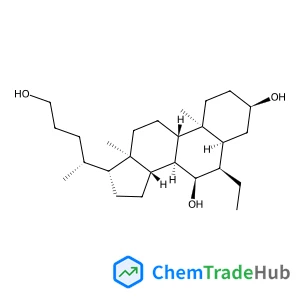
(3alpha,5beta,6alpha,7alpha)-6-Ethylcholane-3,7,24-triol
CAS Number:
1537866-49-1
Molecular Formula:
C26H46O3
Recommended Suppliers






Disclaimer
This page provides academic journal information for reference and research purposes only. We are not affiliated with any journal publishers and do not handle publication submissions. For publication-related inquiries, please contact the respective journal publishers directly.
If you notice any inaccuracies in the information displayed, please contact us at support@chemtradehub.com. We will promptly review and address your concerns.