













First-principles investigation of oxygen interaction with hydrogen/helium/vacancy irradiation defects in Ti3AlC2
Literature Information
Publication Date
2021-02-05
DOI
10.1039/D0CP06462A
Impact Factor
3.676
Authors
Yinlong Wang, Xiaolu Zhu, Liang Huang
View Original
Abstract
First-principles calculations have been performed to investigate the interaction between solute impurity O and H/He/vacancy irradiation defects in Ti3AlC2. The formation energy and occupation of O atoms within different defects as well as the trapping progress of O/H clusters are discussed. It is found that the O atom preferentially occupies the hexahedral interstitial site (Ihex-1) in bulk Ti3AlC2, whereas it prefers to occupy the neighbouring tetrahedral interstitial site (Itetr-2) within pre-exisiting Al monovacancy (VAl), Al divacancy (2VAl–Al) and the 2VAl–C divacancy composed of Al and C vacancies. The appearance of C vacancy could greatly reduce the oxygen formation energy and make an O atom more inclined to occupy the center of C vacancy. Vacancy could capture more O atoms than H/He atoms, where VAl and 2VAl–Al could hold up to fifteen and eighteen O atoms, respectively. Meanwhile, the O could also promote the formation of Al vacancy. On the other hand, O atoms tend to occupy the interstitial sites near the Al atomic layer and have attraction to Al atoms, which is likely to enable the O atoms to combine with the Al atoms to form a Al2O3 protective layer, thus effectively inhibiting further oxidation inside the Ti3AlC2. In addition, the H–O exhibits repulsion interaction, but strong attraction occurs in the He–O interaction. Therefore, the O atom has an inhibitory effect on the formation of the H cluster, while it could bind more He atoms to form a large number of He bubbles. Besides, the O impurity greatly reduces the trapping ability of vacancy to H atoms, and O and He have a synergistic interaction for inhibiting the aggregation of H clusters. The present results are expected to provide a new insight into the behaviour of Ti3AlC2 under irradiation and oxidation conditions so that structural materials could be better designed.
Recommended Journals
Related Literature
A C3-symmetric molecular scaffold for the construction of large receptors
Gebhard Haberhauer, Thomas Oeser, Frank Rominger
2004-08-06
Communication
DOI: 10.1039/B406335J
Highlights from the 39th ESF/EUCHEM Conference on Stereochemistry, Bürgenstock, Switzerland, April 2004
David R. Spring
2004-09-28
Conference Report
DOI: 10.1039/B409495F
A metallo-capped polyrotaxane containing calix[4]arenes and cyclodextrins and its highly selective binding for Ca2+
Yu Liu, Hao Wang, Heng-Yi Zhang, Peng Liang
2004-09-06
Communication
DOI: 10.1039/B409356A
Novel Pt/CeO2/C catalysts for electrooxidation of alcohols in alkaline media
Changwei Xu, Pei Kang Shen
2004-08-25
Communication
DOI: 10.1039/B408589B
Low-temperature synthetic method for size-controlled CdSe nanocrystals: utilization of boron selenide
Nora Iancu, Renu Sharma, Dong-Kyun Seo
2004-09-01
Communication
DOI: 10.1039/B408702J
Synthesis of core–shell polyurethane–ureananoparticles containing 4,4′-methylenedi-p-phenyl diisocyanate and isophorone diisocyanate by self-assembled neutralization emulsification
In Woo Cheong, Jung Hyun Kim
2004-09-14
Communication
DOI: 10.1039/B409755F
Intramolecular nucleophilic carbonyl trapping of α-ketenyl radicals by an amino group
Mami Tojino, Yoshitaka Uenoyama, Takahide Fukuyama, Ilhyong Ryu
2004-09-14
Communication
DOI: 10.1039/B408746A
Synthesis and electropolymerization of novel oligothiophene-functionalized perylene bisimides
Chang-Cheng You, Chantu R. Saha-Möller, Frank Würthner
2004-08-06
Communication
DOI: 10.1039/B407551J
Synthesis and in vitro photodynamic activity of new hexadeca-carboxy phthalocyanines
Chi-Fung Choi, Po-Ting Tsang, Jian-Dong Huang, Elaine Y. M. Chan, Wing-Hung Ko, Wing-Ping Fong, Dennis K. P. Ng
2004-08-25
Communication
DOI: 10.1039/B405868B
The surprisingly beneficial effect of soft donors on the performance of early transition metal olefin polymerisation catalysts
Daniel C. H. Oakes, Brian S. Kimberley, Vernon C. Gibson, David J. Jones, Andrew J. P. White, David J. Williams
2004-08-23
Communication
DOI: 10.1039/B409870F
You might also like
Compound Q&A
How should waste containing 6-Chloro-5-(2'-hydroxy-3'-methoxy-4-biphenylyl)-3-(3-methoxyphenyl)-1H-pyrrolo[3,2-d]pyrimidine-2,4(3H,5H)-dione (CAS: 1346607-05-3) be handled?
Waste containing 6-Chloro-5-(2'-hydroxy-3'-methoxy-4-biphenylyl)-3-(3-methoxyphe...
1346607-05-36-Chloro-5-(2'-hydro...
Compound Q&A
What are the main uses of (3alpha,5alpha)-3-Hydroxypregnane-11,20-dione (CAS: 23930-19-0)?
(3alpha,5alpha)-3-Hydroxypregnane-11,20-dione is primarily used in the pharmaceu...
23930-19-0(3alpha,5alpha)-3-Hy...
Compound Q&A
What is the market or research trend for 4-Amino-6-chloro-2-pyridinecarboxylic acid (CAS: 546141-56-4)?
The market for 4-Amino-6-chloro-2-pyridinecarboxylic acid (CAS: 546141-56-4) is ...
546141-56-44-Amino-6-chloro-2-p...
Compound Q&A
Are there alternatives to (2-Benzoylethyl)trimethylammonium chloride (CAS: 24472-88-6) in synthesis?
Alternatives to (2-Benzoylethyl)trimethylammonium chloride (CAS: 24472-88-6) in ...
24472-88-6(2-Benzoylethyl)trim...
Compound Q&A
Is N-[4-Nitro-3-(trifluoromethyl)phenyl]acetamide (CAS: 393-12-4) safe?
N-[4-Nitro-3-(trifluoromethyl)phenyl]acetamide (CAS: 393-12-4) is generally safe...
393-12-4N-[4-Nitro-3-(triflu...
Compound Q&A
Are there alternatives to [(4R,5R,6S)-5-hydroxy-10-imino-3,7-dioxa-1,9-diazatricyclo[6.4.0.02,6]dodeca-8,11-dien-4-yl]methyl dihydrogen phosphate (CAS: 39679-56-6) in synthesis?
Alternative reagents such as other phosphates or similar functional groups can b...
39679-56-6[(4R,5R,6S)-5-hydrox...
Compound Q&A
Are there alternatives to N,N'-Bis(3-aminopropyl)-1,3-propanediamine (CAS: 4605-14-5) in synthesis?
There are alternatives to N,N'-Bis(3-aminopropyl)-1,3-propanediamine (CAS: 4605-...
4605-14-5N,N'-Bis(3-aminoprop...
Compound Q&A
What precautions should be taken when handling Aluminium trihexadecanoate (CAS: 555-35-1)?
When handling Aluminium trihexadecanoate, it is important to use appropriate per...
555-35-1Aluminium trihexadec...
Compound Q&A
What is (1,1-Dioxido-3-oxo-1,2-benzothiazol-2(3H)-yl)acetic acid (CAS: 52188-11-1)?
(1,1-Dioxido-3-oxo-1,2-benzothiazol-2(3H)-yl)acetic acid is a chemical compound ...
52188-11-1(1,1-Dioxido-3-oxo-1...
Compound Q&A
Are there alternatives to 5,5-dimethyloxolan-2-one (CAS: 3123-97-5) in synthesis?
Several alternatives to 5,5-dimethyloxolan-2-one (CAS: 3123-97-5) can be used in...
3123-97-55,5-dimethyloxolan-2...
Source Journal
Physical Chemistry Chemical Physics

CiteScore:
5.5
Self-citation Rate:
10.3%
Articles per Year:
3036
Physical Chemistry Chemical Physics (PCCP) is an international journal co-owned by 19 physical chemistry and physics societies from around the world. This journal publishes original, cutting-edge research in physical chemistry, chemical physics and biophysical chemistry. To be suitable for publication in PCCP, articles must include significant innovation and/or insight into physical chemistry; this is the most important criterion that reviewers and Editors will judge against when evaluating submissions. The journal has a broad scope and welcomes contributions spanning experiment, theory, computation and data science. Topical coverage includes spectroscopy, dynamics, kinetics, statistical mechanics, thermodynamics, electrochemistry, catalysis, surface science, quantum mechanics, quantum computing and machine learning. Interdisciplinary research areas such as polymers and soft matter, materials, nanoscience, energy, surfaces/interfaces, and biophysical chemistry are welcomed if they demonstrate significant innovation and/or insight into physical chemistry. Joined experimental/theoretical studies are particularly appreciated when complementary and based on up-to-date approaches.
Recommended Compounds
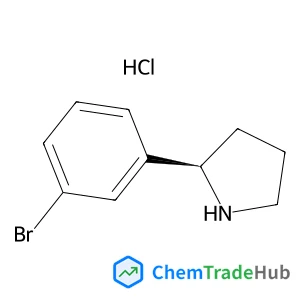
(2R)-2-(3-Bromophenyl)pyrrolidine hydrochloride (1:1)
CAS Number:
1391550-13-2
Molecular Formula:
C10H13BrClN
![1-{3-[4-Amino-3-(4-phenoxyphenyl)-1H-pyrazolo[3,4-d]pyrimidin-1-yl]-1-piperidinyl}-2,3-dihydroxy-1-propanone structure](https://static.chemtradehub.com/structs/122/1226872-27-0-e037.webp "1-{3-[4-Amino-3-(4-phenoxyphenyl)-1H-pyrazolo[3,4-d]pyrimidin-1-yl]-1-piperidinyl}-2,3-dihydroxy-1-propanone structure")
1-{3-[4-Amino-3-(4-phenoxyphenyl)-1H-pyrazolo[3,4-d]pyrimidin-1-yl]-1-piperidinyl}-2,3-dihydroxy-1-propanone
CAS Number:
1226872-27-0
Molecular Formula:
C25H26N6O4
Recommended Suppliers






Disclaimer
This page provides academic journal information for reference and research purposes only. We are not affiliated with any journal publishers and do not handle publication submissions. For publication-related inquiries, please contact the respective journal publishers directly.
If you notice any inaccuracies in the information displayed, please contact us at support@chemtradehub.com. We will promptly review and address your concerns.