












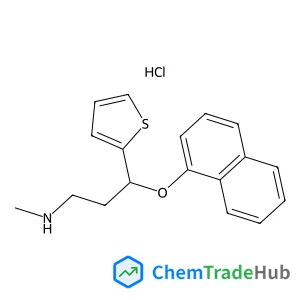
N-Methyl-3-(1-naphthyloxy)-3-(2-thienyl)-1-propanamine hydrochloride (1:1)
CAS Number:
1188266-11-6
Molecular Formula:
C18H20ClNOS
Austėja Mikalčiūtė
Phosphoric acid and its mixtures with water are some of the best proton conducting materials known to science. Although the proton conductivity in pure phosphoric acid decreases upon external doping with excess H+ or OH−, the addition of water improves it substantially. A number of experimental and theoretical studies indicate that these systems form a very special case of hydrogen bond networks which not only facilitate fast proton transport but also show a number of other interesting properties such as glass forming ability. In this work, we present the molecular dynamics simulation results of the H3PO4–H2O system over the entire concentration range. The hydrogen bond networks were analyzed in terms of conventional microscopic as well as topological properties based on graph and network theory. The results show that the hydrogen bond network of H3PO4 is fundamentally different from that of H2O. On average, each phosphoric acid molecule tends to form more and stronger hydrogen bonds than water which leads to a much more connected and clustered network showing small-world properties which are absent in pure water. Moreover, these hydrogen bond network properties persist in the H3PO4–H2O mixtures as well, even at relatively high water contents. Finally, many of the physical properties such as molecular diffusion coefficients seem to be also intimately related to the network topological properties and follow similar trends with respect to system content. These results strongly indicate that many important properties such as proton transport in phosphoric acid and its aqueous systems are fundamentally related to their hydrogen bond network topology and might hold the key for their ultimate molecular understanding.
Francesco Fringuelli, Ferdinando Pizzo, Carla Vittoriani, Luigi Vaccaro
DOI: 10.1039/B409808K
Kazumasa Funabiki, Wataru Hashimoto, Masaki Matsui
DOI: 10.1039/B408226E
Anthony R. Chianese, Brian M. Zeglis, Robert H. Crabtree
DOI: 10.1039/B409672J
Prasad V. Ganesan, Cameron J. Kepert
DOI: 10.1039/B409543J
Yu Liu, Hao Wang, Heng-Yi Zhang, Peng Liang
DOI: 10.1039/B409356A
Gebhard Haberhauer, Thomas Oeser, Frank Rominger
DOI: 10.1039/B406335J
Fuk Yee Kwong, Kin Shing Chan, Chi Hung Yeung, Albert S. C. Chan
DOI: 10.1039/B407661C
Yu-Sheng Chen, Tim Graber
DOI: 10.1039/B409463H
Pier Giorgio Cozzi, Silvia Alesi
DOI: 10.1039/B408654F
José Barluenga, María Marco-Arias, Francisco González-Bobes, Alfredo Ballesteros, José M. González
DOI: 10.1039/B411227J
Waste containing 6-Chloro-5-(2'-hydroxy-3'-methoxy-4-biphenylyl)-3-(3-methoxyphe...
(3alpha,5alpha)-3-Hydroxypregnane-11,20-dione is primarily used in the pharmaceu...
The market for 4-Amino-6-chloro-2-pyridinecarboxylic acid (CAS: 546141-56-4) is ...
Alternatives to (2-Benzoylethyl)trimethylammonium chloride (CAS: 24472-88-6) in ...
N-[4-Nitro-3-(trifluoromethyl)phenyl]acetamide (CAS: 393-12-4) is generally safe...
Alternative reagents such as other phosphates or similar functional groups can b...
There are alternatives to N,N'-Bis(3-aminopropyl)-1,3-propanediamine (CAS: 4605-...
When handling Aluminium trihexadecanoate, it is important to use appropriate per...
(1,1-Dioxido-3-oxo-1,2-benzothiazol-2(3H)-yl)acetic acid is a chemical compound ...
Several alternatives to 5,5-dimethyloxolan-2-one (CAS: 3123-97-5) can be used in...

Physical Chemistry Chemical Physics (PCCP) is an international journal co-owned by 19 physical chemistry and physics societies from around the world. This journal publishes original, cutting-edge research in physical chemistry, chemical physics and biophysical chemistry. To be suitable for publication in PCCP, articles must include significant innovation and/or insight into physical chemistry; this is the most important criterion that reviewers and Editors will judge against when evaluating submissions. The journal has a broad scope and welcomes contributions spanning experiment, theory, computation and data science. Topical coverage includes spectroscopy, dynamics, kinetics, statistical mechanics, thermodynamics, electrochemistry, catalysis, surface science, quantum mechanics, quantum computing and machine learning. Interdisciplinary research areas such as polymers and soft matter, materials, nanoscience, energy, surfaces/interfaces, and biophysical chemistry are welcomed if they demonstrate significant innovation and/or insight into physical chemistry. Joined experimental/theoretical studies are particularly appreciated when complementary and based on up-to-date approaches.
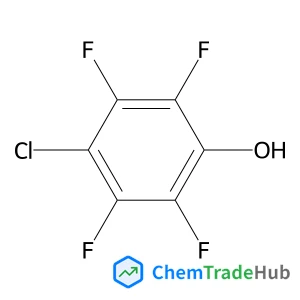
![1-{3-[4-Amino-3-(4-phenoxyphenyl)-1H-pyrazolo[3,4-d]pyrimidin-1-yl]-1-piperidinyl}-2,3-dihydroxy-1-propanone structure](https://static.chemtradehub.com/structs/122/1226872-27-0-e037.webp "1-{3-[4-Amino-3-(4-phenoxyphenyl)-1H-pyrazolo[3,4-d]pyrimidin-1-yl]-1-piperidinyl}-2,3-dihydroxy-1-propanone structure")
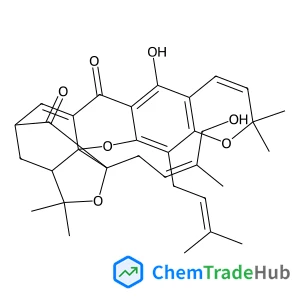
![N-{15-[(2,5-Dioxo-1-pyrrolidinyl)oxy]-15-oxo-3,6,9,12-tetraoxapentadec-1-yl}-2-(2-propyn-1-yloxy)acetamide structure](https://static.chemtradehub.com/structs/210/2101206-92-0-2eb5.webp "N-{15-[(2,5-Dioxo-1-pyrrolidinyl)oxy]-15-oxo-3,6,9,12-tetraoxapentadec-1-yl}-2-(2-propyn-1-yloxy)acetamide structure")





