


Wetting of nanopores probed with pressure
Literature Information
Publication Date
2021-02-23
DOI
10.1039/D1CP00253H
Impact Factor
3.676
Authors
Sanjin Marion, Michal Macha, Sebastian J. Davis, Andrey Chernev, Aleksandra Radenovic
View Original
Abstract
Nanopores are both a tool to study single-molecule biophysics and nanoscale ion transport, but also a promising material for desalination or osmotic power generation. Understanding the physics underlying ion transport through nano-sized pores allows better design of porous membrane materials. Material surfaces can present hydrophobicity, a property which can make them prone to formation of surface nanobubbles. Nanobubbles can influence the electrical transport properties of such devices. We demonstrate an approach which uses hydraulic pressure to probe the electrical transport properties of solid state nanopores. We show how pressure can be used to wet pores, and how it allows control over bubbles or other contaminants in the nanometer scale range normally unachievable using only an electrical driving force. Molybdenum disulfide is then used as a typical example of a 2D material on which we demonstrate wetting and bubble induced nonlinear and linear conductance in the regimes typically used with these experiments. We show that by using pressure one can identify and evade wetting artifacts.
Recommended Journals

Kinetics and Catalysis

Proceedings of the National Academy of Sciences of the United States of America

Planta Medica

Journal of Heterocyclic Chemistry

Journal of Medicinal Chemistry

European Journal of Wood and Wood Products

Molecular Pharmacology

Helvetica Chimica Acta

Journal of Physics and Chemistry of Solids

Nature
Related Literature
A very large Rh–Rh bond shortening on excitation of the [Rh2(1,8-diisocyano-p-menthane)4]2+ ion by time-resolved synchrotron X-ray diffraction
Yu-Sheng Chen, Tim Graber
2004-08-19
Communication
DOI: 10.1039/B409463H
Molecular tectonics: design of luminescent H-bonded molecular networks
Sylvie Ferlay, Mir Wais Hosseini, Véronique Bulach, Jean-Marc Planeix
2004-09-07
Communication
DOI: 10.1039/B410459P
Highlights from the 39th ESF/EUCHEM Conference on Stereochemistry, Bürgenstock, Switzerland, April 2004
David R. Spring
2004-09-28
Conference Report
DOI: 10.1039/B409495F
Reversible folding/unfolding of linear molecular strands into helical channel-like complexes upon proton-modulated binding and release of metal ions
Adrian-Mihail Stadler, Nathalie Kyritsakas, Jean-Marie Lehn
2004-08-11
Communication
DOI: 10.1039/B407168A
A facile synthesis of single-crystal mullite nanobelts
Chuanbao Cao, Xu Xiang, Hesun Zhu
2004-09-24
Communication
DOI: 10.1039/B409087J
Self-oriented pseudoisocyanine J-aggregates in solution
Ken Takazawa, Yasutaka Kitahama, Yasuyuki Kimura
2004-09-07
Communication
DOI: 10.1039/B409690H
En route to coordination chemistry under confined conditions in a porous capsule: Pr3+ with different coordination shells
Achim Müller, Yunshan Zhou, Lijuan Zhang, Hartmut Bögge, Marc Schmidtmann, Martin Dressel, Joris van Slageren
2004-08-13
Communication
DOI: 10.1039/B407753A
Estimates of internal energies of vaporisation of some room temperature ionic liquids
Konrad Swiderski, Andrew McLean, Charles M. Gordon, D. Huw Vaughan
2004-09-07
Communication
DOI: 10.1039/B408334B
Strongly red-fluorescent novel donor–π-bridge–acceptor–π-bridge–donor (D–π–A–π–D) type 2,1,3-benzothiadiazoles with enhanced two-photon absorption cross-sections
Shin-ichiro Kato, Taisuke Matsumoto, Tsutomu Ishi-i, Thies Thiemann, Motoyuki Shigeiwa, Hideki Gorohmaru, Shuichi Maeda, Yoshiro Yamashita, Shuntaro Mataka
2004-09-07
Communication
DOI: 10.1039/B410016F
Intramolecular nucleophilic carbonyl trapping of α-ketenyl radicals by an amino group
Mami Tojino, Yoshitaka Uenoyama, Takahide Fukuyama, Ilhyong Ryu
2004-09-14
Communication
DOI: 10.1039/B408746A
You might also like
Compound Q&A
How should waste containing 6-Chloro-5-(2'-hydroxy-3'-methoxy-4-biphenylyl)-3-(3-methoxyphenyl)-1H-pyrrolo[3,2-d]pyrimidine-2,4(3H,5H)-dione (CAS: 1346607-05-3) be handled?
Waste containing 6-Chloro-5-(2'-hydroxy-3'-methoxy-4-biphenylyl)-3-(3-methoxyphe...
1346607-05-36-Chloro-5-(2'-hydro...
Compound Q&A
What are the main uses of (3alpha,5alpha)-3-Hydroxypregnane-11,20-dione (CAS: 23930-19-0)?
(3alpha,5alpha)-3-Hydroxypregnane-11,20-dione is primarily used in the pharmaceu...
23930-19-0(3alpha,5alpha)-3-Hy...
Compound Q&A
What is the market or research trend for 4-Amino-6-chloro-2-pyridinecarboxylic acid (CAS: 546141-56-4)?
The market for 4-Amino-6-chloro-2-pyridinecarboxylic acid (CAS: 546141-56-4) is ...
546141-56-44-Amino-6-chloro-2-p...
Compound Q&A
Are there alternatives to (2-Benzoylethyl)trimethylammonium chloride (CAS: 24472-88-6) in synthesis?
Alternatives to (2-Benzoylethyl)trimethylammonium chloride (CAS: 24472-88-6) in ...
24472-88-6(2-Benzoylethyl)trim...
Compound Q&A
Is N-[4-Nitro-3-(trifluoromethyl)phenyl]acetamide (CAS: 393-12-4) safe?
N-[4-Nitro-3-(trifluoromethyl)phenyl]acetamide (CAS: 393-12-4) is generally safe...
393-12-4N-[4-Nitro-3-(triflu...
Compound Q&A
Are there alternatives to [(4R,5R,6S)-5-hydroxy-10-imino-3,7-dioxa-1,9-diazatricyclo[6.4.0.02,6]dodeca-8,11-dien-4-yl]methyl dihydrogen phosphate (CAS: 39679-56-6) in synthesis?
Alternative reagents such as other phosphates or similar functional groups can b...
39679-56-6[(4R,5R,6S)-5-hydrox...
Compound Q&A
Are there alternatives to N,N'-Bis(3-aminopropyl)-1,3-propanediamine (CAS: 4605-14-5) in synthesis?
There are alternatives to N,N'-Bis(3-aminopropyl)-1,3-propanediamine (CAS: 4605-...
4605-14-5N,N'-Bis(3-aminoprop...
Compound Q&A
What precautions should be taken when handling Aluminium trihexadecanoate (CAS: 555-35-1)?
When handling Aluminium trihexadecanoate, it is important to use appropriate per...
555-35-1Aluminium trihexadec...
Compound Q&A
What is (1,1-Dioxido-3-oxo-1,2-benzothiazol-2(3H)-yl)acetic acid (CAS: 52188-11-1)?
(1,1-Dioxido-3-oxo-1,2-benzothiazol-2(3H)-yl)acetic acid is a chemical compound ...
52188-11-1(1,1-Dioxido-3-oxo-1...
Compound Q&A
Are there alternatives to 5,5-dimethyloxolan-2-one (CAS: 3123-97-5) in synthesis?
Several alternatives to 5,5-dimethyloxolan-2-one (CAS: 3123-97-5) can be used in...
3123-97-55,5-dimethyloxolan-2...
Source Journal
Physical Chemistry Chemical Physics

CiteScore:
5.5
Self-citation Rate:
10.3%
Articles per Year:
3036
Physical Chemistry Chemical Physics (PCCP) is an international journal co-owned by 19 physical chemistry and physics societies from around the world. This journal publishes original, cutting-edge research in physical chemistry, chemical physics and biophysical chemistry. To be suitable for publication in PCCP, articles must include significant innovation and/or insight into physical chemistry; this is the most important criterion that reviewers and Editors will judge against when evaluating submissions. The journal has a broad scope and welcomes contributions spanning experiment, theory, computation and data science. Topical coverage includes spectroscopy, dynamics, kinetics, statistical mechanics, thermodynamics, electrochemistry, catalysis, surface science, quantum mechanics, quantum computing and machine learning. Interdisciplinary research areas such as polymers and soft matter, materials, nanoscience, energy, surfaces/interfaces, and biophysical chemistry are welcomed if they demonstrate significant innovation and/or insight into physical chemistry. Joined experimental/theoretical studies are particularly appreciated when complementary and based on up-to-date approaches.
Recommended Compounds
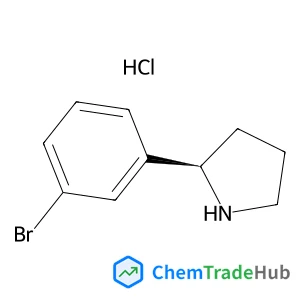
(2R)-2-(3-Bromophenyl)pyrrolidine hydrochloride (1:1)
CAS Number:
1391550-13-2
Molecular Formula:
C10H13BrClN
![1-[6-(1H-Imidazol-1-yl)-3-pyridinyl]methanamine structure](https://static.chemtradehub.com/structs/914/914637-08-4-8825.webp "1-[6-(1H-Imidazol-1-yl)-3-pyridinyl]methanamine structure")
Recommended Suppliers






Disclaimer
This page provides academic journal information for reference and research purposes only. We are not affiliated with any journal publishers and do not handle publication submissions. For publication-related inquiries, please contact the respective journal publishers directly.
If you notice any inaccuracies in the information displayed, please contact us at support@chemtradehub.com. We will promptly review and address your concerns.