












Inside back cover
Literature Information
Publication Date
2021-03-18
DOI
10.1039/D1CP90053F
Impact Factor
3.676
Authors
View Original
Abstract
A graphical abstract is available for this content
Related Literature
Electronic and vibrational properties of a MOF-5 metal–organic framework: ZnO quantum dot behaviour
S. Bordiga, C. Lamberti, G. Ricchiardi, L. Regli, F. Bonino, A. Damin, K.-P. Lillerud, M. Bjorgen, A. Zecchina
2004-09-01
Communication
DOI: 10.1039/B407246D
An unprecedented intramolecular coupling of o-carboranyl and cyclopentadienyl. Synthesis and structural characterization of a ruthenium complex containing a novel doubly-bridged cyclopentadienyl-carboranyl ligand
Yi Sun, Hoi-Shan Chan, Pierre H. Dixneuf, Zuowei Xie
2004-09-30
Communication
DOI: 10.1039/B409772F
Synthesis of the ABCD and ABCDE ring systems of azaspiracid-1‡
Xiao-Ti Zhou, Rich G. Carter
2004-09-20
Communication
DOI: 10.1039/B410092A
A supramolecular approach to the selective detection of dopamine in the presence of ascorbate
Alex Fragoso, Eduardo Almirall, Roberto Cao, Luis Echegoyen, Raúl González-Jonte
2004-08-23
Communication
DOI: 10.1039/B407792J
En route to coordination chemistry under confined conditions in a porous capsule: Pr3+ with different coordination shells
Achim Müller, Yunshan Zhou, Lijuan Zhang, Hartmut Bögge, Marc Schmidtmann, Martin Dressel, Joris van Slageren
2004-08-13
Communication
DOI: 10.1039/B407753A
Design of a robust Ru(salen) complex: aziridination with improved turnover number using N-arylsulfonyl azides as precursors
Kazufumi Omura, Tatsuya Uchida, Ryo Irie, Tsutomu Katsuki
2004-08-13
Communication
DOI: 10.1039/B407693A
Liquid poly(ethylene glycol) and supercritical carbon dioxide as a biphasic solvent system for lipase-catalyzed esterification
Manfred T. Reetz, Wolfgang Wiesenhöfer
2004-10-18
Communication
DOI: 10.1039/B412049C
Photoinduced production of NAD(P)H from an activated fluorescein–DNA monolayer
Heinz-Bernhard Kraatz, Jeremy S. Lee
2004-08-10
Communication
DOI: 10.1039/B406689H
BINOL catalyzed enantioselective addition of titanium phenylacetylide to aromatic ketones
Pier Giorgio Cozzi, Silvia Alesi
2004-09-21
Communication
DOI: 10.1039/B408654F
Unsaturated 1,2-amino alcohols and ethers from aziridines and organolithiums
David M. Hodgson, Bogdan Štefane, Timothy J. Miles, Jason Witherington
2004-08-24
Communication
DOI: 10.1039/B409486G
You might also like
Compound Q&A
What is the market or research trend for N-(4-Methoxybenzyl)-2-pyridinamine (CAS: 52818-63-0)?
N-(4-Methoxybenzyl)-2-pyridinamine (CAS: 52818-63-0) is increasingly being used ...
52818-63-0N-(4-Methoxybenzyl)-...
Compound Q&A
What precautions should be taken when handling Ethyl 4-(2-chlorophenyl)-1,3-thiazole-2-carboxylate (CAS: 1050507-06-6)?
When handling Ethyl 4-(2-chlorophenyl)-1,3-thiazole-2-carboxylate, appropriate p...
1050507-06-6Ethyl 4-(2-chlorophe...
Compound Q&A
What regulatory guidelines apply to diethyldiselane (CAS: 628-39-7)?
Diethyldiselane (CAS: 628-39-7) is classified under the Globally Harmonized Syst...
628-39-7Diethyldiselane
Compound Q&A
What is the market or research trend for oxocopper (CAS: 12053-18-8)?
The market for oxocopper (CAS: 12053-18-8) is primarily driven by its use in cat...
12053-18-8oxocopper; oxo-(oxoc...
Compound Q&A
What is the market or research trend for 5-{[(2-Methyl-2-propanyl)oxy]carbonyl}-5-azaspiro[2.4]heptane-7-carboxylic acid?
The market for 5-{[(2-Methyl-2-propanyl)oxy]carbonyl}-5-azaspiro[2.4]heptane-7-c...
1268519-54-55-{[(2-Methyl-2-prop...
Compound Q&A
What is 2-(1-Pyrrolidinyl)-4-pyridinamine (CAS: 35981-63-6)?
2-(1-Pyrrolidinyl)-4-pyridinamine is a chemical compound with the CAS number 359...
35981-63-62-(1-Pyrrolidinyl)-4...
Compound Q&A
What are the physical and chemical properties of 2-(3-Pyridinyl)-1-azabicyclo[2.2.2]octane (CAS: 91556-75-1)?
2-(3-Pyridinyl)-1-azabicyclo[2.2.2]octane (CAS: 91556-75-1) is a crystalline sol...
91556-75-12-(3-Pyridinyl)-1-az...
Compound Q&A
How is (S)-Alpha-allyl-proline hydrochloride (CAS: 129704-91-2) typically synthesized?
(S)-Alpha-allyl-proline hydrochloride is usually synthesized via a Wittig reacti...
129704-91-2(S)-Alpha-allyl-prol...
Compound Q&A
What is 3-Methyl-1,2-oxazole-5-carboxylic acid (CAS: 4857-42-5)?
3-Methyl-1,2-oxazole-5-carboxylic acid (CAS: 4857-42-5) is an organic compound w...
4857-42-53-Methyl-1,2-oxazole...
Compound Q&A
How is Lys-SMCC-DM1 (CAS: 1281816-04-3) typically synthesized?
Lys-SMCC-DM1 is synthesized via a multi-step process involving the coupling of S...
1281816-04-3Lys-SMCC-DM1
Source Journal
Physical Chemistry Chemical Physics

CiteScore:
5.5
Self-citation Rate:
10.3%
Articles per Year:
3036
Physical Chemistry Chemical Physics (PCCP) is an international journal co-owned by 19 physical chemistry and physics societies from around the world. This journal publishes original, cutting-edge research in physical chemistry, chemical physics and biophysical chemistry. To be suitable for publication in PCCP, articles must include significant innovation and/or insight into physical chemistry; this is the most important criterion that reviewers and Editors will judge against when evaluating submissions. The journal has a broad scope and welcomes contributions spanning experiment, theory, computation and data science. Topical coverage includes spectroscopy, dynamics, kinetics, statistical mechanics, thermodynamics, electrochemistry, catalysis, surface science, quantum mechanics, quantum computing and machine learning. Interdisciplinary research areas such as polymers and soft matter, materials, nanoscience, energy, surfaces/interfaces, and biophysical chemistry are welcomed if they demonstrate significant innovation and/or insight into physical chemistry. Joined experimental/theoretical studies are particularly appreciated when complementary and based on up-to-date approaches.
Recommended Compounds
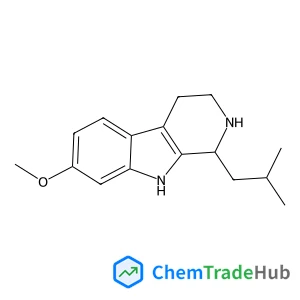
1-Isobutyl-7-methoxy-2,3,4,9-tetrahydro-1H-beta-carboline
CAS Number:
175975-76-5
Molecular Formula:
C16H22N2O
Recommended Suppliers






Disclaimer
This page provides academic journal information for reference and research purposes only. We are not affiliated with any journal publishers and do not handle publication submissions. For publication-related inquiries, please contact the respective journal publishers directly.
If you notice any inaccuracies in the information displayed, please contact us at support@chemtradehub.com. We will promptly review and address your concerns.