













Balancing stability and specific energy in Li-rich cathodes for lithium ion batteries: a case study of a novel Li–Mn–Ni–Co oxide
Literature Information
Publication Date
2015-04-24
DOI
10.1039/C5TA00929D
Impact Factor
12.732
Authors
Qi Li, Guangshe Li, Chaochao Fu, Dong Luo, Jianming Fan, Dongjiu Xie, Liping Li
View Original
Abstract
Lithium batteries for UPS, portable electronics and electrical vehicles rely on high-energy cathodes. Li-rich manganese-rich oxide (xLi2MnO3·(1 − x)LiMO2, M = transition metals) is one of the few materials that might meet such a requirement, but it suffers from poor energy retention due to serious voltage and/or capacity fade, which challenges its applications. Here we show that this challenge can be addressed by optimizing the interactions between the components Li2MnO3 and LiMO2 in the Li-rich oxide (i.e. stabilizing the layered structure through Li2MnO3 and controlling Li2MnO3 activation through LiMO2). To realize this synergistic effect, a novel Li2MnO3-stabilized Li1.080Mn0.503Ni0.387Co0.030O2 was designed and prepared using a hierarchical carbonate precursor obtained by a solvo/hydro-thermal method. This layered oxide is demonstrated to have a high working voltage of 3.9 V and large specific energy of 805 W h kg−1 at 29 °C as well as impressive energy retention of 92% over 100 cycles. Even when exposed to 55 °C, energy retention is still as high as 85% at 200 mA g−1. The attractive performance is most likely the consequence of the balanced stability and specific energy in the present material, which is promisingly applicable to other Li-rich oxide systems. This work sheds light on harnessing Li2MnO3 activation and furthermore efficient battery design simply through compositional tuning and temperature regulation.
Recommended Journals
Related Literature
First in-situSAXS studies of the mesostructuration of spherical silica and titania particles during spray-drying process
C. Boissiere, D. Grosso, H. Amenitsch, A. Gibaud, A. Coupé, N. Baccile, C. Sanchez
2003-10-14
Communication
DOI: 10.1039/B308694A
A catalytic and iterative route to β-substituted estersvia highly enantioselective conjugate addition of dimethylzinc to unsaturated malonates
Julia Schuppan, Adriaan J. Minnaard, Ben L. Feringa
2004-02-24
Communication
DOI: 10.1039/B315871C
Significant promotional effect of CCl4 on fullerene yield in the graphite arc-discharge reaction
Fei Gao, Su-Yuan Xie, Rong-Bin Huang, Lan-Sun Zheng
2003-09-24
Communication
DOI: 10.1039/B306921B
Free-standing mesoporous titania films with anatase nanocrystallites synthesized at 80 °C
2004-03-23
Communication
DOI: 10.1039/B313609D
Facilitation of addition–elimination reactions in pyrimidines and purines using trifluoroacetic acid in trifluoroethanol
Hayley J. Whitfield, Roger J. Griffin, Ian R. Hardcastle, Andrew Henderson, Jerome Meneyrol, Veronique Mesguiche, Kerry L. Sayle, Bernard T. Golding
2003-10-14
Communication
DOI: 10.1039/B308948G
Supported choline hydroxide (ionic liquid) as heterogeneous catalyst for aldol condensation reactions
Sònia Abelló, Francisco Medina, Xavier Rodríguez, Yolanda Cesteros, Pilar Salagre, Jesús E. Sueiras, Didier Tichit, Bernard Coq
2004-04-01
Communication
DOI: 10.1039/B401448K
Porphyrin ring contraction: a one-pot reaction leading to divalent corroles
Christophe Jeandon, Romain Ruppert, Henry J. Callot
2004-04-02
Communication
DOI: 10.1039/B400812J
An efficient method to perform milliliter-scale PCR utilizing highly controlled microwave thermocycling
Kristina Orrling, Peter Nilsson, Mats Gullberg, Mats Larhed
2004-03-08
Communication
DOI: 10.1039/B317049G
Total synthesis of (±)-acetoxyodontoschismenol using zirconium chemistry
Ian R. Baldwin, Richard J. Whitby
2003-10-11
Communication
DOI: 10.1039/B309848F
Extended X-ray absorption fine structure (EXAFS) characterisation of dilute palladium homogeneous catalysts
John Evans, Mark A. Newton, Thomas Neisius, Robert P. Tooze, Richard Oldman
2003-09-24
Communication
DOI: 10.1039/B307535D
You might also like
Compound Q&A
What is the market or research trend for N-(4-Methoxybenzyl)-2-pyridinamine (CAS: 52818-63-0)?
N-(4-Methoxybenzyl)-2-pyridinamine (CAS: 52818-63-0) is increasingly being used ...
52818-63-0N-(4-Methoxybenzyl)-...
Compound Q&A
What precautions should be taken when handling Ethyl 4-(2-chlorophenyl)-1,3-thiazole-2-carboxylate (CAS: 1050507-06-6)?
When handling Ethyl 4-(2-chlorophenyl)-1,3-thiazole-2-carboxylate, appropriate p...
1050507-06-6Ethyl 4-(2-chlorophe...
Compound Q&A
What regulatory guidelines apply to diethyldiselane (CAS: 628-39-7)?
Diethyldiselane (CAS: 628-39-7) is classified under the Globally Harmonized Syst...
628-39-7Diethyldiselane
Compound Q&A
What is the market or research trend for oxocopper (CAS: 12053-18-8)?
The market for oxocopper (CAS: 12053-18-8) is primarily driven by its use in cat...
12053-18-8oxocopper; oxo-(oxoc...
Compound Q&A
What is the market or research trend for 5-{[(2-Methyl-2-propanyl)oxy]carbonyl}-5-azaspiro[2.4]heptane-7-carboxylic acid?
The market for 5-{[(2-Methyl-2-propanyl)oxy]carbonyl}-5-azaspiro[2.4]heptane-7-c...
1268519-54-55-{[(2-Methyl-2-prop...
Compound Q&A
What is 2-(1-Pyrrolidinyl)-4-pyridinamine (CAS: 35981-63-6)?
2-(1-Pyrrolidinyl)-4-pyridinamine is a chemical compound with the CAS number 359...
35981-63-62-(1-Pyrrolidinyl)-4...
Compound Q&A
What are the physical and chemical properties of 2-(3-Pyridinyl)-1-azabicyclo[2.2.2]octane (CAS: 91556-75-1)?
2-(3-Pyridinyl)-1-azabicyclo[2.2.2]octane (CAS: 91556-75-1) is a crystalline sol...
91556-75-12-(3-Pyridinyl)-1-az...
Compound Q&A
How is (S)-Alpha-allyl-proline hydrochloride (CAS: 129704-91-2) typically synthesized?
(S)-Alpha-allyl-proline hydrochloride is usually synthesized via a Wittig reacti...
129704-91-2(S)-Alpha-allyl-prol...
Compound Q&A
What is 3-Methyl-1,2-oxazole-5-carboxylic acid (CAS: 4857-42-5)?
3-Methyl-1,2-oxazole-5-carboxylic acid (CAS: 4857-42-5) is an organic compound w...
4857-42-53-Methyl-1,2-oxazole...
Compound Q&A
How is Lys-SMCC-DM1 (CAS: 1281816-04-3) typically synthesized?
Lys-SMCC-DM1 is synthesized via a multi-step process involving the coupling of S...
1281816-04-3Lys-SMCC-DM1
Source Journal
Journal of Materials Chemistry A

CiteScore:
19.5
Self-citation Rate:
4.7%
Articles per Year:
2211
Journal of Materials Chemistry A, B & C cover high quality studies across all fields of materials chemistry. The journals focus on those theoretical or experimental studies that report new understanding, applications, properties and synthesis of materials. The journals have a strong history of publishing quality reports of interest to interdisciplinary communities and providing an efficient and rigorous service through peer review and publication. The journals are led by an international team of Editors-in-Chief and Associate Editors who are all active researchers in their fields. Journal of Materials Chemistry A, B & C are separated by the intended application of the material studied. Broadly, applications in energy and sustainability are of interest to Journal of Materials Chemistry A, applications in biology and medicine are of interest to Journal of Materials Chemistry B, and applications in optical, magnetic and electronic devices are of interest to Journal of Materials Chemistry C. More than one Journal of Materials Chemistry journal may be suitable for certain fields and researchers are encouraged to submit their paper to the journal that they feel best fits for their particular article. Example topic areas within the scope of Journal of Materials Chemistry A are listed below. This list is neither exhaustive nor exclusive. Artificial photosynthesis Batteries Carbon dioxide conversion Catalysis Fuel cells Gas capture/separation/storage Green/sustainable materials Hydrogen generation Hydrogen storage Photocatalysis Photovoltaics Self-cleaning materials Self-healing materials Sensors Supercapacitors Thermoelectrics Water splitting Water treatment
Recommended Compounds
![1-[6-(1H-Imidazol-1-yl)-3-pyridinyl]methanamine structure](https://static.chemtradehub.com/structs/914/914637-08-4-8825.webp "1-[6-(1H-Imidazol-1-yl)-3-pyridinyl]methanamine structure")
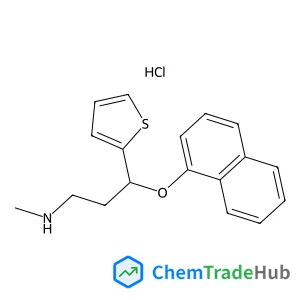
N-Methyl-3-(1-naphthyloxy)-3-(2-thienyl)-1-propanamine hydrochloride (1:1)
CAS Number:
1188266-11-6
Molecular Formula:
C18H20ClNOS
Recommended Suppliers






Disclaimer
This page provides academic journal information for reference and research purposes only. We are not affiliated with any journal publishers and do not handle publication submissions. For publication-related inquiries, please contact the respective journal publishers directly.
If you notice any inaccuracies in the information displayed, please contact us at support@chemtradehub.com. We will promptly review and address your concerns.