












An efficient method to perform milliliter-scale PCR utilizing highly controlled microwave thermocycling
Literature Information
Publication Date
2004-03-08
DOI
10.1039/B317049G
Impact Factor
6.222
Authors
Kristina Orrling, Peter Nilsson, Mats Gullberg, Mats Larhed
View Original
Abstract
This communication describes the development of a controlled microwave methodology for rapid milliliter-scale PCR.
Related Literature
Pyrene based conjugated materials: synthesis, characterization and electroluminescent properties
Jagadish K. Salunke, Prashant Sonar, F. L. Wong, V. A. L. Roy, C. S. Lee, Prakash P. Wadgaonkar
2014-09-26
Paper
DOI: 10.1039/C4CP03693J
Synthesis of Au130(SR)50 and Au130−xAgx(SR)50 nanomolecules through core size conversion of larger metal clusters
Vijay Reddy Jupally, Amala Dass
2014-04-15
Paper
DOI: 10.1039/C3CP54343A
Where does the Raman optical activity of [Rh(en)3]3+ come from? Insight from a combined experimental and theoretical approach
Marie Humbert-Droz, Patric Oulevey, Latévi Max Lawson Daku, Sandra Luber, Hans Hagemann, Thomas Bürgi
2014-09-18
Paper
DOI: 10.1039/C4CP02145B
Direct imaging of layered O3- and P2-NaxFe1/2Mn1/2O2 structures at the atomic scale
Yuesheng Wang, Pin Liu, Lin Gu, Yong-Sheng Hu, Hong Li, George P. Demopoulos, Liquan Chen
2014-08-26
Communication
DOI: 10.1039/C4CP02957G
Near room temperature reduction of graphene oxide Langmuir–Blodgett monolayers by hydrogen plasma
Gulbagh Singh, V. Divakar Botcha, D. S. Sutar, Pavan K. Narayanam, S. S. Talwar, R. S. Srinivasa, S. S. Major
2014-04-17
Paper
DOI: 10.1039/C4CP00875H
Ammonia-modified Co(ii) sites in zeolites: IR spectroscopy and spin-resolved charge transfer analysis of NO adsorption complexes
Kinga Góra-Marek, Adam Stępniewski, Mariusz Radoń, Ewa Broclawik
2014-09-11
Paper
DOI: 10.1039/C4CP03350G
Atomic charge transfer-counter polarization effects determine infrared CH intensities of hydrocarbons: a quantum theory of atoms in molecules model
Arnaldo F. Silva, Wagner E. Richter, Helen G. C. Meneses, Roy E. Bruns
2014-09-25
Paper
DOI: 10.1039/C4CP02922D
Optical trapping and Raman spectroscopy of solid particles
J. C. J. Camp, J. McGregor, I. M. Watson, R. A. Cox, M. Kalberer, A. D. Ward, F. D. Pope
2014-04-29
Paper
DOI: 10.1039/C4CP00994K
Temperature-dependent excitonic photoluminescence of hybrid organometal halide perovskite films
Kewei Wu, Ashok Bera, Chun Ma, Yuanmin Du, Yang Yang, Liang Li, Tom Wu
2014-09-17
Communication
DOI: 10.1039/C4CP03573A
You might also like
Compound Q&A
What is the market or research trend for N-(4-Methoxybenzyl)-2-pyridinamine (CAS: 52818-63-0)?
N-(4-Methoxybenzyl)-2-pyridinamine (CAS: 52818-63-0) is increasingly being used ...
52818-63-0N-(4-Methoxybenzyl)-...
Compound Q&A
What precautions should be taken when handling Ethyl 4-(2-chlorophenyl)-1,3-thiazole-2-carboxylate (CAS: 1050507-06-6)?
When handling Ethyl 4-(2-chlorophenyl)-1,3-thiazole-2-carboxylate, appropriate p...
1050507-06-6Ethyl 4-(2-chlorophe...
Compound Q&A
What regulatory guidelines apply to diethyldiselane (CAS: 628-39-7)?
Diethyldiselane (CAS: 628-39-7) is classified under the Globally Harmonized Syst...
628-39-7Diethyldiselane
Compound Q&A
What is the market or research trend for oxocopper (CAS: 12053-18-8)?
The market for oxocopper (CAS: 12053-18-8) is primarily driven by its use in cat...
12053-18-8oxocopper; oxo-(oxoc...
Compound Q&A
What is the market or research trend for 5-{[(2-Methyl-2-propanyl)oxy]carbonyl}-5-azaspiro[2.4]heptane-7-carboxylic acid?
The market for 5-{[(2-Methyl-2-propanyl)oxy]carbonyl}-5-azaspiro[2.4]heptane-7-c...
1268519-54-55-{[(2-Methyl-2-prop...
Compound Q&A
What is 2-(1-Pyrrolidinyl)-4-pyridinamine (CAS: 35981-63-6)?
2-(1-Pyrrolidinyl)-4-pyridinamine is a chemical compound with the CAS number 359...
35981-63-62-(1-Pyrrolidinyl)-4...
Compound Q&A
What are the physical and chemical properties of 2-(3-Pyridinyl)-1-azabicyclo[2.2.2]octane (CAS: 91556-75-1)?
2-(3-Pyridinyl)-1-azabicyclo[2.2.2]octane (CAS: 91556-75-1) is a crystalline sol...
91556-75-12-(3-Pyridinyl)-1-az...
Compound Q&A
How is (S)-Alpha-allyl-proline hydrochloride (CAS: 129704-91-2) typically synthesized?
(S)-Alpha-allyl-proline hydrochloride is usually synthesized via a Wittig reacti...
129704-91-2(S)-Alpha-allyl-prol...
Compound Q&A
What is 3-Methyl-1,2-oxazole-5-carboxylic acid (CAS: 4857-42-5)?
3-Methyl-1,2-oxazole-5-carboxylic acid (CAS: 4857-42-5) is an organic compound w...
4857-42-53-Methyl-1,2-oxazole...
Compound Q&A
How is Lys-SMCC-DM1 (CAS: 1281816-04-3) typically synthesized?
Lys-SMCC-DM1 is synthesized via a multi-step process involving the coupling of S...
1281816-04-3Lys-SMCC-DM1
Source Journal
Chemical Communications

CiteScore:
8.6
Self-citation Rate:
4.7%
Articles per Year:
2458
ChemComm publishes urgent research which is of outstanding significance and interest to experts in the field, while also appealing to the journal’s broad chemistry readership. Our communication format is ideally suited to short, urgent studies that are of such importance that they require accelerated publication. Our scope covers all topics in chemistry, and research at the interface of chemistry and other disciplines (such as materials science, nanoscience, physics, engineering and biology) where there is a significant novelty in the chemistry aspects. Major topic areas covered include: Analytical Chemistry Catalysis Chemical Biology and medicinal chemistry Computational Chemistry and Machine Learning Energy and sustainable chemistry Environmental Chemistry Green Chemistry Inorganic Chemistry Materials Chemistry Nanoscience Organic Chemistry Physical Chemistry Polymer Chemistry Supramolecular Chemistry
Recommended Compounds
![N-{[(2-Methyl-2-propanyl)oxy]carbonyl}-L-methionylglycine structure](https://static.chemtradehub.com/structs/234/23446-03-9-e1e5.webp "N-{[(2-Methyl-2-propanyl)oxy]carbonyl}-L-methionylglycine structure")
N-{[(2-Methyl-2-propanyl)oxy]carbonyl}-L-methionylglycine
CAS Number:
23446-03-9
Molecular Formula:
C12H22N2O5S
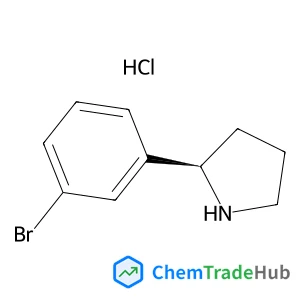
(2R)-2-(3-Bromophenyl)pyrrolidine hydrochloride (1:1)
CAS Number:
1391550-13-2
Molecular Formula:
C10H13BrClN
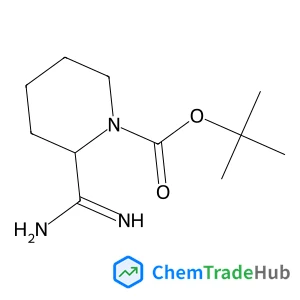
2-Methyl-2-propanyl 2-carbamimidoyl-1-piperidinecarboxylate
CAS Number:
1258640-98-0
Molecular Formula:
C11H21N3O2
Recommended Suppliers




Disclaimer
This page provides academic journal information for reference and research purposes only. We are not affiliated with any journal publishers and do not handle publication submissions. For publication-related inquiries, please contact the respective journal publishers directly.
If you notice any inaccuracies in the information displayed, please contact us at support@chemtradehub.com. We will promptly review and address your concerns.