













Dual-cure photochemical/thermal polymerization of acrylates: a photoassisted process at low light intensity
Literature Information
Publication Date
2014-07-25
DOI
10.1039/C4PY00548A
Impact Factor
5.582
Authors
M. Retailleau, A. Ibrahim, X. Allonas
View Original
Abstract
The dual-cure polymerization of an acrylate resin was investigated by combining a conventional technique (temperature measurement at the surface and in the deep zone) with confocal Raman microscopy. Polymerization was first characterized using a thermal initiator alone. Results showed that the thermal system polymerizes slowly and gradually, generating a thermal front that propagates from the bottom of the sample to the surface. Then, a photoinitiator was added to this thermal system. Unexpectedly, at the beginning of the reaction, the addition slows down the thermal polymerization reaction. But quickly, the reaction is accelerated and an almost fully cured material is obtained in a shorter time than the net thermal system. This behaviour highlights a surprising synergistic effect between the photoinitiator and the thermal initiator in the dual-cure polymerization of thick materials.
Related Literature
Synthesis and self-assembly of amphiphilic semi-brush and dual brush block copolymers in solution and on surfaces‡
Daniel Zehm, André Laschewsky, Michael Gradzielski, Hua Liang, Jürgen P. Rabe, Jean-François Lutz
2010-09-25
Paper
DOI: 10.1039/C0PY00200C
BF3·Et2O-mediated Friedel–Crafts C–H bond polymerization to synthesize π-conjugation-interrupted polymer semiconductors
Zheng-Dong Liu, Yong-Zheng Chang, Chang-Jin Ou, Jin-Yi Lin, Ling-Hai Xie, Cheng-Rong Yin, Ming-Deng Yi, Yan Qian, Nai-En Shi, Wei Huang
2011-07-27
Communication
DOI: 10.1039/C1PY00203A
Exploring RAFT polymerization for the synthesis of bipolar diblock copolymers and their supramolecular self-assembly
Joseph P. Patterson, Saghar Khodabakhsh, Rachel K. O'Reilly
2010-11-30
Paper
DOI: 10.1039/C0PY00359J
Biaxially extended quaterthiophene-thiophene and -selenophene conjugated polymers for optoelectronic device applications
Hsiang-Wei Lin, Wen-Ya Lee, Chien Lu, Chih-Jung Lin, Hung-Chin Wu, Yu-Wei Lin, Byungcheol Ahn, Yecheol Rho, Moonhor Ree
2012-01-23
Paper
DOI: 10.1039/C2PY00583B
Synthesis of multi-block copolymer stars using a simple iterative Cu(0)-mediated radical polymerization technique
Cyrille Boyer, Aurelia Derveaux, Per B. Zetterlund, Michael R. Whittaker
2011-09-30
Paper
DOI: 10.1039/C1PY00384D
Solubility in CO2 and swelling studies by in situIR spectroscopy of vegetable-based epoxidized oils as polyurethane precursors
Stéphanie Foltran, Lise Maisonneuve, Eric Cloutet, Benoit Gadenne, Carine Alfos, Thierry Tassaing, Henri Cramail
2011-12-22
Paper
DOI: 10.1039/C2PY00476C
Multi-end functionalised polymer additives synthesised by living anionic polymerisation—the impact of additive molecular structure upon surface properties
Lian R. Hutchings, Richard L. Thompson
2011-01-20
Paper
DOI: 10.1039/C0PY00362J
You might also like
Compound Q&A
What is 3-Fluoro-2-methylbenzylamine (CAS: 771573-36-5)?
3-Fluoro-2-methylbenzylamine is an organic compound with the CAS number 771573-3...
771573-36-53-Fluoro-2-methylben...
Compound Q&A
Is Tert-butyl 2-(oxetan-3-ylidene)acetate (CAS: 1207175-03-8) safe?
Tert-butyl 2-(oxetan-3-ylidene)acetate is considered safe for its intended uses ...
1207175-03-8Tert-butyl 2-(oxetan...
Compound Q&A
What precautions should be taken when handling 4-Acetyl-2-fluorobenzonitrile (CAS: 214760-18-6)?
Proper personal protective equipment (PPE) such as gloves, goggles, and a lab co...
214760-18-64-Acetyl-2-fluoroben...
Compound Q&A
How is 2-Ethyl-4-methyl-1,3-thiazole (CAS: 15679-12-6) typically synthesized?
2-Ethyl-4-methyl-1,3-thiazole is commonly synthesized via the reaction of thiour...
15679-12-62-Ethyl-4-methyl-1,3...
Compound Q&A
How should 5',5''-([2,2'-Bithiophene]-5,5'-diyl)bis(([1,1':3',1''-terphenyl]-4,4''-dicarboxylic acid)) (CAS: 1227780-71-3) be stored?
This compound should be stored in a cool, dry place away from direct sunlight an...
1227780-71-35',5''''-([2,2'-Bith...
Compound Q&A
What regulatory guidelines apply to L-Lysine Acetate Salt (CAS: 52315-92-1)?
L-Lysine Acetate Salt (CAS: 52315-92-1) is subject to various regulatory guideli...
52315-92-1L-LYSINE ACETATE SAL...
Compound Q&A
Is 6-Fluoro-3-hydroxy-2-pyrazinecarboxamide (CAS: 259793-96-9) safe?
6-Fluoro-3-hydroxy-2-pyrazinecarboxamide (CAS: 259793-96-9) is generally conside...
259793-96-96-Fluoro-3-hydroxy-2...
Compound Q&A
What are the physical and chemical properties of 1,1'-Sulfonylbis(1H-imidazole) (CAS: 7189-69-7)?
1,1'-Sulfonylbis(1H-imidazole) is a crystalline solid with a molecular weight of...
7189-69-71,1'-Sulfonylbis(1H-...
Compound Q&A
What industries use 4-methyl-7-nitro-1H-indole-3-carbonitrile (CAS: 289483-82-5)?
4-Methyl-7-nitro-1H-indole-3-carbonitrile (CAS: 289483-82-5) is primarily used i...
289483-82-54-methyl-7-nitro-1H-...
Compound Q&A
How should waste containing 5-Bromo-3-indolyl-beta-galactoside (CAS: 97753-82-7) be handled?
Waste containing 5-Bromo-3-indolyl-beta-galactoside (CAS: 97753-82-7) should be ...
97753-82-75-Bromo-3-indolyl-be...
Source Journal
Polymer Chemistry

CiteScore:
8.6
Self-citation Rate:
7.3%
Articles per Year:
457
Polymer Chemistry welcomes submissions in all areas of polymer science that have a strong focus on macromolecular chemistry. Manuscripts may cover a broad range of fields, yet no direct application focus is required.
Recommended Compounds
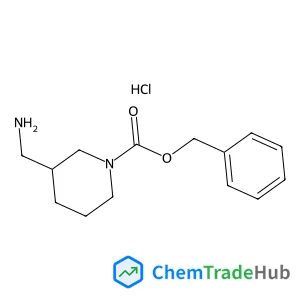
Benzyl 3-(aminomethyl)piperidine-1-carboxylate hydrochloride
CAS Number:
1186663-23-9
Molecular Formula:
C14H21ClN2O2
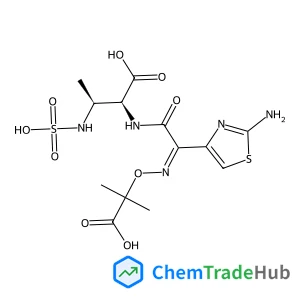
Aztreonam USP Related Compound A (Open-ring Aztreonam)
CAS Number:
87500-74-1
Molecular Formula:
C13H19N5O9S2
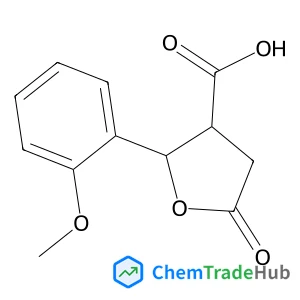
trans-2-(2-Methoxyphenyl)-5-oxotetrahydrofuran-3-carboxylic acid
CAS Number:
99226-02-5
Molecular Formula:
C12H12O5
Recommended Suppliers






Disclaimer
This page provides academic journal information for reference and research purposes only. We are not affiliated with any journal publishers and do not handle publication submissions. For publication-related inquiries, please contact the respective journal publishers directly.
If you notice any inaccuracies in the information displayed, please contact us at support@chemtradehub.com. We will promptly review and address your concerns.