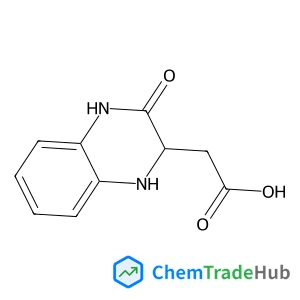
(3-Oxo-1,2,3,4-tetrahydro-2-quinoxalinyl)acetic acid
CAS Number:
136584-14-0
Molecular Formula:
C10H10N2O3
Weixin Song, Xiaobo Ji, Jun Chen, Zhengping Wu, Yirong Zhu, Kefen Ye, Hongshuai Hou, Mingjun Jing, Craig. E. Banks
The ion-migration mechanism of Na3V2(PO4)2F3 is investigated in Na3V2(PO4)2F3–Li hybrid-ion batteries for the first time through a combined computational and experimental study. There are two Na sites namely Na(1) and Na(2) in Na3V2(PO4)2F3, and the Na ions at Na(2) sites with 0.5 occupation likely extract earlier to form Na2V2(PO4)2F3. The structural reorganisation is suggested to make a stable configuration of the remaining ions at the centre of Na(1) sites. After the extraction of the second Na ion, the last ion prefers to change occupation from 1 to 0.5 to occupy two Na(2) sites. The insertion of predominant Li ions also should undergo structural reorganization when the first Li ion inserts into the centre of Na(1) site theoretically forming NaLiV2(PO4)2F3, and the second ion inserts into two Na(2) sites to form NaLi2V2(PO4)2F3. More than a 0.3 Li ion insertion would take place in the applied voltage range by increasing the number of sites occupied rather than occupy the vacancy in triangular prismatic sites. An improved solution-based carbothermal reduction methodology makes Na3V2(PO4)2F3 exhibit excellent C-rate and cycling performances, of which the Li-inserted voltage is evaluated by first principles calculations.
Yanchen Han, Shengjie Ling, Zeming Qi, Zhengzhong Shao, Xin Chen
DOI: 10.1039/C8CP00802G
Xiuting Li, Christopher Batchelor-McAuley, Javor K. Novev, Richard G. Compton
DOI: 10.1039/C8CP01360H
Moses Cho, Joonho Park, Cafer T. Yavuz, Yousung Jung
DOI: 10.1039/C7CP07973G
Peng Zhang, Nathan W. Yee, Sorin V. Filip, Casey E. Hetrick, Bin Yang, William H. Green
DOI: 10.1039/C7CP07058F
F. Makhlooghiazad, J. Guazzagaloppa, L. A. O’Dell, R. Yunis, A. Basile, P. C. Howlett, M. Forsyth
DOI: 10.1039/C7CP06971E
Naoto Todoroki, Ryutaro Kawamura, Masato Asano, Ren Sasakawa, Shuntaro Takahashi, Toshimasa Wadayama
DOI: 10.1039/C8CP01217B
DOI: 10.1039/C7CP08620B
Emmanuel Assaf, Coralie Schoemaecker, Luc Vereecken, Christa Fittschen
DOI: 10.1039/C7CP05770A
Carolyn E. Carr, Luis A. Marky
DOI: 10.1039/C7CP08329G
Zhilin Yang, Yang Zhou, Hui Huang, Dingguo Xu, Chaoyang Zhang
DOI: 10.1039/C8CP00345A
This compound is mainly used as an intermediate in the synthesis of antipsychoti...
Waste containing 1-(D-Ribofuranosyl)-1,4-dihydro-3-pyridinecarboxamide (CAS: 191...
2-Methyl-2-propanyl 3-bromo-3-(hydroxymethyl)-1-azetidinecarboxylate (CAS: 20079...
N-(4-Chloro-2-pyridinyl)acetamide (CAS: 245056-66-0) is a chemical compound with...
5-Chloro-2-hydroxybenzoic acid, also known as 5-chlorosalicylic acid, is an arom...
When handling 1,1-Dichloro-1-fluoroethane (CAS: 1717-00-6), it is important to u...
Fmoc-(2S,3R)-3-phenylpyrrolidine-2-carboxylic acid is a white crystalline solid ...
4-Amino-5-bromo-2-pyridinecarboxylic acid is primarily used as a precursor in th...
Handling this compound should be done with personal protective equipment (PPE) i...
When handling 8-bromo-2,2-dimethyl-3,4-dihydro-2H-1,4-benzoxazin-3-one, use prop...

Physical Chemistry Chemical Physics (PCCP) is an international journal co-owned by 19 physical chemistry and physics societies from around the world. This journal publishes original, cutting-edge research in physical chemistry, chemical physics and biophysical chemistry. To be suitable for publication in PCCP, articles must include significant innovation and/or insight into physical chemistry; this is the most important criterion that reviewers and Editors will judge against when evaluating submissions. The journal has a broad scope and welcomes contributions spanning experiment, theory, computation and data science. Topical coverage includes spectroscopy, dynamics, kinetics, statistical mechanics, thermodynamics, electrochemistry, catalysis, surface science, quantum mechanics, quantum computing and machine learning. Interdisciplinary research areas such as polymers and soft matter, materials, nanoscience, energy, surfaces/interfaces, and biophysical chemistry are welcomed if they demonstrate significant innovation and/or insight into physical chemistry. Joined experimental/theoretical studies are particularly appreciated when complementary and based on up-to-date approaches.
![2,6-Bis({(2R)-2-[hydroxy(diphenyl)methyl]-1-pyrrolidinyl}methyl)-4-methylphenol structure](https://static.chemtradehub.com/structs/877/877395-58-9-70bf.webp "2,6-Bis({(2R)-2-[hydroxy(diphenyl)methyl]-1-pyrrolidinyl}methyl)-4-methylphenol structure")