


A catalytic role of surface silanol groups in CO2 capture on the amine-anchored silica support
Literature Information
Publication Date
2018-04-06
DOI
10.1039/C7CP07973G
Impact Factor
3.676
Authors
Moses Cho, Joonho Park, Cafer T. Yavuz, Yousung Jung
View Original
Abstract
A new mechanism of CO2 capture on the amine-functionalized silica support is demonstrated using density functional theory calculations, in which the silica surface not only acts as a support to anchor amines, but also can actively participate in the CO2 capture process through a facile proton transfer reaction with the amine groups. The surface-mediated proton transfer mechanism in forming a carbamate–ammonium product has lower kinetic barrier (8.1 kcal mol−1) than the generally accepted intermolecular mechanism (12.7 kcal mol−1) under dry conditions, and comparable to that of the water-assisted intermolecular mechanism (6.0 kcal mol−1) under humid conditions. These findings suggest that the CO2 adsorption on the amine-anchored silica surface would mostly occur via the rate-determining proton transfer step that is catalyzed by the surface silanol groups.
Recommended Journals

Chemical & Pharmaceutical Bulletin

Cement and Concrete Research

Chemistry of Natural Compounds

Carbon

Journal of the Chinese Chemical Society

Australian Journal of Chemistry

Corrosion Science

Journal of the American Chemical Society

Bulletin of the Chemical Society of Japan

Chemistry of Heterocyclic Compounds
Related Literature
Nonequilibrium self-assembly induced Liesegang rings in a non-isothermal system
Andrés Arango-Restrepo, Daniel Barragán, J. Miguel Rubi
2018-01-25
Paper
DOI: 10.1039/C7CP08469B
Ultrafast coherent vibrational dynamics in dimethyl methylphosphonate radical cation
Derrick Ampadu Boateng, Gennady L. Gutsev, Puru Jena, Katharine Moore Tibbetts
2017-12-05
Communication
DOI: 10.1039/C7CP07261A
Study of low temperature chlorine atom initiated oxidation of methyl and ethyl butyrate using synchrotron photoionization TOF-mass spectrometry
Joseph Czekner, Craig A. Taatjes, David L. Osborn, Giovanni Meloni
2018-02-01
Paper
DOI: 10.1039/C7CP08221E
Solvent-dependent dual fluorescence of the push–pull system 2-diethylamino-7-nitrofluorene
M. A. B. Larsen, A. B. Stephansen, E. Alarousu, M. Pittelkow, O. F. Mohammed, T. I. Sølling
2018-01-31
Paper
DOI: 10.1039/C8CP00235E
Thermal equilibration between excited states or solvent effects: unveiling the origins of anomalous emissions in heteroleptic Ru(ii) complexes
Denis Jacquemin, Daniel Escudero
2018-04-04
Communication
DOI: 10.1039/C8CP01101J
Crystallization of silica promoted by residual hydrogen bonding interactions at high temperature
Xiaojiao Zhang, Yang Liu, Wenchuan Lai, Zaoming Wang, Wang Xu, Xiangyang Liu
2018-04-09
Paper
DOI: 10.1039/C8CP00642C
On the relationship between rutile/anatase ratio and the nature of defect states in sub-100 nm TiO2 nanostructures: experimental insights
Moamen M. Soliman, Mohamed H. Al Haron, Menna Samir, Sarah A. Tolba, Basamat S. Shaheen, Ahmed W. Amer, Omar F. Mohammed, Nageh K. Allam
2018-02-02
Paper
DOI: 10.1039/C7CP08629F
Liquid worm-like and proto-micelles: water solubilization in amphiphile–oil solutions
Baofu Qiao, Kenneth C. Littrell, Ross J. Ellis
2018-04-10
Paper
DOI: 10.1039/C8CP00600H
Gas phase kinetics of the OH + CH3CH2OH reaction at temperatures of the interstellar medium (T = 21–107 K)
A. J. Ocaña, S. Blázquez, A. Canosa, M. Antiñolo
2018-01-31
Paper
DOI: 10.1039/C7CP07868D
You might also like
Compound Q&A
What are the main uses of 1-(3-Aminophenyl)-3-[(3R)-1-(3,3-dimethyl-2-oxobutyl)-2-oxo-5-(2-pyridinyl)-2,3-dihydro-1H-1,4-benzodiazepin-3-yl]urea (CAS: 155412-88-7)?
This compound is mainly used as an intermediate in the synthesis of antipsychoti...
155412-88-71-(3-Aminophenyl)-3-...
Compound Q&A
How should waste containing 1-(D-Ribofuranosyl)-1,4-dihydro-3-pyridinecarboxamide (CAS: 19132-12-8) be handled?
Waste containing 1-(D-Ribofuranosyl)-1,4-dihydro-3-pyridinecarboxamide (CAS: 191...
19132-12-81-(D-Ribofuranosyl)-...
Compound Q&A
What regulatory guidelines apply to 2-Methyl-2-propanyl 3-bromo-3-(hydroxymethyl)-1-azetidinecarboxylate (CAS: 2007919-81-3)?
2-Methyl-2-propanyl 3-bromo-3-(hydroxymethyl)-1-azetidinecarboxylate (CAS: 20079...
2007919-81-32-Methyl-2-propanyl ...
Compound Q&A
What is N-(4-Chloro-2-pyridinyl)acetamide (CAS: 245056-66-0)?
N-(4-Chloro-2-pyridinyl)acetamide (CAS: 245056-66-0) is a chemical compound with...
245056-66-0N-(4-Chloro-2-pyridi...
Compound Q&A
What is 5-Chloro-2-hydroxybenzoic acid (CAS: 321-14-2)?
5-Chloro-2-hydroxybenzoic acid, also known as 5-chlorosalicylic acid, is an arom...
321-14-25-Chloro-2-hydroxybe...
Compound Q&A
What precautions should be taken when handling 1,1-Dichloro-1-fluoroethane (CAS: 1717-00-6)?
When handling 1,1-Dichloro-1-fluoroethane (CAS: 1717-00-6), it is important to u...
1717-00-61,1-Dichloro-1-fluor...
Compound Q&A
What are the physical and chemical properties of Fmoc-(2S,3R)-3-phenylpyrrolidine-2-carboxylic acid (CAS: 281655-32-1)?
Fmoc-(2S,3R)-3-phenylpyrrolidine-2-carboxylic acid is a white crystalline solid ...
281655-32-1Fmoc-(2S,3R)-3-pheny...
Compound Q&A
What are the main uses of 4-Amino-5-bromo-2-pyridinecarboxylic acid (CAS: 1363381-01-4)?
4-Amino-5-bromo-2-pyridinecarboxylic acid is primarily used as a precursor in th...
1363381-01-44-Amino-5-bromo-2-py...
Compound Q&A
What precautions should be taken when handling (S)-tert-butyl 2-((2-(4-bromophenyl)-2-oxoethyl)carbamoyl)pyrrolidine-1-carboxylate (CAS: 1007881-98-2)?
Handling this compound should be done with personal protective equipment (PPE) i...
1007881-98-2(S)-tert-butyl 2-((2...
Compound Q&A
What precautions should be taken when handling 8-bromo-2,2-dimethyl-3,4-dihydro-2H-1,4-benzoxazin-3-one (CAS: 688363-73-7)?
When handling 8-bromo-2,2-dimethyl-3,4-dihydro-2H-1,4-benzoxazin-3-one, use prop...
688363-73-78-bromo-2,2-dimethyl...
Source Journal
Physical Chemistry Chemical Physics

CiteScore:
5.5
Self-citation Rate:
10.3%
Articles per Year:
3036
Physical Chemistry Chemical Physics (PCCP) is an international journal co-owned by 19 physical chemistry and physics societies from around the world. This journal publishes original, cutting-edge research in physical chemistry, chemical physics and biophysical chemistry. To be suitable for publication in PCCP, articles must include significant innovation and/or insight into physical chemistry; this is the most important criterion that reviewers and Editors will judge against when evaluating submissions. The journal has a broad scope and welcomes contributions spanning experiment, theory, computation and data science. Topical coverage includes spectroscopy, dynamics, kinetics, statistical mechanics, thermodynamics, electrochemistry, catalysis, surface science, quantum mechanics, quantum computing and machine learning. Interdisciplinary research areas such as polymers and soft matter, materials, nanoscience, energy, surfaces/interfaces, and biophysical chemistry are welcomed if they demonstrate significant innovation and/or insight into physical chemistry. Joined experimental/theoretical studies are particularly appreciated when complementary and based on up-to-date approaches.
Recommended Compounds
![1-[3-(4-Morpholinylsulfonyl)phenyl]methanamine structure](https://static.chemtradehub.com/structs/933/933989-32-3-51af.webp "1-[3-(4-Morpholinylsulfonyl)phenyl]methanamine structure")
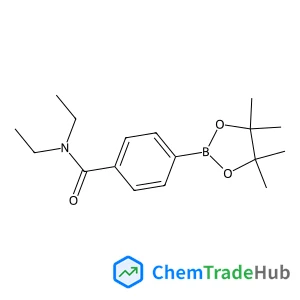
N,N-Diethyl-4-(4,4,5,5-tetramethyl-1,3,2-dioxaborolan-2-yl)benzamide
CAS Number:
325142-99-2
Molecular Formula:
C17H26BNO3
Recommended Suppliers




Disclaimer
This page provides academic journal information for reference and research purposes only. We are not affiliated with any journal publishers and do not handle publication submissions. For publication-related inquiries, please contact the respective journal publishers directly.
If you notice any inaccuracies in the information displayed, please contact us at support@chemtradehub.com. We will promptly review and address your concerns.