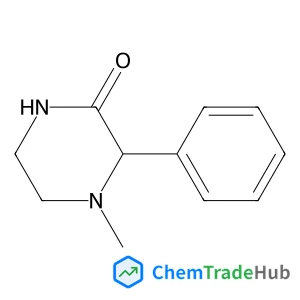
![tert-Butyl N-[(2-chloropyridin-4-yl)methyl]carbamate structure](https://static.chemtradehub.com/structs/916/916210-27-0-9f95.webp "tert-Butyl N-[(2-chloropyridin-4-yl)methyl]carbamate structure")
tert-Butyl N-[(2-chloropyridin-4-yl)methyl]carbamate
CAS Number:
916210-27-0
Molecular Formula:
C11H15ClN2O2
Carolyn E. Carr, Luis A. Marky
Tetraloops are a common way of changing the melting behavior of a DNA or RNA structure without changing the sequence of the stem. Because of the ubiquitous nature of tetraloops, our goal is to understand the effect a GCAA tetraloop, which belongs to the GNRA family of tetraloops, has on the unfolding thermodynamics of intramolecular junctions. Specifically, we have described the melting behavior of intramolecular three-way and four-way junctions where a T5 loop has been replaced with a GCAA tetraloops in different positions. Their thermodynamic profiles, including ΔnNa+ and ΔnW, were analyzed based on the position of the tetraloop. We obtained between −16.7 and −27.5 kcal mol−1 for all junctions studied. The experimental data indicates the influence of the GCAA tetraloop is primarily dictated by the native unfolding of the junction; if the tetraloop is placed on a stem that unfolds as a single domain when the tetraloop is not present, it will unfold as a single domain when the tetraloop is present but with a higher thermal stability. Conversely, if the tetraloop is placed on a stem which unfolds cooperatively with other stems when the tetraloop is not present, the tetraloop will increase the thermal stability of all the stems in the melting domain. The oligonucleotide structure and not the tetraloop itself affects ion uptake; three-way junctions do not gain an increase in ion uptake, but four-way junctions do. This is not the case for water immobilization, where the position of the tetraloop dictates the amount of water immobilized.
Ranjan Kumar Acharyya, Samik Nanda
DOI: 10.1039/C8OB01328D
Takashi Sakamoto, Daisaku Hasegawa, Kenzo Fujimoto
DOI: 10.1039/C8OB02218F
Changduo Pan, Zhenkun Yang, Du Gao, Jin-Tao Yu
DOI: 10.1039/C8OB01329B
Debashis Mondal, Anjana Sathyan, Sopan V. Shinde, Kamal K. Mishra, Pinaki Talukdar
DOI: 10.1039/C8OB01345D
Coralie De Schutter, Vincent Roy, Patrick Favetta, Corentin Pavageau, Stéphane Maisonneuve, Nicolas Bogliotti, Juan Xie, Luigi A. Agrofoglio
DOI: 10.1039/C8OB01606B
J. Schörgenhumer, M. Waser
DOI: 10.1039/C8OB02375A
Fen Li, Xiaohui Li, Xin Zhang
DOI: 10.1039/C8OB01944D
Philip C. Bulman Page, Francesca S. Kinsey, Yohan Chan, Ian R. Strutt, Alexandra M. Z. Slawin, Garth A. Jones
DOI: 10.1039/C8OB01795F
Martin Liebold, Eugen Sharikow, Elisabeth Seikel, Lukas Trombach, Klaus Harms, Petr Zimcik, Veronika Novakova, Ralf Tonner, Jörg Sundermeyer
DOI: 10.1039/C8OB01705K
Ze-lin Li, Kang-kang Sun, Chun Cai
DOI: 10.1039/C8OB01448E
This compound is mainly used as an intermediate in the synthesis of antipsychoti...
Waste containing 1-(D-Ribofuranosyl)-1,4-dihydro-3-pyridinecarboxamide (CAS: 191...
2-Methyl-2-propanyl 3-bromo-3-(hydroxymethyl)-1-azetidinecarboxylate (CAS: 20079...
N-(4-Chloro-2-pyridinyl)acetamide (CAS: 245056-66-0) is a chemical compound with...
5-Chloro-2-hydroxybenzoic acid, also known as 5-chlorosalicylic acid, is an arom...
When handling 1,1-Dichloro-1-fluoroethane (CAS: 1717-00-6), it is important to u...
Fmoc-(2S,3R)-3-phenylpyrrolidine-2-carboxylic acid is a white crystalline solid ...
4-Amino-5-bromo-2-pyridinecarboxylic acid is primarily used as a precursor in th...
Handling this compound should be done with personal protective equipment (PPE) i...
When handling 8-bromo-2,2-dimethyl-3,4-dihydro-2H-1,4-benzoxazin-3-one, use prop...

Physical Chemistry Chemical Physics (PCCP) is an international journal co-owned by 19 physical chemistry and physics societies from around the world. This journal publishes original, cutting-edge research in physical chemistry, chemical physics and biophysical chemistry. To be suitable for publication in PCCP, articles must include significant innovation and/or insight into physical chemistry; this is the most important criterion that reviewers and Editors will judge against when evaluating submissions. The journal has a broad scope and welcomes contributions spanning experiment, theory, computation and data science. Topical coverage includes spectroscopy, dynamics, kinetics, statistical mechanics, thermodynamics, electrochemistry, catalysis, surface science, quantum mechanics, quantum computing and machine learning. Interdisciplinary research areas such as polymers and soft matter, materials, nanoscience, energy, surfaces/interfaces, and biophysical chemistry are welcomed if they demonstrate significant innovation and/or insight into physical chemistry. Joined experimental/theoretical studies are particularly appreciated when complementary and based on up-to-date approaches.
![Methyl 4-({[(2-methyl-2-propanyl)oxy]carbonyl}amino)bicyclo[2.2.2]octane-1-carboxylate structure](https://static.chemtradehub.com/structs/943/943845-74-7-b7e5.webp "Methyl 4-({[(2-methyl-2-propanyl)oxy]carbonyl}amino)bicyclo[2.2.2]octane-1-carboxylate structure")
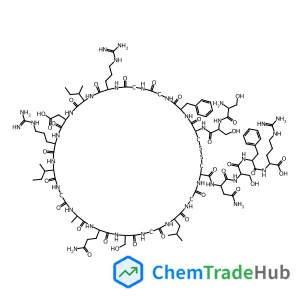
![2,6-Di(thiophen-2-yl)dithieno[3,2-b:2',3'-d]thiophene structure](https://static.chemtradehub.com/structs/910/910788-24-8-5b70.webp "2,6-Di(thiophen-2-yl)dithieno[3,2-b:2',3'-d]thiophene structure")