












Application of far-infrared spectroscopy to the structural identification of protein materials
Literature Information
Publication Date
2018-04-04
DOI
10.1039/C8CP00802G
Impact Factor
3.676
Authors
Yanchen Han, Shengjie Ling, Zeming Qi, Zhengzhong Shao, Xin Chen
View Original
Abstract
Although far-infrared (IR) spectroscopy has been shown to be a powerful tool to determine peptide structure and to detect structural transitions in peptides, it has been overlooked in the characterization of proteins. Herein, we used far-IR spectroscopy to monitor the structure of four abundant non-bioactive proteins, namely, soybean protein isolate (SPI), pea protein isolate (PPI) and two types of silk fibroins (SFs), domestic Bombyx mori and wild Antheraea pernyi. The two globular proteins SPI and PPI result in broad and weak far-IR bands (between 50 and 700 cm−1), in agreement with those of some other bioactive globular proteins previously studied (lysozyme, myoglobin, hemoglobin, etc.) that generally only have random amino acid sequences. Interestingly, the two SFs, which are characterized by a structure composed of highly repetitive motifs, show several sharp far-IR characteristic absorption peaks. Moreover, some of these characteristic peaks (such as the peaks at 260 and 428 cm−1 in B. mori, and the peaks at 245 and 448 cm−1 in A. pernyi) are sensitive to conformational changes; hence, they can be directly used to monitor conformational transitions in SFs. Furthermore, since SF absorption bands clearly differ from those of globular proteins and different SFs even show distinct adsorption bands, far-IR spectroscopy can be applied to distinguish and determine the specific SF component within protein blends.
Related Literature
Osmotic contribution to the flow-driven tube formation of copper–phosphate and copper–silicate chemical gardens
Evelin Rauscher, Gábor Schuszter, Bíborka Bohner, Ágota Tóth, Dezső Horváth
2018-01-23
Paper
DOI: 10.1039/C7CP08282G
Precursor non-stoichiometry to enable improved CH3NH3PbBr3 nanocrystal LED performance
Sjoerd A. Veldhuis, Xin Yu Chin, Natalia Yantara, Xiaodong Chen
2018-01-24
Paper
DOI: 10.1039/C7CP07827G
Fundamental study of hydrogen-attachment-induced peptide fragmentation occurring in the gas phase and during the matrix-assisted laser desorption/ionization process
Daiki Asakawa, Hidenori Takahashi, Shinichi Iwamoto, Koichi Tanaka
2018-04-09
Paper
DOI: 10.1039/C8CP00733K
Nonequilibrium self-assembly induced Liesegang rings in a non-isothermal system
Andrés Arango-Restrepo, Daniel Barragán, J. Miguel Rubi
2018-01-25
Paper
DOI: 10.1039/C7CP08469B
Molecular dynamics simulations of the structure of mixtures of protic ionic liquids and monovalent and divalent salts at the electrochemical interface
Víctor Gómez-González, Borja Docampo-Álvarez, J. Manuel Otero-Mato, Oscar Cabeza, Luis J. Gallego, Luis M. Varela
2018-04-26
Paper
DOI: 10.1039/C8CP01180J
Origin of enhancement in Raman scattering from Ag-dressed carbon-nanotube antennas: experiment and modelling
T. V. Raziman, J. A. Duenas, W. I. Milne, O. J. F. Martin, P. Dawson
2018-01-31
Paper
DOI: 10.1039/C7CP06416K
Factors impacting the aggregation/agglomeration and photocatalytic activity of highly crystalline spheroid- and rod-shaped TiO2 nanoparticles in aqueous solutions
Thomas Degabriel, Elodie Colaço, Rute F. Domingos, Karim El Kirat, Dalil Brouri, Sandra Casale, Jessem Landoulsi, Jolanda Spadavecchia
2018-04-05
Paper
DOI: 10.1039/C7CP08054A
The gelation influence on diffusion and conductivity enhancement effect in renewable ionic gels based on a LMWG
M. Bielejewski, A. Rachocki, J. Kaszyńska, J. Tritt-Goc
2018-01-24
Paper
DOI: 10.1039/C7CP07740H
Thermodynamics of faceted palladium(–gold) nanoparticles supported on rutile titania nanorods studied using transmission electron microscopy
Nhat Tai Nguyen, Jaysen Nelayah, Damien Alloyeau, Guillaume Wang, Laurent Piccolo, Pavel Afanasiev, Christian Ricolleau
2018-04-05
Paper
DOI: 10.1039/C8CP00737C
You might also like
Compound Q&A
What are the main uses of 1-(3-Aminophenyl)-3-[(3R)-1-(3,3-dimethyl-2-oxobutyl)-2-oxo-5-(2-pyridinyl)-2,3-dihydro-1H-1,4-benzodiazepin-3-yl]urea (CAS: 155412-88-7)?
This compound is mainly used as an intermediate in the synthesis of antipsychoti...
155412-88-71-(3-Aminophenyl)-3-...
Compound Q&A
How should waste containing 1-(D-Ribofuranosyl)-1,4-dihydro-3-pyridinecarboxamide (CAS: 19132-12-8) be handled?
Waste containing 1-(D-Ribofuranosyl)-1,4-dihydro-3-pyridinecarboxamide (CAS: 191...
19132-12-81-(D-Ribofuranosyl)-...
Compound Q&A
What regulatory guidelines apply to 2-Methyl-2-propanyl 3-bromo-3-(hydroxymethyl)-1-azetidinecarboxylate (CAS: 2007919-81-3)?
2-Methyl-2-propanyl 3-bromo-3-(hydroxymethyl)-1-azetidinecarboxylate (CAS: 20079...
2007919-81-32-Methyl-2-propanyl ...
Compound Q&A
What is N-(4-Chloro-2-pyridinyl)acetamide (CAS: 245056-66-0)?
N-(4-Chloro-2-pyridinyl)acetamide (CAS: 245056-66-0) is a chemical compound with...
245056-66-0N-(4-Chloro-2-pyridi...
Compound Q&A
What is 5-Chloro-2-hydroxybenzoic acid (CAS: 321-14-2)?
5-Chloro-2-hydroxybenzoic acid, also known as 5-chlorosalicylic acid, is an arom...
321-14-25-Chloro-2-hydroxybe...
Compound Q&A
What precautions should be taken when handling 1,1-Dichloro-1-fluoroethane (CAS: 1717-00-6)?
When handling 1,1-Dichloro-1-fluoroethane (CAS: 1717-00-6), it is important to u...
1717-00-61,1-Dichloro-1-fluor...
Compound Q&A
What are the physical and chemical properties of Fmoc-(2S,3R)-3-phenylpyrrolidine-2-carboxylic acid (CAS: 281655-32-1)?
Fmoc-(2S,3R)-3-phenylpyrrolidine-2-carboxylic acid is a white crystalline solid ...
281655-32-1Fmoc-(2S,3R)-3-pheny...
Compound Q&A
What are the main uses of 4-Amino-5-bromo-2-pyridinecarboxylic acid (CAS: 1363381-01-4)?
4-Amino-5-bromo-2-pyridinecarboxylic acid is primarily used as a precursor in th...
1363381-01-44-Amino-5-bromo-2-py...
Compound Q&A
What precautions should be taken when handling (S)-tert-butyl 2-((2-(4-bromophenyl)-2-oxoethyl)carbamoyl)pyrrolidine-1-carboxylate (CAS: 1007881-98-2)?
Handling this compound should be done with personal protective equipment (PPE) i...
1007881-98-2(S)-tert-butyl 2-((2...
Compound Q&A
What precautions should be taken when handling 8-bromo-2,2-dimethyl-3,4-dihydro-2H-1,4-benzoxazin-3-one (CAS: 688363-73-7)?
When handling 8-bromo-2,2-dimethyl-3,4-dihydro-2H-1,4-benzoxazin-3-one, use prop...
688363-73-78-bromo-2,2-dimethyl...
Source Journal
Physical Chemistry Chemical Physics

CiteScore:
5.5
Self-citation Rate:
10.3%
Articles per Year:
3036
Physical Chemistry Chemical Physics (PCCP) is an international journal co-owned by 19 physical chemistry and physics societies from around the world. This journal publishes original, cutting-edge research in physical chemistry, chemical physics and biophysical chemistry. To be suitable for publication in PCCP, articles must include significant innovation and/or insight into physical chemistry; this is the most important criterion that reviewers and Editors will judge against when evaluating submissions. The journal has a broad scope and welcomes contributions spanning experiment, theory, computation and data science. Topical coverage includes spectroscopy, dynamics, kinetics, statistical mechanics, thermodynamics, electrochemistry, catalysis, surface science, quantum mechanics, quantum computing and machine learning. Interdisciplinary research areas such as polymers and soft matter, materials, nanoscience, energy, surfaces/interfaces, and biophysical chemistry are welcomed if they demonstrate significant innovation and/or insight into physical chemistry. Joined experimental/theoretical studies are particularly appreciated when complementary and based on up-to-date approaches.
Recommended Compounds
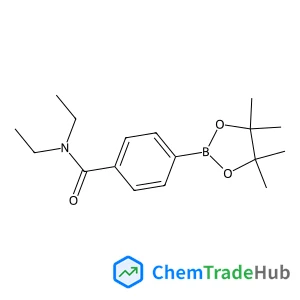
N,N-Diethyl-4-(4,4,5,5-tetramethyl-1,3,2-dioxaborolan-2-yl)benzamide
CAS Number:
325142-99-2
Molecular Formula:
C17H26BNO3
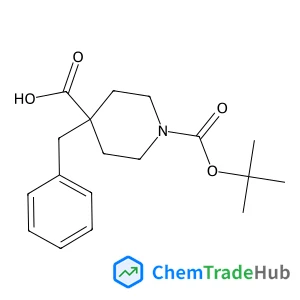
4-Benzyl-1-(tert-butoxycarbonyl)piperidine-4-carboxylic acid
CAS Number:
170838-87-6
Molecular Formula:
C18H25NO4
Recommended Suppliers



Disclaimer
This page provides academic journal information for reference and research purposes only. We are not affiliated with any journal publishers and do not handle publication submissions. For publication-related inquiries, please contact the respective journal publishers directly.
If you notice any inaccuracies in the information displayed, please contact us at support@chemtradehub.com. We will promptly review and address your concerns.