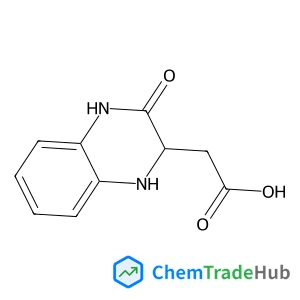
(3-Oxo-1,2,3,4-tetrahydro-2-quinoxalinyl)acetic acid
CAS Number:
136584-14-0
Molecular Formula:
C10H10N2O3
F. Makhlooghiazad, J. Guazzagaloppa, L. A. O’Dell, R. Yunis, A. Basile, P. C. Howlett, M. Forsyth
The phase behaviour, ionic conductivity, electrochemical stability and diffusion coefficients of mobile components in three organic ionic plastic crystals (OIPCs): triisobutylmethylphosphonium bis(fluorosulphonyl)amide (P1i444FSI), triisobutylmethylphosphonium bis(trifluromethanesulphonyl)amide (P1i444NTf2) and trimethylisobutylphosphonium bis(trifluoromethanesulphonyl)amide (P111i4NTf2) are compared to study the effect of the anions and cations on phase behaviour and dynamics. The FSI-based OIPC shows lower melting point and higher conductivity values most likely because of the higher degree of charge distributions and weaker ion–ion interactions compared to NTf2 anion-based OIPCs. Cyclic voltammetry of electrolytes consisting of these OIPCs with 70 mol% sodium salt incorporated indicates stable sodium plating/stripping behaviour at 70 and 50 °C for all samples. The magnitude of the peak currents, however, are much higher for the FSI-based electrolyte.
Caiyang Zhang, You Zhou, Jintao Huang, Canhui Tu, Xiaoai Zhou, Guodong Yin
DOI: 10.1039/C8OB01758A
Coralie De Schutter, Vincent Roy, Patrick Favetta, Corentin Pavageau, Stéphane Maisonneuve, Nicolas Bogliotti, Juan Xie, Luigi A. Agrofoglio
DOI: 10.1039/C8OB01606B
Mirela Matić, Bernard Denegri
DOI: 10.1039/C8OB00917A
Keisuke Tanaka, Yoichi Miyamoto, Takumi Okuda, Tatsuro Kasai, Kentaro Onodera, Masahiro Oka, Yoshihiro Yoneda
DOI: 10.1039/C8OB90140F
Kun Liu, Xinye Shang, Yuyu Cheng, Xiaoyong Chang, Pengfei Li, Wenjun Li
DOI: 10.1039/C8OB02352B
Yu Wang, Wei Wang, Ruyun Tang, Zhenhua Liu, Weihua Tao, Zhongxue Fang
DOI: 10.1039/C8OB02151A
Lei Yang, Yuanan Su, Yani Geng, Haiqing Xiong, Jinliang Han, Qian Fang, Xiangzhi Song
DOI: 10.1039/C8OB00831K
Danil P. Zarezin, Olga I. Shmatova, Valentine G. Nenajdenko
DOI: 10.1039/C8OB01507D
Zhuo Wang, Tongyu Li, Siyang Xing, Bolin Zhu
DOI: 10.1039/C8OB01182F
This compound is mainly used as an intermediate in the synthesis of antipsychoti...
Waste containing 1-(D-Ribofuranosyl)-1,4-dihydro-3-pyridinecarboxamide (CAS: 191...
2-Methyl-2-propanyl 3-bromo-3-(hydroxymethyl)-1-azetidinecarboxylate (CAS: 20079...
N-(4-Chloro-2-pyridinyl)acetamide (CAS: 245056-66-0) is a chemical compound with...
5-Chloro-2-hydroxybenzoic acid, also known as 5-chlorosalicylic acid, is an arom...
When handling 1,1-Dichloro-1-fluoroethane (CAS: 1717-00-6), it is important to u...
Fmoc-(2S,3R)-3-phenylpyrrolidine-2-carboxylic acid is a white crystalline solid ...
4-Amino-5-bromo-2-pyridinecarboxylic acid is primarily used as a precursor in th...
Handling this compound should be done with personal protective equipment (PPE) i...
When handling 8-bromo-2,2-dimethyl-3,4-dihydro-2H-1,4-benzoxazin-3-one, use prop...

Physical Chemistry Chemical Physics (PCCP) is an international journal co-owned by 19 physical chemistry and physics societies from around the world. This journal publishes original, cutting-edge research in physical chemistry, chemical physics and biophysical chemistry. To be suitable for publication in PCCP, articles must include significant innovation and/or insight into physical chemistry; this is the most important criterion that reviewers and Editors will judge against when evaluating submissions. The journal has a broad scope and welcomes contributions spanning experiment, theory, computation and data science. Topical coverage includes spectroscopy, dynamics, kinetics, statistical mechanics, thermodynamics, electrochemistry, catalysis, surface science, quantum mechanics, quantum computing and machine learning. Interdisciplinary research areas such as polymers and soft matter, materials, nanoscience, energy, surfaces/interfaces, and biophysical chemistry are welcomed if they demonstrate significant innovation and/or insight into physical chemistry. Joined experimental/theoretical studies are particularly appreciated when complementary and based on up-to-date approaches.