













Understanding the hydrogen transfer mechanism for the biodegradation of 2,4,6-trinitrotoluene catalyzed by pentaerythritol tetranitrate reductase: molecular dynamics simulations
Literature Information
Publication Date
2018-04-06
DOI
10.1039/C8CP00345A
Impact Factor
3.676
Authors
Zhilin Yang, Yang Zhou, Hui Huang, Dingguo Xu, Chaoyang Zhang
View Original
Abstract
The explosive 2,4,6-trinitrotoluene (TNT) is a highly toxic pollutant. Biodegradation is inevitably one of the most cost-effective and enviromentally friendly means of removing TNT pollution. However, the aromatic derivatives from the reduction of nitro groups by several classic enzymes are still toxic. Besides the reduction of nitro groups, pentaerythritol tetranitrate reductase (PETNR) offers a potential route to ring fission and complete degradation of TNT through the pathway of the Meisenheimer complex. This work is devoted to deeply understand the essence of the Meisenheimer pathway and mainly focus on the crucial hydrogen-transfer reaction by means of molecular dynamics (MD) simulations. We obtain three valuable findings. Firstly, the parallel π–π stacking between TNT and the flavin mononucleotide (FMN) cofactor is a precondition. The key residue controlling this conformation is His181. Although His184 does not interact with TNT, the mutation from His184 to Asn184 would abolish the π–π structure. Secondly, the data of the empirical valence bond (EVB) show that the Meisenheimer pathway is predominant because its activation barrier is 6.7 kcal mol−1 far less than that of nitro reduction (26.6 kcal mol−1). Finally, based on the results of thermodynamic integration (TI), the type of transferred hydrogen is also ensured, that is, the H anion (H−) for the Meisenheimer complex and the H radical (H˙) for nitro reduction. Our findings provide an exhaustive understanding for the first hydrogen transfer reaction that has a decisive effect on two competing pathways, and help in searching for and designing new enzymes that can effectively degrade TNT.
Related Literature
Thermal decomposition of FC(O)OCH3 and FC(O)OCH2CH3
M. Berasategui, G. A. Argüello, M. A. Burgos Paci
2018-03-29
Paper
DOI: 10.1039/C7CP08656C
A systematic examination of classical and multi-center bonding in heteroborane clusters
Petr Melichar, Drahomír Hnyk, Jindřich Fanfrlík
2017-12-18
Paper
DOI: 10.1039/C7CP07422K
Real time monitoring of the minute dynamic variation at the crude oil–water interface
Ziling Ding, Yan Xiong
2018-01-26
Paper
DOI: 10.1039/C7CP07491C
Multi-color electrochromism containing green color based on electrochemically polymerized star-shaped phenyl bithiophene
Yujie Dong, Feifei Luo, Lan Chen, Feiya Yuan, Yuejiao Hou, Weijun Li, Shuanma Yan, Yuyu Dai, Mi Ouyang, Cheng Zhang
2018-04-10
Paper
DOI: 10.1039/C8CP00338F
The origin of absorptive features in the two-dimensional electronic spectra of rhodopsin
Marwa H. Farag, Thomas L. C. Jansen, Jasper Knoester
2018-04-18
Paper
DOI: 10.1039/C8CP00638E
Precursor non-stoichiometry to enable improved CH3NH3PbBr3 nanocrystal LED performance
Sjoerd A. Veldhuis, Xin Yu Chin, Natalia Yantara, Xiaodong Chen
2018-01-24
Paper
DOI: 10.1039/C7CP07827G
Outstanding Reviewers for Physical Chemistry Chemical Physics in 2017
2018-04-25
Editorial
DOI: 10.1039/C8CP91743D
A DFT+U study of the catalytic degradation of 1,2-dichloroethane over CeO2
Guanzhong Lu
2018-01-22
Paper
DOI: 10.1039/C7CP08322J
Thermal equilibration between excited states or solvent effects: unveiling the origins of anomalous emissions in heteroleptic Ru(ii) complexes
Denis Jacquemin, Daniel Escudero
2018-04-04
Communication
DOI: 10.1039/C8CP01101J
Ion hydration: linking self-diffusion and reorientational motion to water structure
Seishi Shimizu
2018-02-08
Paper
DOI: 10.1039/C7CP07309G
You might also like
Compound Q&A
What are the main uses of 1-(3-Aminophenyl)-3-[(3R)-1-(3,3-dimethyl-2-oxobutyl)-2-oxo-5-(2-pyridinyl)-2,3-dihydro-1H-1,4-benzodiazepin-3-yl]urea (CAS: 155412-88-7)?
This compound is mainly used as an intermediate in the synthesis of antipsychoti...
155412-88-71-(3-Aminophenyl)-3-...
Compound Q&A
How should waste containing 1-(D-Ribofuranosyl)-1,4-dihydro-3-pyridinecarboxamide (CAS: 19132-12-8) be handled?
Waste containing 1-(D-Ribofuranosyl)-1,4-dihydro-3-pyridinecarboxamide (CAS: 191...
19132-12-81-(D-Ribofuranosyl)-...
Compound Q&A
What regulatory guidelines apply to 2-Methyl-2-propanyl 3-bromo-3-(hydroxymethyl)-1-azetidinecarboxylate (CAS: 2007919-81-3)?
2-Methyl-2-propanyl 3-bromo-3-(hydroxymethyl)-1-azetidinecarboxylate (CAS: 20079...
2007919-81-32-Methyl-2-propanyl ...
Compound Q&A
What is N-(4-Chloro-2-pyridinyl)acetamide (CAS: 245056-66-0)?
N-(4-Chloro-2-pyridinyl)acetamide (CAS: 245056-66-0) is a chemical compound with...
245056-66-0N-(4-Chloro-2-pyridi...
Compound Q&A
What is 5-Chloro-2-hydroxybenzoic acid (CAS: 321-14-2)?
5-Chloro-2-hydroxybenzoic acid, also known as 5-chlorosalicylic acid, is an arom...
321-14-25-Chloro-2-hydroxybe...
Compound Q&A
What precautions should be taken when handling 1,1-Dichloro-1-fluoroethane (CAS: 1717-00-6)?
When handling 1,1-Dichloro-1-fluoroethane (CAS: 1717-00-6), it is important to u...
1717-00-61,1-Dichloro-1-fluor...
Compound Q&A
What are the physical and chemical properties of Fmoc-(2S,3R)-3-phenylpyrrolidine-2-carboxylic acid (CAS: 281655-32-1)?
Fmoc-(2S,3R)-3-phenylpyrrolidine-2-carboxylic acid is a white crystalline solid ...
281655-32-1Fmoc-(2S,3R)-3-pheny...
Compound Q&A
What are the main uses of 4-Amino-5-bromo-2-pyridinecarboxylic acid (CAS: 1363381-01-4)?
4-Amino-5-bromo-2-pyridinecarboxylic acid is primarily used as a precursor in th...
1363381-01-44-Amino-5-bromo-2-py...
Compound Q&A
What precautions should be taken when handling (S)-tert-butyl 2-((2-(4-bromophenyl)-2-oxoethyl)carbamoyl)pyrrolidine-1-carboxylate (CAS: 1007881-98-2)?
Handling this compound should be done with personal protective equipment (PPE) i...
1007881-98-2(S)-tert-butyl 2-((2...
Compound Q&A
What precautions should be taken when handling 8-bromo-2,2-dimethyl-3,4-dihydro-2H-1,4-benzoxazin-3-one (CAS: 688363-73-7)?
When handling 8-bromo-2,2-dimethyl-3,4-dihydro-2H-1,4-benzoxazin-3-one, use prop...
688363-73-78-bromo-2,2-dimethyl...
Source Journal
Physical Chemistry Chemical Physics

CiteScore:
5.5
Self-citation Rate:
10.3%
Articles per Year:
3036
Physical Chemistry Chemical Physics (PCCP) is an international journal co-owned by 19 physical chemistry and physics societies from around the world. This journal publishes original, cutting-edge research in physical chemistry, chemical physics and biophysical chemistry. To be suitable for publication in PCCP, articles must include significant innovation and/or insight into physical chemistry; this is the most important criterion that reviewers and Editors will judge against when evaluating submissions. The journal has a broad scope and welcomes contributions spanning experiment, theory, computation and data science. Topical coverage includes spectroscopy, dynamics, kinetics, statistical mechanics, thermodynamics, electrochemistry, catalysis, surface science, quantum mechanics, quantum computing and machine learning. Interdisciplinary research areas such as polymers and soft matter, materials, nanoscience, energy, surfaces/interfaces, and biophysical chemistry are welcomed if they demonstrate significant innovation and/or insight into physical chemistry. Joined experimental/theoretical studies are particularly appreciated when complementary and based on up-to-date approaches.
Recommended Compounds

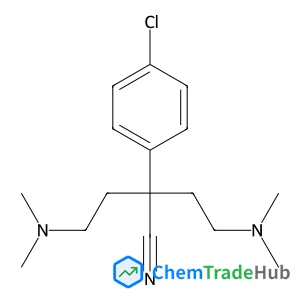
2-(4-Chlorophenyl)-4-(dimethylamino)-2-(2-(dimethylamino)ethyl)butanenitrile
CAS Number:
1246816-57-8
Molecular Formula:
C16H24ClN3


Recommended Suppliers





Disclaimer
This page provides academic journal information for reference and research purposes only. We are not affiliated with any journal publishers and do not handle publication submissions. For publication-related inquiries, please contact the respective journal publishers directly.
If you notice any inaccuracies in the information displayed, please contact us at support@chemtradehub.com. We will promptly review and address your concerns.