












The first dehydration and the competing reaction pathways of glucose homogeneously and heterogeneously catalyzed by acids
Literature Information
Publication Date
2013-01-03
DOI
10.1039/C2CP43644B
Impact Factor
3.676
Authors
David Lee Phillips
View Original
Abstract
The dehydration mechanisms for glucose in β-pyranose (BP) and in open-chain (OC) forms, catalyzed by acids homogeneously and heterogeneously, were investigated using density functional and two-layer ONIOM calculations. The first dehydration reaction and competing reaction pathways are the main focus of the present study. The energetics of five dehydration and two isomerization pathways were examined for the protonated form of BP in acidic aqueous solutions and the most favorable pathway of these was found to be the dehydration at the anomeric site. No dehydration pathway of OC glucose is favored over its isomerization to BP or to fructose. The relative ease of dehydration over isomerization depends on the selection of the reaction media for the protonated form of BP. These two reaction pathways catalyzed by a surface Brönsted acid site were then examined and the isomerization pathway was found to be more favorable than dehydration at the anomeric site on a surface acid site. These mechanistic insights provide an important guide for the catalyst design/selection of the reaction media for glucose dehydration.
Related Literature
Selective CO2 capture in an imine linked porphyrin porous polymer
Venkata S. Pavan K. Neti, Xiaofei Wu, Shuguang Deng, Luis Echegoyen
2013-07-03
Communication
DOI: 10.1039/C3PY00798G
Porous films based on a conjugated polymergelator for fluorescent detection of explosive vapors
Xiaofu Wu, Hui Tong, Lixiang Wang
2013-07-16
Communication
DOI: 10.1039/C3PY00806A
Comparing solution and melt-state association of hydrogen bonds in supramolecular polymers
Florian Herbst, Wolfgang H. Binder
2013-04-19
Paper
DOI: 10.1039/C3PY00362K
Characterization and assembly investigation of a dodecapeptide hydrolyzed from the crystalline domain of Bombyx mori silk fibroin
Ruiwen Hao, Jinming Zhang, Tao Xu, Lei Huang, Jinrong Yao, Xin Chen, Zhengzhong Shao
2013-02-07
Paper
DOI: 10.1039/C3PY21096K
A new method to make polymers with flexible main chains and photoelectric pendants for organic semiconductors
Yeli Fan, Baoping Lin, Ying Sun, Xiaohui Gong, Hong Yang, Xueqin Zhang
2013-05-22
Paper
DOI: 10.1039/C3PY00454F
Grafting of copolymers onto graphene by miniemulsion polymerization for conductive polymer composites: improved electrical conductivity and compatibility induced by interfacial distribution of graphene
Yeqiang Tan, Lijun Fang, Jianliang Xiao, Yihu Song, Qiang Zheng
2013-03-25
Communication
DOI: 10.1039/C3PY00164D
Synthesis of random copolymer based pH-responsive nanoparticles as drug carriers for cancer therapeutics
Apiradee Honglawan, Houping Ni, Drew Weissman
2013-05-08
Paper
DOI: 10.1039/C3PY00390F
Polymerization of methyl methacrylate by latent pre-catalysts based on CO2-protected N-heterocyclic carbenes
Stefan Naumann, Friedrich Georg Schmidt, Roman Schowner, Wolfgang Frey
2013-02-19
Paper
DOI: 10.1039/C3PY00073G
High Tg thermosetting resins from resveratrol
Jessica J. Cash, Matthew C. Davis, Michael D. Ford, Thomas J. Groshens, Andrew J. Guenthner, Benjamin G. Harvey, Kevin R. Lamison, Joseph M. Mabry, Heather A. Meylemans, Josiah T. Reams, Christopher M. Sahagun
2013-04-26
Paper
DOI: 10.1039/C3PY00438D
You might also like
Compound Q&A
Is 6-(3-Fluorophenyl)picolinic acid (CAS: 887982-40-3) safe?
6-(3-Fluorophenyl)picolinic acid is generally considered safe for laboratory use...
887982-40-36-(3-Fluorophenyl)pi...
Compound Q&A
What industries use (3R)-3-Pyrrolidinol (CAS: 2799-21-5)?
(3R)-3-Pyrrolidinol is used in the pharmaceutical industry as a precursor for dr...
2799-21-5(3R)-3-Pyrrolidinol
Compound Q&A
What precautions should be taken when handling (4R,5R)-4,5-Diethoxycarbonyl-2,2-dimethyldioxolane (CAS: 59779-75-8)?
When handling (4R,5R)-4,5-Diethoxycarbonyl-2,2-dimethyldioxolane (CAS: 59779-75-...
59779-75-8(4R,5R)-4,5-Diethoxy...
Compound Q&A
How is 1-(6-Chloroimidazo[1,2-b]pyridazin-3-yl)ethanone (CAS: 90734-71-7) typically synthesized?
1-(6-Chloroimidazo[1,2-b]pyridazin-3-yl)ethanone is often synthesized via a mult...
90734-71-71-(6-Chloroimidazo[1...
Compound Q&A
What is the market or research trend for N-Ethyl-3,4-dimethylbenzylamine (CAS: 39180-83-1)?
The market for N-Ethyl-3,4-dimethylbenzylamine (CAS: 39180-83-1) remains steady,...
39180-83-1N-Ethyl-3,4-dimethyl...
Compound Q&A
What is Tert-butyl 3-(pyrrolidin-1-yl)azetidine-1-carboxylate (CAS: 1019008-21-9)?
Tert-butyl 3-(pyrrolidin-1-yl)azetidine-1-carboxylate is a chemical compound wit...
1019008-21-9Tert-butyl 3-(pyrrol...
Compound Q&A
What regulatory guidelines apply to 1-Bromo-3-chloro-2,4-dimethoxybenzene (CAS: 1228956-93-1)?
1-Bromo-3-chloro-2,4-dimethoxybenzene (CAS: 1228956-93-1) falls under the classi...
1228956-93-11-Bromo-3-chloro-2,4...
Compound Q&A
Is 8-Bromo-2-methyl-3,4-dihydroisoquinolin-1(2H)-one (CAS: 1368622-07-4) safe?
The safety of 8-Bromo-2-methyl-3,4-dihydroisoquinolin-1(2H)-one (CAS: 1368622-07...
1368622-07-48-Bromo-2-methyl-3,4...
Compound Q&A
Is Benzyl [(3S)-2,6-dioxo-3-piperidinyl]carbamate (CAS: 22785-43-9) safe?
Benzyl [(3S)-2,6-dioxo-3-piperidinyl]carbamate is generally safe when handled wi...
22785-43-9Benzyl [(3S)-2,6-dio...
Compound Q&A
How should 1-{[4-(4,4,5,5-Tetramethyl-1,3,2-dioxaborolan-2-yl)phenyl]sulfonyl}pyrrolidine (CAS: 928657-21-0) be stored?
1-{[4-(4,4,5,5-Tetramethyl-1,3,2-dioxaborolan-2-yl)phenyl]sulfonyl}pyrrolidine s...
928657-21-01-{[4-(4,4,5,5-Tetra...
Source Journal
Physical Chemistry Chemical Physics

CiteScore:
5.5
Self-citation Rate:
10.3%
Articles per Year:
3036
Physical Chemistry Chemical Physics (PCCP) is an international journal co-owned by 19 physical chemistry and physics societies from around the world. This journal publishes original, cutting-edge research in physical chemistry, chemical physics and biophysical chemistry. To be suitable for publication in PCCP, articles must include significant innovation and/or insight into physical chemistry; this is the most important criterion that reviewers and Editors will judge against when evaluating submissions. The journal has a broad scope and welcomes contributions spanning experiment, theory, computation and data science. Topical coverage includes spectroscopy, dynamics, kinetics, statistical mechanics, thermodynamics, electrochemistry, catalysis, surface science, quantum mechanics, quantum computing and machine learning. Interdisciplinary research areas such as polymers and soft matter, materials, nanoscience, energy, surfaces/interfaces, and biophysical chemistry are welcomed if they demonstrate significant innovation and/or insight into physical chemistry. Joined experimental/theoretical studies are particularly appreciated when complementary and based on up-to-date approaches.
Recommended Compounds
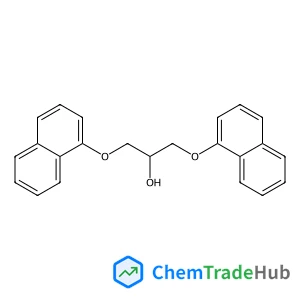
![4-[(2,4-Dihydroxyphenyl)diazenyl]-5-hydroxy-2,7-naphthalenedisulfonic acid structure](https://static.chemtradehub.com/structs/362/3627-01-8-79ac.webp "4-[(2,4-Dihydroxyphenyl)diazenyl]-5-hydroxy-2,7-naphthalenedisulfonic acid structure")
4-[(2,4-Dihydroxyphenyl)diazenyl]-5-hydroxy-2,7-naphthalenedisulfonic acid
CAS Number:
3627-01-8
Molecular Formula:
C16H12N2O9S2
Recommended Suppliers






Disclaimer
This page provides academic journal information for reference and research purposes only. We are not affiliated with any journal publishers and do not handle publication submissions. For publication-related inquiries, please contact the respective journal publishers directly.
If you notice any inaccuracies in the information displayed, please contact us at support@chemtradehub.com. We will promptly review and address your concerns.