












Synthesis of random copolymer based pH-responsive nanoparticles as drug carriers for cancer therapeutics
Literature Information
Publication Date
2013-05-08
DOI
10.1039/C3PY00390F
Impact Factor
5.582
Authors
Apiradee Honglawan, Houping Ni, Drew Weissman
View Original
Abstract
We report the design and synthesis of pH-responsive vesicular nanoparticles (NPs) based on amphiphilic random copolymers as novel drug carriers for chemotherapy. The random copolymers were photopolymerized from acryloyl chloride, followed by assembly in acetone. The resulting vesicular PAC NPs with an acrylate-functionalized shell were hydrolyzed in aqueous solution to form NPs with a carboxylated shell, which were further modified with branched poly(ethyleneimine) (PEI) to obtain positively charged PEI NPs. The resulting NPs maintained their structures and were pH-sensitive. The effects of molecular weight and concentration of PEI on the grafting efficiency, surface charge, and pH-sensitivity of PEI NPs were investigated by Fourier transform infrared (FT-IR) spectroscopy, electron microscopy, dynamic light scattering and zeta-potential measurements, respectively. We examined two packaging strategies to load the anticancer drug molecule, doxorubicin hydrochloride (Dox), into the NPs by encapsulating Dox inside the cavity of NPs during the assembly of the PAC NPs and by coupling Dox to the shell of PEI modified NPs. The first showed ∼30 wt% Dox loading efficiency, which was 15 times more than the latter, likely due to the larger loading capacity of both within the cavity and on the NP shell. We then tested in vitro delivery of Dox using cavity and surface loaded PEI NPs to HEK 293T cells. At the optimal concentration of NPs (9 μg mL−1), approximately 10 times more Dox were delivered compared to the naked Dox with a low level of cytotoxicity (over 90% relative cell viability).
Related Literature
Density functional study on the resistance to sulfur poisoning of Ptx (x = 0, 1, 4 and 8) modified α-Mo2C(0001) surfaces
Weimeng Kong, Xilin Zhang, Jianjun Mao, Xiaopei Xu, Yanxing Zhang
2017-08-21
Paper
DOI: 10.1039/C7CP04718E
Tailoring the physical properties of the mixtures of ionic liquids: a microscopic point of view
O. Palumbo, M. A. Navarra, J.-B. Brubach, P. Roy, A. Paolone
2017-02-27
Paper
DOI: 10.1039/C7CP00850C
Photomanipulation of the anchoring strength using a spontaneously adsorbed layer of azo dendrimers
Hajnalka Nádasi, Ralf Stannarius, Alexey Eremin, Ken Ishikawa, Osamu Haba, Koichiro Yonetake, Hideo Takezoe, Fumito Araoka
2017-03-02
Paper
DOI: 10.1039/C6CP08461C
Pd-P nanoparticles supported on PxOy-incorporated carbon nanotubes for enhanced methanol oxidation in an alkaline medium
Yanan Xie, Weizhen Yu, Juan Wang, Yifei Wu, Shuo Niu, Wenyao Guo, Tsungwu Lin, Lidong Shao
2017-08-18
Paper
DOI: 10.1039/C7CP04540A
Emergence of novel hydrogen chlorides under high pressure
Gilles Frapper
2017-03-01
Paper
DOI: 10.1039/C6CP08708F
Membrane interactions and antimicrobial effects of layered double hydroxide nanoparticles
L. Nyström, R. Nordström, Z. P. Xu, M. Davoudi
2017-07-06
Paper
DOI: 10.1039/C7CP02701J
CO2 electroreduction performance of a single transition metal atom supported on porphyrin-like graphene: a computational study
Zhongxu Wang
2017-08-08
Paper
DOI: 10.1039/C7CP04299J
Compositions and structures of niobium oxide cluster ions, NbmOn±, (m = 2–12), revealed by ion mobility mass spectrometry
Jenna W. J. Wu, Ryoichi Moriyama, Keijiro Ohshimo, Fuminori Misaizu
2017-08-22
Paper
DOI: 10.1039/C7CP04017B
You might also like
Compound Q&A
Is 6-(3-Fluorophenyl)picolinic acid (CAS: 887982-40-3) safe?
6-(3-Fluorophenyl)picolinic acid is generally considered safe for laboratory use...
887982-40-36-(3-Fluorophenyl)pi...
Compound Q&A
What industries use (3R)-3-Pyrrolidinol (CAS: 2799-21-5)?
(3R)-3-Pyrrolidinol is used in the pharmaceutical industry as a precursor for dr...
2799-21-5(3R)-3-Pyrrolidinol
Compound Q&A
What precautions should be taken when handling (4R,5R)-4,5-Diethoxycarbonyl-2,2-dimethyldioxolane (CAS: 59779-75-8)?
When handling (4R,5R)-4,5-Diethoxycarbonyl-2,2-dimethyldioxolane (CAS: 59779-75-...
59779-75-8(4R,5R)-4,5-Diethoxy...
Compound Q&A
How is 1-(6-Chloroimidazo[1,2-b]pyridazin-3-yl)ethanone (CAS: 90734-71-7) typically synthesized?
1-(6-Chloroimidazo[1,2-b]pyridazin-3-yl)ethanone is often synthesized via a mult...
90734-71-71-(6-Chloroimidazo[1...
Compound Q&A
What is the market or research trend for N-Ethyl-3,4-dimethylbenzylamine (CAS: 39180-83-1)?
The market for N-Ethyl-3,4-dimethylbenzylamine (CAS: 39180-83-1) remains steady,...
39180-83-1N-Ethyl-3,4-dimethyl...
Compound Q&A
What is Tert-butyl 3-(pyrrolidin-1-yl)azetidine-1-carboxylate (CAS: 1019008-21-9)?
Tert-butyl 3-(pyrrolidin-1-yl)azetidine-1-carboxylate is a chemical compound wit...
1019008-21-9Tert-butyl 3-(pyrrol...
Compound Q&A
What regulatory guidelines apply to 1-Bromo-3-chloro-2,4-dimethoxybenzene (CAS: 1228956-93-1)?
1-Bromo-3-chloro-2,4-dimethoxybenzene (CAS: 1228956-93-1) falls under the classi...
1228956-93-11-Bromo-3-chloro-2,4...
Compound Q&A
Is 8-Bromo-2-methyl-3,4-dihydroisoquinolin-1(2H)-one (CAS: 1368622-07-4) safe?
The safety of 8-Bromo-2-methyl-3,4-dihydroisoquinolin-1(2H)-one (CAS: 1368622-07...
1368622-07-48-Bromo-2-methyl-3,4...
Compound Q&A
Is Benzyl [(3S)-2,6-dioxo-3-piperidinyl]carbamate (CAS: 22785-43-9) safe?
Benzyl [(3S)-2,6-dioxo-3-piperidinyl]carbamate is generally safe when handled wi...
22785-43-9Benzyl [(3S)-2,6-dio...
Compound Q&A
How should 1-{[4-(4,4,5,5-Tetramethyl-1,3,2-dioxaborolan-2-yl)phenyl]sulfonyl}pyrrolidine (CAS: 928657-21-0) be stored?
1-{[4-(4,4,5,5-Tetramethyl-1,3,2-dioxaborolan-2-yl)phenyl]sulfonyl}pyrrolidine s...
928657-21-01-{[4-(4,4,5,5-Tetra...
Source Journal
Polymer Chemistry

CiteScore:
8.6
Self-citation Rate:
7.3%
Articles per Year:
457
Polymer Chemistry welcomes submissions in all areas of polymer science that have a strong focus on macromolecular chemistry. Manuscripts may cover a broad range of fields, yet no direct application focus is required.
Recommended Compounds
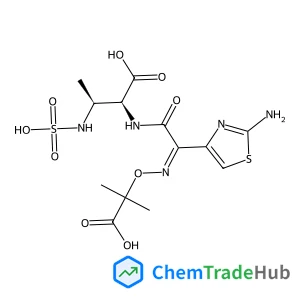
Aztreonam USP Related Compound A (Open-ring Aztreonam)
CAS Number:
87500-74-1
Molecular Formula:
C13H19N5O9S2
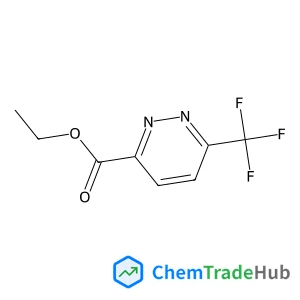
Ethyl 6-(trifluoromethyl)pyridazine-3-carboxylate
CAS Number:
1192155-06-8
Molecular Formula:
C8H7F3N2O2
Recommended Suppliers




Disclaimer
This page provides academic journal information for reference and research purposes only. We are not affiliated with any journal publishers and do not handle publication submissions. For publication-related inquiries, please contact the respective journal publishers directly.
If you notice any inaccuracies in the information displayed, please contact us at support@chemtradehub.com. We will promptly review and address your concerns.