












Grafting of copolymers onto graphene by miniemulsion polymerization for conductive polymer composites: improved electrical conductivity and compatibility induced by interfacial distribution of graphene
Literature Information
Publication Date
2013-03-25
DOI
10.1039/C3PY00164D
Impact Factor
5.582
Authors
Yeqiang Tan, Lijun Fang, Jianliang Xiao, Yihu Song, Qiang Zheng
View Original
Abstract
A facile and general method to covalently functionalize graphene oxide (GO) with copolymers, using poly(styrene-co-methylmethacrylate) (P(St-co-MMA)) as an example, via miniemulsion polymerization is described in this study. After in situ reduction, insulating GO is converted to conductive reduced-graphene oxide (RGO). P(St-co-MMA) grafted RGO as conducting filler was incorporated into immiscible polystyrene (PS)/poly(methyl methacrylate) (PMMA) blend to prepare conductive polymer composites (CPCs). The lowest percolation threshold (0.02 vol%) among all the reported values for graphene-filled CPCs was achieved due to the controllable preferential distribution of the modified RGO at the interfacial region between PS and PMMA phases, attributed to P(St-co-MMA) grafted on the surface of RGO behaving as compatibilizers to improve interfacial interactions with both the two phases. Moreover, P(St-co-MMA) grafting modified RGO could obviously enhance the compatibility reflected by a significant reduction of the size of dispersed phase, for an example, by nearly one order of magnitude for PS/PMMA (4/1 in volume) blends.
Recommended Journals
Related Literature
Bias induced spin transitions of spin crossover molecules: the role of charging effect
2017-02-16
Paper
DOI: 10.1039/C6CP08265C
A structural study on the excimer state of an isolated benzene dimer using infrared spectroscopy in the skeletal vibration region
Masaaki Fujii
2017-07-18
Paper
DOI: 10.1039/C7CP03480F
Impacts of anions on the oxygen reduction reaction kinetics on platinum and palladium surfaces in alkaline solutions
Shangqian Zhu, Xiaomeng Hu, Minhua Shao
2017-02-17
Paper
DOI: 10.1039/C7CP00404D
Near-infrared photochemistry at interfaces based on upconverting nanoparticles
Si Wu, Hans-Jürgen Butt
2017-05-03
Perspective
DOI: 10.1039/C7CP01838J
Influence of co-non-solvency on hydrophobic molecules driven by excluded volume effect
2017-08-15
Communication
DOI: 10.1039/C7CP04152G
Amphiphilic nanosheet self-assembly at the water/oil interface: computer simulations
Wenjun Xiang, Shuangliang Zhao, Xianyu Song, Shenwen Fang, Fen Wang, Cheng Zhong, Zhaoyang Luo
2017-02-10
Paper
DOI: 10.1039/C6CP08654C
Correction: Elucidation of transport mechanism and enhanced alkali ion transference numbers in mixed alkali metal–organic ionic molten salts
Fangfang Chen
2017-09-11
Correction
DOI: 10.1039/C7CP90203D
High temperature activation of hematite nanorods for sunlight driven water oxidation reaction
Nathalie Minko Ito, Waldemir Moura Carvalho, Jr, Dereck Nills Ferreira Muche, Ricardo Hauch Ribeiro Castro, Gustavo Martini Dalpian
2017-08-24
Paper
DOI: 10.1039/C7CP04827K
Pd-P nanoparticles supported on PxOy-incorporated carbon nanotubes for enhanced methanol oxidation in an alkaline medium
Yanan Xie, Weizhen Yu, Juan Wang, Yifei Wu, Shuo Niu, Wenyao Guo, Tsungwu Lin, Lidong Shao
2017-08-18
Paper
DOI: 10.1039/C7CP04540A
You might also like
Compound Q&A
Is 6-(3-Fluorophenyl)picolinic acid (CAS: 887982-40-3) safe?
6-(3-Fluorophenyl)picolinic acid is generally considered safe for laboratory use...
887982-40-36-(3-Fluorophenyl)pi...
Compound Q&A
What industries use (3R)-3-Pyrrolidinol (CAS: 2799-21-5)?
(3R)-3-Pyrrolidinol is used in the pharmaceutical industry as a precursor for dr...
2799-21-5(3R)-3-Pyrrolidinol
Compound Q&A
What precautions should be taken when handling (4R,5R)-4,5-Diethoxycarbonyl-2,2-dimethyldioxolane (CAS: 59779-75-8)?
When handling (4R,5R)-4,5-Diethoxycarbonyl-2,2-dimethyldioxolane (CAS: 59779-75-...
59779-75-8(4R,5R)-4,5-Diethoxy...
Compound Q&A
How is 1-(6-Chloroimidazo[1,2-b]pyridazin-3-yl)ethanone (CAS: 90734-71-7) typically synthesized?
1-(6-Chloroimidazo[1,2-b]pyridazin-3-yl)ethanone is often synthesized via a mult...
90734-71-71-(6-Chloroimidazo[1...
Compound Q&A
What is the market or research trend for N-Ethyl-3,4-dimethylbenzylamine (CAS: 39180-83-1)?
The market for N-Ethyl-3,4-dimethylbenzylamine (CAS: 39180-83-1) remains steady,...
39180-83-1N-Ethyl-3,4-dimethyl...
Compound Q&A
What is Tert-butyl 3-(pyrrolidin-1-yl)azetidine-1-carboxylate (CAS: 1019008-21-9)?
Tert-butyl 3-(pyrrolidin-1-yl)azetidine-1-carboxylate is a chemical compound wit...
1019008-21-9Tert-butyl 3-(pyrrol...
Compound Q&A
What regulatory guidelines apply to 1-Bromo-3-chloro-2,4-dimethoxybenzene (CAS: 1228956-93-1)?
1-Bromo-3-chloro-2,4-dimethoxybenzene (CAS: 1228956-93-1) falls under the classi...
1228956-93-11-Bromo-3-chloro-2,4...
Compound Q&A
Is 8-Bromo-2-methyl-3,4-dihydroisoquinolin-1(2H)-one (CAS: 1368622-07-4) safe?
The safety of 8-Bromo-2-methyl-3,4-dihydroisoquinolin-1(2H)-one (CAS: 1368622-07...
1368622-07-48-Bromo-2-methyl-3,4...
Compound Q&A
Is Benzyl [(3S)-2,6-dioxo-3-piperidinyl]carbamate (CAS: 22785-43-9) safe?
Benzyl [(3S)-2,6-dioxo-3-piperidinyl]carbamate is generally safe when handled wi...
22785-43-9Benzyl [(3S)-2,6-dio...
Compound Q&A
How should 1-{[4-(4,4,5,5-Tetramethyl-1,3,2-dioxaborolan-2-yl)phenyl]sulfonyl}pyrrolidine (CAS: 928657-21-0) be stored?
1-{[4-(4,4,5,5-Tetramethyl-1,3,2-dioxaborolan-2-yl)phenyl]sulfonyl}pyrrolidine s...
928657-21-01-{[4-(4,4,5,5-Tetra...
Source Journal
Polymer Chemistry

CiteScore:
8.6
Self-citation Rate:
7.3%
Articles per Year:
457
Polymer Chemistry welcomes submissions in all areas of polymer science that have a strong focus on macromolecular chemistry. Manuscripts may cover a broad range of fields, yet no direct application focus is required.
Recommended Compounds
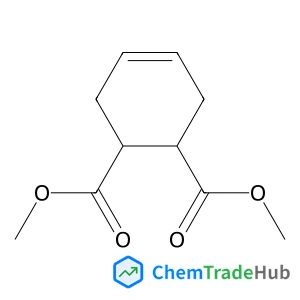
4-Cyclohexene-1,2-dicarboxylic acid, 1,2-dimethyl ester, (1R,2R)-rel-
CAS Number:
17673-68-6
Molecular Formula:
C10H14O4
![2-[({[(2-Methyl-2-propanyl)oxy]carbonyl}amino)methyl]isonicotinic acid structure](https://static.chemtradehub.com/structs/473/473924-63-9-973b.webp "2-[({[(2-Methyl-2-propanyl)oxy]carbonyl}amino)methyl]isonicotinic acid structure")
2-[({[(2-Methyl-2-propanyl)oxy]carbonyl}amino)methyl]isonicotinic acid
CAS Number:
473924-63-9
Molecular Formula:
C12H16N2O4
Recommended Suppliers







Disclaimer
This page provides academic journal information for reference and research purposes only. We are not affiliated with any journal publishers and do not handle publication submissions. For publication-related inquiries, please contact the respective journal publishers directly.
If you notice any inaccuracies in the information displayed, please contact us at support@chemtradehub.com. We will promptly review and address your concerns.