













Spontaneous electric fields in films of CF3Cl, CF2Cl2 and CFCl3
Literature Information
Publication Date
2012-10-24
DOI
10.1039/C2CP43138F
Impact Factor
3.676
Authors
Andrew Cassidy, Oksana Plekan, Richard Balog, Nykola C. Jones, David Field
View Original
Abstract
Data are presented showing the spontaneous formation of electric fields within solid films of the chlorofluorocarbons (CFCs) CF3Cl, CF2Cl2 and CFCl3 as a function of film deposition temperature from 40 K and above. Electric fields, which arise through dipole alignment and lie in the range of a few times 107 V m−1 to a few times 106 V m−1, decrease as the degree of chlorination increases. Maximum deposition temperatures for display of an electric field lie at ∼50 K, ∼65 K and ∼52 K for CF3Cl, CF2Cl2 and CFCl3 respectively. CFCl3 films possess electric fields which show an onset of temporal metastability between deposition temperatures of 46 K and 50 K. CF3Cl and CF2Cl2 demonstrate temperatures of ∼65 K and ∼80 K at which the electric field in the film is removed by heating, so-called Curie points, with decay of the field spread over more than 10 K. CFCl3 displays a comparatively sharp Curie point at 55 K. This variety of behaviour arises despite the resemblance of these three species in terms of electronic structure and gas phase dipole moment, emphasising the requirement for detailed chemical models of this phenomenon.
Related Literature
Solution-processable blue-to-transmissive electrochromic benzotriazole-containing conjugated polymers
Wei Teng Neo, Lee May Loo, Jing Song, Xiaobai Wang, Ching Mui Cho, Hardy Sze On Chan, Yun Zong
2013-06-20
Paper
DOI: 10.1039/C3PY00677H
Porous films based on a conjugated polymergelator for fluorescent detection of explosive vapors
Xiaofu Wu, Hui Tong, Lixiang Wang
2013-07-16
Communication
DOI: 10.1039/C3PY00806A
High Tg thermosetting resins from resveratrol
Jessica J. Cash, Matthew C. Davis, Michael D. Ford, Thomas J. Groshens, Andrew J. Guenthner, Benjamin G. Harvey, Kevin R. Lamison, Joseph M. Mabry, Heather A. Meylemans, Josiah T. Reams, Christopher M. Sahagun
2013-04-26
Paper
DOI: 10.1039/C3PY00438D
Conjugated polymers with 2,7-linked 3,6-difluorocarbazole as donor unit for high efficiency polymer solar cells
Chun Du, Weiwei Li, Yan Duan, Cuihong Li, Huanli Dong, Jia Zhu, Wenping Hu, Zhishan Bo
2013-02-20
Paper
DOI: 10.1039/C3PY00177F
Amphiphilic supramolecular A(B)2A quasi-triblock copolymers
2013-03-13
Communication
DOI: 10.1039/C3PY00216K
Generation of supramolecular microcapsules by oxidative covalent polymerization of a ditopic supramolecular building block
Nabarun Roy, Eric Buhler, Jean-Marie Lehn
2013-03-19
Communication
DOI: 10.1039/C3PY00308F
Surface-initiated RAFT polymerization of sulfobetaine from cellulose membranes to improve hemocompatibility and antibiofouling property
Jiang Yuan, Xiaobo Huang, Pengfei Li, Li Li
2013-06-24
Paper
DOI: 10.1039/C3PY00565H
Characterization and assembly investigation of a dodecapeptide hydrolyzed from the crystalline domain of Bombyx mori silk fibroin
Ruiwen Hao, Jinming Zhang, Tao Xu, Lei Huang, Jinrong Yao, Xin Chen, Zhengzhong Shao
2013-02-07
Paper
DOI: 10.1039/C3PY21096K
RAFT polymerization of dimethyl(methacryloyloxy)methyl phosphonate and its phosphonic acid derivative: a new opportunity for phosphorus-based materials
Benjamin Canniccioni, Sophie Monge, Ghislain David, Jean-Jacques Robin
2013-04-19
Paper
DOI: 10.1039/C3PY00426K
Organic microporous polymer from a hexaphenylbenzene based triptycene monomer: synthesis and its gas storage properties
Chun Zhang, Lian-Hui Peng, Buyi Li, Ying Liu, Peng-Cheng Zhu, Zhen Wang, Deng-Huang Zhan, Bien Tan, Xiang-Liang Yang, Hui-Bi Xu
2013-05-08
Communication
DOI: 10.1039/C3PY00499F
You might also like
Compound Q&A
Is 6-(3-Fluorophenyl)picolinic acid (CAS: 887982-40-3) safe?
6-(3-Fluorophenyl)picolinic acid is generally considered safe for laboratory use...
887982-40-36-(3-Fluorophenyl)pi...
Compound Q&A
What industries use (3R)-3-Pyrrolidinol (CAS: 2799-21-5)?
(3R)-3-Pyrrolidinol is used in the pharmaceutical industry as a precursor for dr...
2799-21-5(3R)-3-Pyrrolidinol
Compound Q&A
What precautions should be taken when handling (4R,5R)-4,5-Diethoxycarbonyl-2,2-dimethyldioxolane (CAS: 59779-75-8)?
When handling (4R,5R)-4,5-Diethoxycarbonyl-2,2-dimethyldioxolane (CAS: 59779-75-...
59779-75-8(4R,5R)-4,5-Diethoxy...
Compound Q&A
How is 1-(6-Chloroimidazo[1,2-b]pyridazin-3-yl)ethanone (CAS: 90734-71-7) typically synthesized?
1-(6-Chloroimidazo[1,2-b]pyridazin-3-yl)ethanone is often synthesized via a mult...
90734-71-71-(6-Chloroimidazo[1...
Compound Q&A
What is the market or research trend for N-Ethyl-3,4-dimethylbenzylamine (CAS: 39180-83-1)?
The market for N-Ethyl-3,4-dimethylbenzylamine (CAS: 39180-83-1) remains steady,...
39180-83-1N-Ethyl-3,4-dimethyl...
Compound Q&A
What is Tert-butyl 3-(pyrrolidin-1-yl)azetidine-1-carboxylate (CAS: 1019008-21-9)?
Tert-butyl 3-(pyrrolidin-1-yl)azetidine-1-carboxylate is a chemical compound wit...
1019008-21-9Tert-butyl 3-(pyrrol...
Compound Q&A
What regulatory guidelines apply to 1-Bromo-3-chloro-2,4-dimethoxybenzene (CAS: 1228956-93-1)?
1-Bromo-3-chloro-2,4-dimethoxybenzene (CAS: 1228956-93-1) falls under the classi...
1228956-93-11-Bromo-3-chloro-2,4...
Compound Q&A
Is 8-Bromo-2-methyl-3,4-dihydroisoquinolin-1(2H)-one (CAS: 1368622-07-4) safe?
The safety of 8-Bromo-2-methyl-3,4-dihydroisoquinolin-1(2H)-one (CAS: 1368622-07...
1368622-07-48-Bromo-2-methyl-3,4...
Compound Q&A
Is Benzyl [(3S)-2,6-dioxo-3-piperidinyl]carbamate (CAS: 22785-43-9) safe?
Benzyl [(3S)-2,6-dioxo-3-piperidinyl]carbamate is generally safe when handled wi...
22785-43-9Benzyl [(3S)-2,6-dio...
Compound Q&A
How should 1-{[4-(4,4,5,5-Tetramethyl-1,3,2-dioxaborolan-2-yl)phenyl]sulfonyl}pyrrolidine (CAS: 928657-21-0) be stored?
1-{[4-(4,4,5,5-Tetramethyl-1,3,2-dioxaborolan-2-yl)phenyl]sulfonyl}pyrrolidine s...
928657-21-01-{[4-(4,4,5,5-Tetra...
Source Journal
Physical Chemistry Chemical Physics

CiteScore:
5.5
Self-citation Rate:
10.3%
Articles per Year:
3036
Physical Chemistry Chemical Physics (PCCP) is an international journal co-owned by 19 physical chemistry and physics societies from around the world. This journal publishes original, cutting-edge research in physical chemistry, chemical physics and biophysical chemistry. To be suitable for publication in PCCP, articles must include significant innovation and/or insight into physical chemistry; this is the most important criterion that reviewers and Editors will judge against when evaluating submissions. The journal has a broad scope and welcomes contributions spanning experiment, theory, computation and data science. Topical coverage includes spectroscopy, dynamics, kinetics, statistical mechanics, thermodynamics, electrochemistry, catalysis, surface science, quantum mechanics, quantum computing and machine learning. Interdisciplinary research areas such as polymers and soft matter, materials, nanoscience, energy, surfaces/interfaces, and biophysical chemistry are welcomed if they demonstrate significant innovation and/or insight into physical chemistry. Joined experimental/theoretical studies are particularly appreciated when complementary and based on up-to-date approaches.
Recommended Compounds

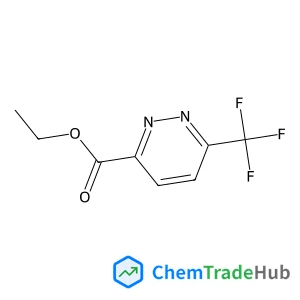
Ethyl 6-(trifluoromethyl)pyridazine-3-carboxylate
CAS Number:
1192155-06-8
Molecular Formula:
C8H7F3N2O2
![4-[(2,4-Dihydroxyphenyl)diazenyl]-5-hydroxy-2,7-naphthalenedisulfonic acid structure](https://static.chemtradehub.com/structs/362/3627-01-8-79ac.webp "4-[(2,4-Dihydroxyphenyl)diazenyl]-5-hydroxy-2,7-naphthalenedisulfonic acid structure")
4-[(2,4-Dihydroxyphenyl)diazenyl]-5-hydroxy-2,7-naphthalenedisulfonic acid
CAS Number:
3627-01-8
Molecular Formula:
C16H12N2O9S2
Recommended Suppliers




Disclaimer
This page provides academic journal information for reference and research purposes only. We are not affiliated with any journal publishers and do not handle publication submissions. For publication-related inquiries, please contact the respective journal publishers directly.
If you notice any inaccuracies in the information displayed, please contact us at support@chemtradehub.com. We will promptly review and address your concerns.