


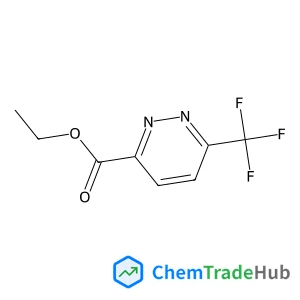
Ethyl 6-(trifluoromethyl)pyridazine-3-carboxylate
CAS Number:
1192155-06-8
Molecular Formula:
C8H7F3N2O2
Miaojun Ding, Hongyuan Hu
Shell cross-linked polymeric nanoparticles were prepared through an interfacially confined copolymerization of styrene and disulfide cross-linker in a reversible addition-fragmentation chain transfer (RAFT) miniemulsion system using poly(2-(dimethylamino) ethyl methacrylate) (PDMAEMA) as stabilizer and macroinitiator. 1H NMR, FT-IR, and FE-SEM have been applied to investigate the structures and morphologies of the resultant nanoparticles. Fluorescent spectra results show that the as-prepared samples have fluorescent properties, which may be used as a fluorescent carrier for control release of guest molecules.

Nature Medicine

Chemical Communications

Saudi Pharmaceutical Journal

Russian Journal of General Chemistry

Russian Journal of Coordination Chemistry

Organic Process Research & Development

Current Opinion in Colloid & Interface Science

Current Opinion in Solid State & Materials Science

New Journal of Chemistry

Journal of Peptide Science
Ji Liu, Oren A. Scherman
DOI: 10.1039/C5PY01115A
Junfeng Zhou, Linxuan Fang, Jiajia Wang, Jing Sun, Kaikai Jin, Qiang Fang
DOI: 10.1039/C6PY00788K
Jonathan Marshall, Jake Hooton, Yang Han, Adam Creamer, Raja Shahid Ashraf, Yoann Porte, Thomas D. Anthopoulos, Paul N. Stavrinou, Martyn A. McLachlan, Hugo Bronstein, Peter Beavis, Martin Heeney
DOI: 10.1039/C4PY00767K
Andrea Laybourn, Rob Clowes, Tom Hasell, Andrew I. Cooper, Yaroslav Z. Khimyak, Dave J. Adams
DOI: 10.1039/C4PY00647J
Priyapratim Patra, Arun Prabhu Rameshbabu, Dipankar Das, Santanu Dhara, Asit Baran Panda, Sagar Pal
DOI: 10.1039/C6PY01128D
Zheng Zhao, Zhongli Wang, Congwu Ge, Xu Zhang, Xiaodi Yang, Xike Gao
DOI: 10.1039/C5PY01709B
C. Gioia, M. B. Banella, P. Marchese, M. Vannini, M. Colonna, A. Celli
DOI: 10.1039/C6PY00908E
Wenqiang Yao, Yongjun Li, Chun Feng, Guolin Lu, Xiaoyu Huang
DOI: 10.1039/C4PY00851K
6-(3-Fluorophenyl)picolinic acid is generally considered safe for laboratory use...
(3R)-3-Pyrrolidinol is used in the pharmaceutical industry as a precursor for dr...
When handling (4R,5R)-4,5-Diethoxycarbonyl-2,2-dimethyldioxolane (CAS: 59779-75-...
1-(6-Chloroimidazo[1,2-b]pyridazin-3-yl)ethanone is often synthesized via a mult...
The market for N-Ethyl-3,4-dimethylbenzylamine (CAS: 39180-83-1) remains steady,...
Tert-butyl 3-(pyrrolidin-1-yl)azetidine-1-carboxylate is a chemical compound wit...
1-Bromo-3-chloro-2,4-dimethoxybenzene (CAS: 1228956-93-1) falls under the classi...
The safety of 8-Bromo-2-methyl-3,4-dihydroisoquinolin-1(2H)-one (CAS: 1368622-07...
Benzyl [(3S)-2,6-dioxo-3-piperidinyl]carbamate is generally safe when handled wi...
1-{[4-(4,4,5,5-Tetramethyl-1,3,2-dioxaborolan-2-yl)phenyl]sulfonyl}pyrrolidine s...

Polymer Chemistry welcomes submissions in all areas of polymer science that have a strong focus on macromolecular chemistry. Manuscripts may cover a broad range of fields, yet no direct application focus is required.
![Benzyl spiro[indole-3,4'-piperidine]-1(2H)-carboxylate hydrochloride (1:1) structure](https://static.chemtradehub.com/structs/159/159635-46-8-8de0.webp "Benzyl spiro[indole-3,4'-piperidine]-1(2H)-carboxylate hydrochloride (1:1) structure")
![4-[(2,4-Dihydroxyphenyl)diazenyl]-5-hydroxy-2,7-naphthalenedisulfonic acid structure](https://static.chemtradehub.com/structs/362/3627-01-8-79ac.webp "4-[(2,4-Dihydroxyphenyl)diazenyl]-5-hydroxy-2,7-naphthalenedisulfonic acid structure")




