













Advances in the synthesis of bio-based aromatic polyesters: novel copolymers derived from vanillic acid and ε-caprolactone
Literature Information
Publication Date
2016-08-01
DOI
10.1039/C6PY00908E
Impact Factor
5.582
Authors
C. Gioia, M. B. Banella, P. Marchese, M. Vannini, M. Colonna, A. Celli
View Original
Abstract
A new and sustainable pathway for the synthesis of polyesters and copolyesters derived from vanillic acid is suggested. The poor reactivity of the fenolic –OH group of vanillic acid has been overcome by etherification reactions with biobased ethylene carbonate: the full procedure towards poly(ethylene vanillate) (PEV) avoids solvents and purification steps and uses only bio-based reagents. The PEV thus obtained is an example of bio-based PET mimics, characterized by high thermal transitions and a notable level of crystallinity. However, probably due to its low molecular weight, the material is brittle. In order to solve such problems and to exploit the aromatic structure of PEV to enhance the properties of aliphatic polyesters, new copolymers based on PEV and poly-ε-caprolactone were prepared. The new materials are characterized by an EV crystalline phase and tunable thermal properties according to the composition.
Related Literature
4D solid-state NMR for protein structure determination
Matthias Huber, Anja Böckmann, Sebastian Hiller, Beat H. Meier
2012-02-17
Perspective
DOI: 10.1039/C2CP23872A
Ultra-thin SiO2 layers on TiO2: improved photocatalysis by enhancing products' desorption
Milka Nussbaum, Yaron Paz
2012-01-10
Paper
DOI: 10.1039/C2CP23202B
Carbon coated nano-LiTi2(PO4)3 electrodes for non-aqueous hybrid supercapacitors
W. Chuiling, M. V. Reddy, G. V. Subba Rao, B. V. R. Chowdari
2012-03-02
Paper
DOI: 10.1039/C2CP40603A
The degradation mechanism of methyl orange under photo-catalysis of TiO2
Lihong Yu, Jingyu Xi, Ming-De Li, Hung Tat Chan, Tao Su, David Lee Phillips, Wai Kin Chan
2012-01-05
Paper
DOI: 10.1039/C2CP23226J
A density functional theory study of hydrogen dissociation and diffusion at the perimeter sites of Au/TiO2
Bo Yang, Xue-Qing Gong
2012-01-16
Communication
DOI: 10.1039/C2CP23755E
What is the “best” atomic charge model to describe through-space charge-transfer excitations?
Denis Jacquemin, Tangui Le Bahers, Ilaria Ciofini
2012-02-24
Paper
DOI: 10.1039/C2CP40261K
Cooperative effects to enhance two-photon absorption efficiency: intra- versus inter-molecular approach
E. Collini
2012-01-23
Perspective
DOI: 10.1039/C2CP24030K
Effects of Cr2O3 modification on the performance of SnO2 electrodes in DSSCs
Seo-Yeong Choi, Min-Hye Kim, Young-Uk Kwon
2012-01-16
Paper
DOI: 10.1039/C2CP23545E
High-pressure spin-crossover in a dinuclear Fe(ii) complex
Patrick Rosa, Laure Vendier, Nicola Casati, Jean-François Létard, Azzedine Bousseksou, Philippe Guionneau, Gábor Molnár
2012-03-08
Paper
DOI: 10.1039/C2CP23940J
Probing the structural and electronic properties of small vanadium monoxide clusters
Huai-Qian Wang, Xiao-Yu Kuang
2012-02-14
Paper
DOI: 10.1039/C2CP40112F
You might also like
Compound Q&A
What is 3-Fluoro-2-methylbenzylamine (CAS: 771573-36-5)?
3-Fluoro-2-methylbenzylamine is an organic compound with the CAS number 771573-3...
771573-36-53-Fluoro-2-methylben...
Compound Q&A
Is Tert-butyl 2-(oxetan-3-ylidene)acetate (CAS: 1207175-03-8) safe?
Tert-butyl 2-(oxetan-3-ylidene)acetate is considered safe for its intended uses ...
1207175-03-8Tert-butyl 2-(oxetan...
Compound Q&A
What precautions should be taken when handling 4-Acetyl-2-fluorobenzonitrile (CAS: 214760-18-6)?
Proper personal protective equipment (PPE) such as gloves, goggles, and a lab co...
214760-18-64-Acetyl-2-fluoroben...
Compound Q&A
How is 2-Ethyl-4-methyl-1,3-thiazole (CAS: 15679-12-6) typically synthesized?
2-Ethyl-4-methyl-1,3-thiazole is commonly synthesized via the reaction of thiour...
15679-12-62-Ethyl-4-methyl-1,3...
Compound Q&A
How should 5',5''-([2,2'-Bithiophene]-5,5'-diyl)bis(([1,1':3',1''-terphenyl]-4,4''-dicarboxylic acid)) (CAS: 1227780-71-3) be stored?
This compound should be stored in a cool, dry place away from direct sunlight an...
1227780-71-35',5''''-([2,2'-Bith...
Compound Q&A
What regulatory guidelines apply to L-Lysine Acetate Salt (CAS: 52315-92-1)?
L-Lysine Acetate Salt (CAS: 52315-92-1) is subject to various regulatory guideli...
52315-92-1L-LYSINE ACETATE SAL...
Compound Q&A
Is 6-Fluoro-3-hydroxy-2-pyrazinecarboxamide (CAS: 259793-96-9) safe?
6-Fluoro-3-hydroxy-2-pyrazinecarboxamide (CAS: 259793-96-9) is generally conside...
259793-96-96-Fluoro-3-hydroxy-2...
Compound Q&A
What are the physical and chemical properties of 1,1'-Sulfonylbis(1H-imidazole) (CAS: 7189-69-7)?
1,1'-Sulfonylbis(1H-imidazole) is a crystalline solid with a molecular weight of...
7189-69-71,1'-Sulfonylbis(1H-...
Compound Q&A
What industries use 4-methyl-7-nitro-1H-indole-3-carbonitrile (CAS: 289483-82-5)?
4-Methyl-7-nitro-1H-indole-3-carbonitrile (CAS: 289483-82-5) is primarily used i...
289483-82-54-methyl-7-nitro-1H-...
Compound Q&A
How should waste containing 5-Bromo-3-indolyl-beta-galactoside (CAS: 97753-82-7) be handled?
Waste containing 5-Bromo-3-indolyl-beta-galactoside (CAS: 97753-82-7) should be ...
97753-82-75-Bromo-3-indolyl-be...
Source Journal
Polymer Chemistry

CiteScore:
8.6
Self-citation Rate:
7.3%
Articles per Year:
457
Polymer Chemistry welcomes submissions in all areas of polymer science that have a strong focus on macromolecular chemistry. Manuscripts may cover a broad range of fields, yet no direct application focus is required.
Recommended Compounds
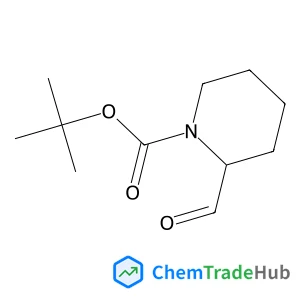
2-Methyl-2-propanyl (2R)-2-formyl-1-piperidinecarboxylate
CAS Number:
134526-69-5
Molecular Formula:
C11H19NO3
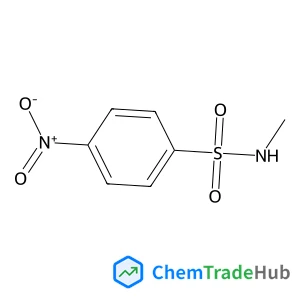
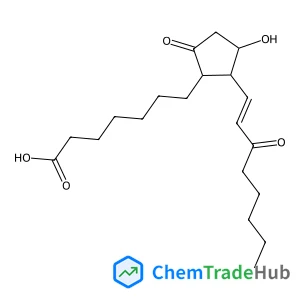
(11alpha,13E)-11-Hydroxy-9,15-dioxoprost-13-en-1-oic acid
CAS Number:
22973-19-9
Molecular Formula:
C20H32O5
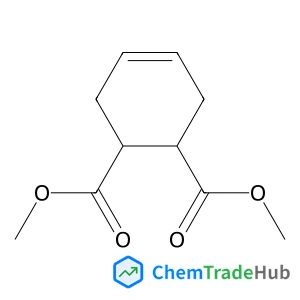
4-Cyclohexene-1,2-dicarboxylic acid, 1,2-dimethyl ester, (1R,2R)-rel-
CAS Number:
17673-68-6
Molecular Formula:
C10H14O4
Recommended Suppliers







Disclaimer
This page provides academic journal information for reference and research purposes only. We are not affiliated with any journal publishers and do not handle publication submissions. For publication-related inquiries, please contact the respective journal publishers directly.
If you notice any inaccuracies in the information displayed, please contact us at support@chemtradehub.com. We will promptly review and address your concerns.