












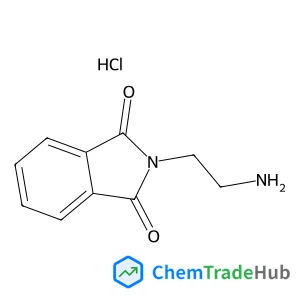
2-(2-Aminoethyl)-1H-isoindole-1,3(2H)-dione hydrochloride (1:1)
CAS Number:
30250-67-0
Molecular Formula:
C10H11ClN2O2
The first page of this article is displayed as the abstract.
Gabriel Abranches Dias Castro, Ana Luíza Quintão Santos, Ángel Gabriel Sathicq, Valeria Palermo, Sergio Antonio Fernandes
DOI: 10.1039/D1RE00557J
Danim Yun, Zhongyao Zhang, David W. Flaherty
DOI: 10.1039/D2RE00160H
DOI: 10.1039/D2RE00183G
Runze Jin, Ke Ma, Shutao Xu, Yingxu Wei, Lijuan Song, Zhijun Li, Penghui Zhang, Yufeng Wang, Jiaofei Wang, Zhuangzhuang Zhang, Haobin Hu, Chengyi Dai, Xinwen Guo
DOI: 10.1039/D2RE00065B
Yichen Zhuang, David S. A. Simakov
DOI: 10.1039/D2RE00236A
Alexander Böddecker, Arisa Bodnar, Lars Schücke, Jonas Giesekus, Katja Wenselau, Ryan T. Nguyen-Smith, Timothy Oppotsch, Christian Oberste-Beulmann, Martin Muhler, Peter Awakowicz
DOI: 10.1039/D2RE00167E
Shrilekha V. Sawant, Ashwin W. Patwardhan
DOI: 10.1039/D1RE00536G
Iryna Kubitska, Volodymyr Ivasiv, Roman Nebesnyi, Igor I. Potemkin
DOI: 10.1039/D2RE00252C
Suitao Qi, Kevin J. Smith, Yiming Zhou
DOI: 10.1039/D2RE00345G
Waste containing 2-Ethyl-4-Methyl-1H-Imidazole-5-Carbaldehyde (CAS: 88634-80-4) ...
Triethoxy(octyl)silane (CAS: 1385031-14-0) is widely used in the pharmaceuticals...
Several alternatives to 3-iodo-7-nitro-1H-indazole (CAS: 864724-64-1) exist in t...
Yes, there are alternatives to Benzene, bis[(trimethoxysilyl)ethyl] (CAS: 266317...
Isothiazole-3-carbonitrile (CAS: 1452-17-1) is generally considered safe when us...
(3-Chlorophenyl)methanol (CAS: 873-63-2) is considered low to moderately toxic. ...
(2S,3S)-2-Hydroxy-3-({[(2-methyl-2-propanyl)oxy]carbonyl}amino)-3-(2-naphthyl)pr...
Proper handling of methyl 2-(bromomethyl)-5-methoxybenzoate requires the use of ...
6,8-Dibromoimidazo[1,2-a]pyridine-2-carboxylic acid (CAS: 904805-36-3) is an aro...
3-Amino-5-bromo-2-pyridinecarbonitrile is considered safe when handled under pro...

Physical Chemistry Chemical Physics (PCCP) is an international journal co-owned by 19 physical chemistry and physics societies from around the world. This journal publishes original, cutting-edge research in physical chemistry, chemical physics and biophysical chemistry. To be suitable for publication in PCCP, articles must include significant innovation and/or insight into physical chemistry; this is the most important criterion that reviewers and Editors will judge against when evaluating submissions. The journal has a broad scope and welcomes contributions spanning experiment, theory, computation and data science. Topical coverage includes spectroscopy, dynamics, kinetics, statistical mechanics, thermodynamics, electrochemistry, catalysis, surface science, quantum mechanics, quantum computing and machine learning. Interdisciplinary research areas such as polymers and soft matter, materials, nanoscience, energy, surfaces/interfaces, and biophysical chemistry are welcomed if they demonstrate significant innovation and/or insight into physical chemistry. Joined experimental/theoretical studies are particularly appreciated when complementary and based on up-to-date approaches.
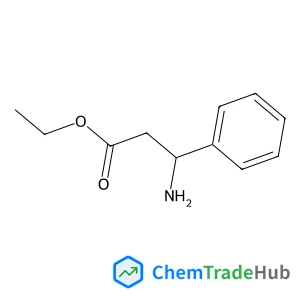
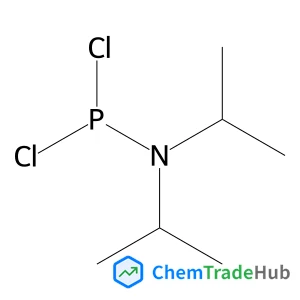
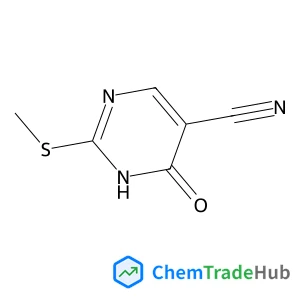
![N-[(5,6-Dichloro-1H-benzimidazol-2-yl)methyl]-9-(1-methyl-1H-pyrazol-4-yl)-2-(4-morpholinyl)-9H-purin-6-amine structure](https://static.chemtradehub.com/structs/238/2387704-62-1-25f4.webp "N-[(5,6-Dichloro-1H-benzimidazol-2-yl)methyl]-9-(1-methyl-1H-pyrazol-4-yl)-2-(4-morpholinyl)-9H-purin-6-amine structure")




