


Effect of acid distribution and pore structure of ZSM-5 on catalytic performance
Literature Information
Publication Date
2022-07-04
DOI
10.1039/D2RE00065B
Impact Factor
4.239
Authors
Runze Jin, Ke Ma, Shutao Xu, Yingxu Wei, Lijuan Song, Zhijun Li, Penghui Zhang, Yufeng Wang, Jiaofei Wang, Zhuangzhuang Zhang, Haobin Hu, Chengyi Dai, Xinwen Guo
View Original
Abstract
Zeolites are widely used in acid catalysis, shape-selective catalysis, and other fields because of their unique structural characteristics. Zeolites have long and narrow pore structures, which limits the diffusion of reactants and products. However, in traditional alkali desilication processes, the acid center of the zeolite is exposed to the outer surface, inhibiting microporous shape selection and resulting in a reduction of target product selectivity. Consequently, a “seesaw” relationship exists between conversion and selectivity in zeolite catalysis, and this is one of the main bottlenecks in the development of this field. Developing an alkali treatment strategy that breaks this “seesaw” relationship and is suitable for shape-selective catalysis is a significant challenge. Therefore, we systematically studied the effects of different alkali treatment strategies on the physicochemical properties of an HZSM-5 zeolite, including properties such as acid distribution, acid strength, acid amount, Si/Al coordination state, and diffusion performance. We then further studied the effects of these physicochemical properties on catalytic performance (conversion and selectivity). The results show that a zeolite prepared by the dissolution–recrystallization method forms a rich intracrystalline structure with good accessibility in the crystal, and the silicon-rich outer surface inhibits a surface side reaction. This zeolite was applied to the alkylation of biphenyl with emphasis on selectivity and conversion, and it was found that both were significantly improved by the alkali treatment strategy. In a methanol to propylene (MTP) reaction, this zeolite catalyst also showed good catalytic life and selectivity.
Recommended Journals

NDT & E International

Heteroatom Chemistry

Atomization and Sprays

Acta Metallurgica Sinica-English Letters

Biocatalysis and Biotransformation

Herald of the Russian Academy of Sciences

Journal of the Indian Institute of Science

Main Group Chemistry

Chinese Journal of Chemistry

Critical Reviews in Solid State and Materials Sciences
Related Literature
Dynamics and kinetics of the OH + HO2 → H2O + O2 (1Δg) reaction on a global full-dimensional singlet-state potential energy surface
Xiaoxiao Lu, Bina Fu, Dong H. Zhang
2020-10-28
Paper
DOI: 10.1039/D0CP04611F
Surface functionalization: an efficient alternative for promoting the catalytic activity of closed shell gold clusters‡
Manzoor Ahmad Dar
2020-09-21
Paper
DOI: 10.1039/D0CP01918F
A coarse-grain force field based on quantum mechanics (CGq FF) for molecular dynamics simulation of poly(ethylene glycol)-block-poly(ε-caprolactone) (PEG-b-PCL) micelles
Maryam S. Sadeghi, Mohammad Reza Moghbeli, William A. Goddard, III
2020-10-06
Paper
DOI: 10.1039/D0CP04364H
Binding of divalent cations to acetate: molecular simulations guided by Raman spectroscopy
Denilson Mendes de Oliveira, Samual R. Zukowski, Vladimir Palivec, Hector Martinez-Seara, Dor Ben-Amotz, Pavel Jungwirth
2020-10-10
Paper
DOI: 10.1039/D0CP02987D
Towards understanding the catalytic properties of lead-based ballistic modifiers in double base propellants
Lisette R. Warren, Colin R. Pulham, Carole A. Morrison
2020-10-29
Paper
DOI: 10.1039/D0CP05172A
Geometry, induced magnetism and modified electronic behaviors for magnetic atom adsorption on antimonene nanotubes
X. He, Z. Q. Fan, Z. H. Zhang
2020-09-28
Paper
DOI: 10.1039/D0CP04346J
Correction: The influence of diameter of multiwalled carbon nanotubes on mechanical, optical and electrical properties of Langmuir–Schaefer films
Karol Rytel, Kamil Kędzierski, Bolesław Barszcz, Małgorzata Widelicka, Alicja Stachowiak, Andrzej Biadasz, Łukasz Majchrzycki, Emerson Coy, Danuta Wróbel
2020-10-15
Correction
DOI: 10.1039/D0CP90227F
Ab initio modelling of spin relaxation lengths in disordered graphene nanoribbons
Cesar E. P. Villegas, Alexandre R. Rocha
2019-10-21
Paper
DOI: 10.1039/C9CP04054D
You might also like
Compound Q&A
How should waste containing 2-Ethyl-4-Methyl-1H-Imidazole-5-Carbaldehyde (CAS: 88634-80-4) be handled?
Waste containing 2-Ethyl-4-Methyl-1H-Imidazole-5-Carbaldehyde (CAS: 88634-80-4) ...
88634-80-42-Ethyl-4-Methyl-1H-...
Compound Q&A
What industries use Triethoxy(octyl)silane (CAS: 1385031-14-0)?
Triethoxy(octyl)silane (CAS: 1385031-14-0) is widely used in the pharmaceuticals...
1385031-14-0Triethoxy(octyl)sila...
Compound Q&A
Are there alternatives to 3-iodo-7-nitro-1H-indazole (CAS: 864724-64-1) in synthesis?
Several alternatives to 3-iodo-7-nitro-1H-indazole (CAS: 864724-64-1) exist in t...
864724-64-13-iodo-7-nitro-1H-in...
Compound Q&A
Are there alternatives to Benzene, bis[(trimethoxysilyl)ethyl] (CAS: 266317-71-9) in synthesis?
Yes, there are alternatives to Benzene, bis[(trimethoxysilyl)ethyl] (CAS: 266317...
266317-71-9Benzene, bis[(trimet...
Compound Q&A
Is Isothiazole-3-carbonitrile (CAS: 1452-17-1) safe?
Isothiazole-3-carbonitrile (CAS: 1452-17-1) is generally considered safe when us...
1452-17-1Isothiazole-3-carbon...
Compound Q&A
Is (3-Chlorophenyl)methanol (CAS: 873-63-2) safe?
(3-Chlorophenyl)methanol (CAS: 873-63-2) is considered low to moderately toxic. ...
873-63-2(3-Chlorophenyl)meth...
Compound Q&A
How is (2S,3S)-2-Hydroxy-3-({[(2-methyl-2-propanyl)oxy]carbonyl}amino)-3-(2-naphthyl)propanoic acid (CAS: 959583-98-3) typically synthesized?
(2S,3S)-2-Hydroxy-3-({[(2-methyl-2-propanyl)oxy]carbonyl}amino)-3-(2-naphthyl)pr...
959583-98-3(2S,3S)-2-Hydroxy-3-...
Compound Q&A
What precautions should be taken when handling Methyl 2-(bromomethyl)-5-methoxybenzoate (CAS: 788081-99-2)?
Proper handling of methyl 2-(bromomethyl)-5-methoxybenzoate requires the use of ...
788081-99-2Methyl 2-(bromomethy...
Compound Q&A
What is 6,8-Dibromoimidazo[1,2-a]pyridine-2-carboxylic acid (CAS: 904805-36-3)?
6,8-Dibromoimidazo[1,2-a]pyridine-2-carboxylic acid (CAS: 904805-36-3) is an aro...
904805-36-36,8-Dibromoimidazo[1...
Compound Q&A
Is 3-Amino-5-bromo-2-pyridinecarbonitrile (CAS: 573675-27-1) safe?
3-Amino-5-bromo-2-pyridinecarbonitrile is considered safe when handled under pro...
573675-27-13-Amino-5-bromo-2-py...
Source Journal
Reaction Chemistry & Engineering

CiteScore:
0
Self-citation Rate:
8.8%
Articles per Year:
284
Reaction Chemistry & Engineering is an interdisciplinary journal reporting cutting-edge research focused on enhancing the understanding and efficiency of reactions. Reaction engineering leverages the interface where fundamental molecular chemistry meets chemical engineering and technology. Challenges in chemistry can be overcome by the application of new technologies, while engineers may find improved solutions for process development from the latest developments in reaction chemistry. Reaction Chemistry & Engineering is a unique forum for researchers whose interests span the broad areas of chemical engineering and chemical sciences to come together in solving problems of importance to wider society. All papers should be written to be approachable by readers across the engineering and chemical sciences. Papers that consider multiple scales, from the laboratory up to and including plant scale, are particularly encouraged.
Recommended Compounds
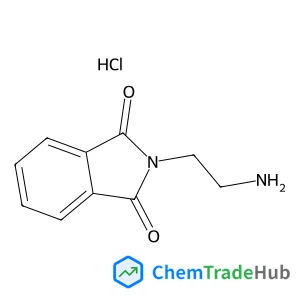
2-(2-Aminoethyl)-1H-isoindole-1,3(2H)-dione hydrochloride (1:1)
CAS Number:
30250-67-0
Molecular Formula:
C10H11ClN2O2
Recommended Suppliers




Disclaimer
This page provides academic journal information for reference and research purposes only. We are not affiliated with any journal publishers and do not handle publication submissions. For publication-related inquiries, please contact the respective journal publishers directly.
If you notice any inaccuracies in the information displayed, please contact us at support@chemtradehub.com. We will promptly review and address your concerns.