












Sustainable synthesis of acetals from glycerol as potential additives for biofuels under solvent-free conditions
Literature Information
Publication Date
2022-06-16
DOI
10.1039/D1RE00557J
Impact Factor
4.239
Authors
Gabriel Abranches Dias Castro, Ana Luíza Quintão Santos, Ángel Gabriel Sathicq, Valeria Palermo, Sergio Antonio Fernandes
View Original
Abstract
Acetals formed from glycerol find applications in several areas, their use as fuel additives being the most promising, since it results in total integration in the biodiesel chain and eliminates one of the obstacles to its production. In order to convert glycerol into acetals, the use of p-sulfonic acid calix[4]arene supported on silica (CX4SO3HSi(n)) and microwave-assisted heating was proposed, and quantitative analysis was performed by 1H NMR. The effects of the main reaction parameters were evaluated, such as temperature, reaction time and the amount of heterogeneous catalyst, using benzaldehyde and glycerol as model substrates. From the optimized conditions (0.5 mmol of glycerol, 0.5 mmol of benzaldehyde, 5 wt% of the catalyst CX4SO3HSi(n), at 110 °C in 20 min), the generality of the reaction was evaluated, obtaining twelve products with yields ranging from 6 to 99%. The important aspects of this protocol are the following: solvent-free reaction, water as the sole waste, being metal-free, and shorter reaction times.
Related Literature
DFT-MD and vibrational anharmonicities of a phosphorylated amino acid. Success and failure
Alvaro Cimas
2010-02-24
Paper
DOI: 10.1039/B924025J
Ligand-dependent blinking of zinc-blende CdSe/ZnS core/shell nanocrystals
Yongwook Kim, Hyunung Yu, Dae Won Moon, Sung Jun Lim, Wonjung Kim, Hye-Joo Yoon, Seung Koo Shin
2009-03-03
Paper
DOI: 10.1039/B822351C
Probing the hydrogen-bond network of watervia time-resolved soft X-ray spectroscopy
Nils Huse, Haidan Wen, Dennis Nordlund
2009-03-10
Paper
DOI: 10.1039/B822210J
Ab initio study of the magnetic exchange coupling constants of a structural model [CaMn3IIIMnII] of the oxygen evolving center in photosystem II
Heike Fliegl, Karin Fink, Christopher E. Anson
2009-03-12
Paper
DOI: 10.1039/B819444K
Proton transfer in adsorbed water dimers
Xiao Liang Hu, Jiří Klimeš, Angelos Michaelides
2010-02-25
Communication
DOI: 10.1039/B924422K
Conformational behaviour determines the low-relaxivity state of a conditional MRI contrast agent
Ugo Cosentino, Demetrio Pitea, Giorgio Moro, Gloria A. A. Saracino, Alessandra Villa
2009-04-20
Paper
DOI: 10.1039/B902049G
Bifunctional polyacrylamide based polymers for the specific binding of hexahistidine tagged proteins on gold surfaces
Lucas B. Thompson, Nathan H. Mack, Ralph G. Nuzzo
2009-12-04
Paper
DOI: 10.1039/B920713A
Nucleation and growth of atomic layer deposition of HfO2 gate dielectric layers on silicon oxide: a multiscale modelling investigation
2009-03-26
Paper
DOI: 10.1039/B821502B
You might also like
Compound Q&A
How should waste containing 2-Ethyl-4-Methyl-1H-Imidazole-5-Carbaldehyde (CAS: 88634-80-4) be handled?
Waste containing 2-Ethyl-4-Methyl-1H-Imidazole-5-Carbaldehyde (CAS: 88634-80-4) ...
88634-80-42-Ethyl-4-Methyl-1H-...
Compound Q&A
What industries use Triethoxy(octyl)silane (CAS: 1385031-14-0)?
Triethoxy(octyl)silane (CAS: 1385031-14-0) is widely used in the pharmaceuticals...
1385031-14-0Triethoxy(octyl)sila...
Compound Q&A
Are there alternatives to 3-iodo-7-nitro-1H-indazole (CAS: 864724-64-1) in synthesis?
Several alternatives to 3-iodo-7-nitro-1H-indazole (CAS: 864724-64-1) exist in t...
864724-64-13-iodo-7-nitro-1H-in...
Compound Q&A
Are there alternatives to Benzene, bis[(trimethoxysilyl)ethyl] (CAS: 266317-71-9) in synthesis?
Yes, there are alternatives to Benzene, bis[(trimethoxysilyl)ethyl] (CAS: 266317...
266317-71-9Benzene, bis[(trimet...
Compound Q&A
Is Isothiazole-3-carbonitrile (CAS: 1452-17-1) safe?
Isothiazole-3-carbonitrile (CAS: 1452-17-1) is generally considered safe when us...
1452-17-1Isothiazole-3-carbon...
Compound Q&A
Is (3-Chlorophenyl)methanol (CAS: 873-63-2) safe?
(3-Chlorophenyl)methanol (CAS: 873-63-2) is considered low to moderately toxic. ...
873-63-2(3-Chlorophenyl)meth...
Compound Q&A
How is (2S,3S)-2-Hydroxy-3-({[(2-methyl-2-propanyl)oxy]carbonyl}amino)-3-(2-naphthyl)propanoic acid (CAS: 959583-98-3) typically synthesized?
(2S,3S)-2-Hydroxy-3-({[(2-methyl-2-propanyl)oxy]carbonyl}amino)-3-(2-naphthyl)pr...
959583-98-3(2S,3S)-2-Hydroxy-3-...
Compound Q&A
What precautions should be taken when handling Methyl 2-(bromomethyl)-5-methoxybenzoate (CAS: 788081-99-2)?
Proper handling of methyl 2-(bromomethyl)-5-methoxybenzoate requires the use of ...
788081-99-2Methyl 2-(bromomethy...
Compound Q&A
What is 6,8-Dibromoimidazo[1,2-a]pyridine-2-carboxylic acid (CAS: 904805-36-3)?
6,8-Dibromoimidazo[1,2-a]pyridine-2-carboxylic acid (CAS: 904805-36-3) is an aro...
904805-36-36,8-Dibromoimidazo[1...
Compound Q&A
Is 3-Amino-5-bromo-2-pyridinecarbonitrile (CAS: 573675-27-1) safe?
3-Amino-5-bromo-2-pyridinecarbonitrile is considered safe when handled under pro...
573675-27-13-Amino-5-bromo-2-py...
Source Journal
Reaction Chemistry & Engineering

CiteScore:
0
Self-citation Rate:
8.8%
Articles per Year:
284
Reaction Chemistry & Engineering is an interdisciplinary journal reporting cutting-edge research focused on enhancing the understanding and efficiency of reactions. Reaction engineering leverages the interface where fundamental molecular chemistry meets chemical engineering and technology. Challenges in chemistry can be overcome by the application of new technologies, while engineers may find improved solutions for process development from the latest developments in reaction chemistry. Reaction Chemistry & Engineering is a unique forum for researchers whose interests span the broad areas of chemical engineering and chemical sciences to come together in solving problems of importance to wider society. All papers should be written to be approachable by readers across the engineering and chemical sciences. Papers that consider multiple scales, from the laboratory up to and including plant scale, are particularly encouraged.
Recommended Compounds
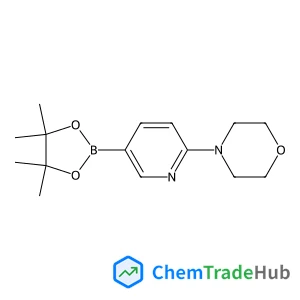
4-(5-(4,4,5,5-tetramethyl-1,3,2-dioxaborolan-2-yl)pyridin-2-yl)morpholine
CAS Number:
485799-04-0
Molecular Formula:
C15H23BN2O3
Recommended Suppliers



Disclaimer
This page provides academic journal information for reference and research purposes only. We are not affiliated with any journal publishers and do not handle publication submissions. For publication-related inquiries, please contact the respective journal publishers directly.
If you notice any inaccuracies in the information displayed, please contact us at support@chemtradehub.com. We will promptly review and address your concerns.