



Synthesis of boron-doped carbon nanotubes by thermocatalytic decomposition of ethanol using a floating catalyst chemical vapor deposition method: kinetic study
Literature Information
Publication Date
2022-07-04
DOI
10.1039/D1RE00536G
Impact Factor
4.239
Authors
Shrilekha V. Sawant, Ashwin W. Patwardhan
View Original
Abstract
A kinetic study was conducted to define experimental rates of reaction for the production of boron-doped carbon nanotubes (BCNTs) using a floating catalyst chemical vapor deposition technique. Here, boric acid (boron) and ferrocene (catalyst) dissolved in ethanol (carbon) were used as precursors. As a part of the kinetic study, the synthesis temperature, partial pressure of the boron precursor, catalyst precursor, and carbon source were studied in detail. A seven step reaction mechanism and a rate expression were proposed. Using the developed reaction kinetic model, we proposed the irreversible adsorption of ethanol followed by abstraction of hydrogen from the ethyl group adsorbed on iron nanoparticles to be the rate-controlling step. From the Arrhenius plot, in the temperature range of 750–950 °C, the activation energy for the overall reaction was found to be 68.9 kJ mol−1. It was found that an increase in synthesis temperature is responsible for the reduction in boron content (at%) and also defect density. Various spectroscopic and microscopic analyses were performed to evaluate the properties, quality, and purity of BCNTs formed.
Recommended Journals

Bioorganic & Medicinal Chemistry Letters

Bioorganic & Medicinal Chemistry

Medicinal Chemistry Research

Atomization and Sprays

Journal of the Indian Institute of Science

Heteroatom Chemistry

Acta Metallurgica Sinica-English Letters

Main Group Chemistry

Herald of the Russian Academy of Sciences

Topics in Catalysis
Related Literature
Structure and composition of binary monolayers self-assembled from sodium 2-mercaptoetanosulfonate and mercaptoundecanol mixed solutions on silver and gold supports
Mateusz L. Donten, Agata Królikowska, Jolanta Bukowska
2009-02-26
Paper
DOI: 10.1039/B816605F
Quantification of the adhesion strength of fibroblastcells on ethylene glycol terminated self-assembled monolayers by a microfluidic shear force assay
Christof Christophis
2010-03-03
Paper
DOI: 10.1039/B924304F
Thermally stable ordered mesoporous CeO2/TiO2 visible-light photocatalysts
Guisheng Li, Dieqing Zhang, Jimmy C. Yu
2009-02-25
Paper
DOI: 10.1039/B819167K
IR and Raman spectra of β″-(BEDT-TTF)2RCH2SO3 (R = SF5, CF3): dimerization related to hydrogen bonding
Iwona Olejniczak, Bolesław Barszcz, Anna Szutarska, Andrzej Graja, Roman Wojciechowski, John A. Schlueter, Aaron N. Hata, Brian H. Ward
2009-03-12
Paper
DOI: 10.1039/B822253C
The photophysics of selectively metallated arrays of quinoxaline-fused tetraarylporphyrins
James A. Hutchison, Paul J. Sintic, Maxwell J. Crossley, Toshihiko Nagamura, Kenneth P. Ghiggino
2009-03-03
Paper
DOI: 10.1039/B820969C
DFT-MD and vibrational anharmonicities of a phosphorylated amino acid. Success and failure
Alvaro Cimas
2010-02-24
Paper
DOI: 10.1039/B924025J
A molecular model for H2 interactions in aliphatic and aromatic hydrocarbons
Susana Figueroa-Gerstenmaier, Simona Giudice, Luigi Cavallo, Giuseppe Milano
2009-04-17
Paper
DOI: 10.1039/B900176J
Bending of purple membranes in dependence on the pH analyzed by AFM and single molecule force spectroscopy
R.-P. Baumann, M. Schranz
2010-02-23
Paper
DOI: 10.1039/B919729J
Synthesis and characterization of V2O3 nanorods
Alexander C. Santulli, Wenqian Xu, Liusuo Wu, Fen Zhang, Chang-Yong Nam, Charles T. Black, Amanda L. Tiano
2009-03-12
Paper
DOI: 10.1039/B822902C
You might also like
Compound Q&A
How should waste containing 2-Ethyl-4-Methyl-1H-Imidazole-5-Carbaldehyde (CAS: 88634-80-4) be handled?
Waste containing 2-Ethyl-4-Methyl-1H-Imidazole-5-Carbaldehyde (CAS: 88634-80-4) ...
88634-80-42-Ethyl-4-Methyl-1H-...
Compound Q&A
What industries use Triethoxy(octyl)silane (CAS: 1385031-14-0)?
Triethoxy(octyl)silane (CAS: 1385031-14-0) is widely used in the pharmaceuticals...
1385031-14-0Triethoxy(octyl)sila...
Compound Q&A
Are there alternatives to 3-iodo-7-nitro-1H-indazole (CAS: 864724-64-1) in synthesis?
Several alternatives to 3-iodo-7-nitro-1H-indazole (CAS: 864724-64-1) exist in t...
864724-64-13-iodo-7-nitro-1H-in...
Compound Q&A
Are there alternatives to Benzene, bis[(trimethoxysilyl)ethyl] (CAS: 266317-71-9) in synthesis?
Yes, there are alternatives to Benzene, bis[(trimethoxysilyl)ethyl] (CAS: 266317...
266317-71-9Benzene, bis[(trimet...
Compound Q&A
Is Isothiazole-3-carbonitrile (CAS: 1452-17-1) safe?
Isothiazole-3-carbonitrile (CAS: 1452-17-1) is generally considered safe when us...
1452-17-1Isothiazole-3-carbon...
Compound Q&A
Is (3-Chlorophenyl)methanol (CAS: 873-63-2) safe?
(3-Chlorophenyl)methanol (CAS: 873-63-2) is considered low to moderately toxic. ...
873-63-2(3-Chlorophenyl)meth...
Compound Q&A
How is (2S,3S)-2-Hydroxy-3-({[(2-methyl-2-propanyl)oxy]carbonyl}amino)-3-(2-naphthyl)propanoic acid (CAS: 959583-98-3) typically synthesized?
(2S,3S)-2-Hydroxy-3-({[(2-methyl-2-propanyl)oxy]carbonyl}amino)-3-(2-naphthyl)pr...
959583-98-3(2S,3S)-2-Hydroxy-3-...
Compound Q&A
What precautions should be taken when handling Methyl 2-(bromomethyl)-5-methoxybenzoate (CAS: 788081-99-2)?
Proper handling of methyl 2-(bromomethyl)-5-methoxybenzoate requires the use of ...
788081-99-2Methyl 2-(bromomethy...
Compound Q&A
What is 6,8-Dibromoimidazo[1,2-a]pyridine-2-carboxylic acid (CAS: 904805-36-3)?
6,8-Dibromoimidazo[1,2-a]pyridine-2-carboxylic acid (CAS: 904805-36-3) is an aro...
904805-36-36,8-Dibromoimidazo[1...
Compound Q&A
Is 3-Amino-5-bromo-2-pyridinecarbonitrile (CAS: 573675-27-1) safe?
3-Amino-5-bromo-2-pyridinecarbonitrile is considered safe when handled under pro...
573675-27-13-Amino-5-bromo-2-py...
Source Journal
Reaction Chemistry & Engineering

CiteScore:
0
Self-citation Rate:
8.8%
Articles per Year:
284
Reaction Chemistry & Engineering is an interdisciplinary journal reporting cutting-edge research focused on enhancing the understanding and efficiency of reactions. Reaction engineering leverages the interface where fundamental molecular chemistry meets chemical engineering and technology. Challenges in chemistry can be overcome by the application of new technologies, while engineers may find improved solutions for process development from the latest developments in reaction chemistry. Reaction Chemistry & Engineering is a unique forum for researchers whose interests span the broad areas of chemical engineering and chemical sciences to come together in solving problems of importance to wider society. All papers should be written to be approachable by readers across the engineering and chemical sciences. Papers that consider multiple scales, from the laboratory up to and including plant scale, are particularly encouraged.
Recommended Compounds
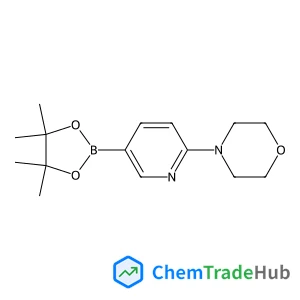
4-(5-(4,4,5,5-tetramethyl-1,3,2-dioxaborolan-2-yl)pyridin-2-yl)morpholine
CAS Number:
485799-04-0
Molecular Formula:
C15H23BN2O3
Recommended Suppliers






Disclaimer
This page provides academic journal information for reference and research purposes only. We are not affiliated with any journal publishers and do not handle publication submissions. For publication-related inquiries, please contact the respective journal publishers directly.
If you notice any inaccuracies in the information displayed, please contact us at support@chemtradehub.com. We will promptly review and address your concerns.