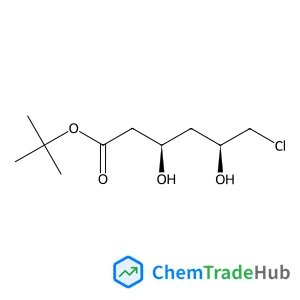
2-Methyl-2-propanyl (3R,5S)-6-chloro-3,5-dihydroxyhexanoate
CAS Number:
154026-93-4
Molecular Formula:
C10H19ClO4
Alexander Böddecker, Arisa Bodnar, Lars Schücke, Jonas Giesekus, Katja Wenselau, Ryan T. Nguyen-Smith, Timothy Oppotsch, Christian Oberste-Beulmann, Martin Muhler, Peter Awakowicz
In this work, a modular, multi-electrode surface dielectric barrier discharge system for the decomposition of polluted air streams at high volumetric flows, necessary for industrial applications, is designed and constructed. The system is demonstrated for the decomposition of butoxyethanol and n-butane in ambient air flows of up to almost 500 slm (standard litres per minute) (≙ 30 m3 h−1) at concentrations between 50 ppm and 1000 ppm. With an energy density of (78.3 ± 3.6) J L−1 a maximum relative conversion of about 27% of butoxyethanol is achieved. n-Butane was used to enable comparison with previous studies. Here it could be demonstrated that the scaled-up source achieved higher conversion at lower energy densities in comparison to the original design used at lower volumetric flow rates. Additionally, the density of ozone, which is a toxic by-product of the overall process, was measured in the exhaust gas under different operating conditions and its degradation with activated carbon filters was studied. At an energy density of 79.6 J L−1 a maximum ozone molecule flow of (9.02 ± 0.19) × 1018 s−1 was measured which decreases with increasing energy density, because among other possible effects the rising temperature accelerates its decay. One of the activated carbon filters was able to reduce the concentration of toxic ozone by 100% under conditions where a preheated airstream is used.
E. M. Gavilán-Arriazu, Rodrigo E. Giménez, O. A. Pinto
DOI: 10.1039/D0CP03348K
Xiaoxiao Lu, Bina Fu, Dong H. Zhang
DOI: 10.1039/D0CP04611F
Yang Liu, Hongwei Song, Jun Li
DOI: 10.1039/D0CP04120C
D. K. Andrea Phan Huu, Cristina Sissa, Francesca Terenziani, Anna Painelli
DOI: 10.1039/D0CP04496B
Aniket A. Hande, Clovis Darrigan, Paulina Bartos, Patrick Baylère, Anna Chrostowska
DOI: 10.1039/D0CP03896B
Huiwen Wang, Linlu Song, Ting Zhou, Chen Zeng, Ya Jia, Yunjie Zhao
DOI: 10.1039/D0CP03662E
Mateusz Dembowski, Trent R. Graham, Jacob G. Reynolds, Kevin M. Rosso, Carolyn I. Pearce
DOI: 10.1039/D0CP04820H
Yongshuai Wen, Qingchang Liu, Yongshou Liu
DOI: 10.1039/D0CP03834B
Waste containing 2-Ethyl-4-Methyl-1H-Imidazole-5-Carbaldehyde (CAS: 88634-80-4) ...
Triethoxy(octyl)silane (CAS: 1385031-14-0) is widely used in the pharmaceuticals...
Several alternatives to 3-iodo-7-nitro-1H-indazole (CAS: 864724-64-1) exist in t...
Yes, there are alternatives to Benzene, bis[(trimethoxysilyl)ethyl] (CAS: 266317...
Isothiazole-3-carbonitrile (CAS: 1452-17-1) is generally considered safe when us...
(3-Chlorophenyl)methanol (CAS: 873-63-2) is considered low to moderately toxic. ...
(2S,3S)-2-Hydroxy-3-({[(2-methyl-2-propanyl)oxy]carbonyl}amino)-3-(2-naphthyl)pr...
Proper handling of methyl 2-(bromomethyl)-5-methoxybenzoate requires the use of ...
6,8-Dibromoimidazo[1,2-a]pyridine-2-carboxylic acid (CAS: 904805-36-3) is an aro...
3-Amino-5-bromo-2-pyridinecarbonitrile is considered safe when handled under pro...

Reaction Chemistry & Engineering is an interdisciplinary journal reporting cutting-edge research focused on enhancing the understanding and efficiency of reactions. Reaction engineering leverages the interface where fundamental molecular chemistry meets chemical engineering and technology. Challenges in chemistry can be overcome by the application of new technologies, while engineers may find improved solutions for process development from the latest developments in reaction chemistry. Reaction Chemistry & Engineering is a unique forum for researchers whose interests span the broad areas of chemical engineering and chemical sciences to come together in solving problems of importance to wider society. All papers should be written to be approachable by readers across the engineering and chemical sciences. Papers that consider multiple scales, from the laboratory up to and including plant scale, are particularly encouraged.