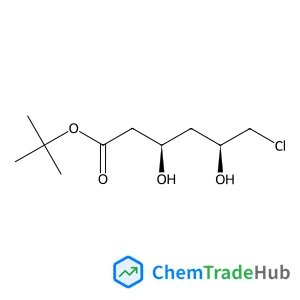
2-Methyl-2-propanyl (3R,5S)-6-chloro-3,5-dihydroxyhexanoate
CAS Number:
154026-93-4
Molecular Formula:
C10H19ClO4
Yichen Zhuang, David S. A. Simakov
CO2 captured from various sources can be converted into renewable natural gas (RNG) via the Sabatier reaction (thermocatalytic hydrogenation of CO2). The highly exothermic nature of the Sabatier reaction brings certain challenges to the design and operation of Sabatier reactors, with thermal management being one of the main issues. In this study, we report the experimental, lab-scale proof-of-concept of an autothermal Sabatier reactor. We demonstrate a completely autothermal operation of the air-cooled, stainless-steel reactor using a commercial Ni catalyst. The effects of pressure, feed temperature, space velocity and cooling rate were investigated using three prototypes with different sizes and configurations. The maximum CO2 conversion of 93.5% with 100% generation selectivity to CH4 was achieved in a 10′′-length reactor, over 120 h of a continuous, stable operation (at 2400 L kg−1 h−1, without any reactor heating or feed preheating).
Karol Rytel, Kamil Kędzierski, Bolesław Barszcz, Małgorzata Widelicka, Alicja Stachowiak, Andrzej Biadasz, Łukasz Majchrzycki, Emerson Coy, Danuta Wróbel
DOI: 10.1039/D0CP90227F
Lei Gao, Hai-Qing Lin
DOI: 10.1039/D0CP04020G
Yalan Yan, Hao Liu, Guozhao Zhang, Shuang Tong, Chunxiao Gao, Yonghao Han
DOI: 10.1039/D0CP03579C
Sonia Peggiani, Pietro Marabotti, Riccardo Alberto Lotti, Anna Facibeni, Patrick Serafini, Alberto Milani, Valeria Russo, Andrea Li Bassi, Carlo Spartaco Casari
DOI: 10.1039/D0CP04132G
Prasanta Bandyopadhyay, Soumyadip Ray, Md. Motin Seikh
DOI: 10.1039/C9CP05374C
Azar Ostovan, Nick Papior, Mansour Zahedi
DOI: 10.1039/D0CP03279D
Denilson Mendes de Oliveira, Samual R. Zukowski, Vladimir Palivec, Hector Martinez-Seara, Dor Ben-Amotz, Pavel Jungwirth
DOI: 10.1039/D0CP02987D
Chongshan Yin, Chunqing He, Qicheng Liu, Bangyun Xiong, Xiaowei Zhang, Libing Qian, Jingjing Li, Yawei Zhou
DOI: 10.1039/C9CP04832D
Eduardo Martín Rico-Sotomayor, José Enrique Barquera-Lozada
DOI: 10.1039/D0CP03305G
Waste containing 2-Ethyl-4-Methyl-1H-Imidazole-5-Carbaldehyde (CAS: 88634-80-4) ...
Triethoxy(octyl)silane (CAS: 1385031-14-0) is widely used in the pharmaceuticals...
Several alternatives to 3-iodo-7-nitro-1H-indazole (CAS: 864724-64-1) exist in t...
Yes, there are alternatives to Benzene, bis[(trimethoxysilyl)ethyl] (CAS: 266317...
Isothiazole-3-carbonitrile (CAS: 1452-17-1) is generally considered safe when us...
(3-Chlorophenyl)methanol (CAS: 873-63-2) is considered low to moderately toxic. ...
(2S,3S)-2-Hydroxy-3-({[(2-methyl-2-propanyl)oxy]carbonyl}amino)-3-(2-naphthyl)pr...
Proper handling of methyl 2-(bromomethyl)-5-methoxybenzoate requires the use of ...
6,8-Dibromoimidazo[1,2-a]pyridine-2-carboxylic acid (CAS: 904805-36-3) is an aro...
3-Amino-5-bromo-2-pyridinecarbonitrile is considered safe when handled under pro...

Reaction Chemistry & Engineering is an interdisciplinary journal reporting cutting-edge research focused on enhancing the understanding and efficiency of reactions. Reaction engineering leverages the interface where fundamental molecular chemistry meets chemical engineering and technology. Challenges in chemistry can be overcome by the application of new technologies, while engineers may find improved solutions for process development from the latest developments in reaction chemistry. Reaction Chemistry & Engineering is a unique forum for researchers whose interests span the broad areas of chemical engineering and chemical sciences to come together in solving problems of importance to wider society. All papers should be written to be approachable by readers across the engineering and chemical sciences. Papers that consider multiple scales, from the laboratory up to and including plant scale, are particularly encouraged.