












On the chemical bonding effects in the Raman response: Benzenethiol adsorbed on silver clusters‡
Literature Information
Publication Date
2009-08-26
DOI
10.1039/B906885F
Impact Factor
3.676
Authors
Roberto Olivares-Amaya, Dmitrij Rappoport, Michael Stopa, Alán Aspuru-Guzik
View Original
Abstract
We study the effects of chemical bonding on Raman scattering from benzenethiol chemisorbed on silver clusters using time-dependent density functional theory (TDDFT). Raman scattering cross sections are computed using a formalism that employs analytical derivatives of frequency-dependent electronic polarizabilities, which treats both off-resonant and resonant enhancement within the same scheme. In the off-resonant regime, Raman scattering into molecular vibrational modes is enhanced by one order of magnitude and shows pronounced dependence on the orientation and the local symmetry of the molecule. Additional strong enhancement of the order of 102 arises from resonant transitions to mixed metal–molecular electronic states. The Raman enhancement is analyzed using Raman excitation profiles (REPs) for the range of excitation energies 1.6–3.0 eV, in which isolated benzenethiol does not have electronic transitions. The computed vibrational frequency shifts and relative Raman scattering cross sections of the metal–molecular complexes are in good agreement with experimental data on surface enhanced Raman scattering (SERS) from benzenethiol adsorbed on silver surfaces. Characterization and understanding of these effects, associated with chemical enhancement mechanism, may be used to improve the detection sensitivity in molecular Raman scattering.
Recommended Journals
Related Literature
B-Site cation diffusivity of Mn and Cr in perovskite-type LaMnO3 with cation-deficit nonstoichiometry
Shogo Miyoshi, Manfred Martin
2009-03-13
Paper
DOI: 10.1039/B901208G
An improved chemical model for the quantitative description of the front propagation in the tetrathionate–chlorite reaction
Gábor Peintler, György Csekő, Andrea Petz, Attila K. Horváth
2010-01-15
Paper
DOI: 10.1039/B920618C
Analysis of the adsorption state and desorption kinetics of NO2 over Fe–zeolitecatalyst by FT-IR and temperature-programmed desorption
Masaoki Iwasaki, Hirofumi Shinjoh
2010-01-18
Paper
DOI: 10.1039/B923938C
Oxidation states of Co and Fe in Ba1−xSrxCo1−yFeyO3−δ (x, y = 0.2–0.8) and oxygen desorption in the temperature range 300–1273 K
Ashley S. Harvey, F. Jochen Litterst, Zhen Yang, Jennifer L. M. Rupp, Anna Infortuna, Ludwig J. Gauckler
2009-02-11
Paper
DOI: 10.1039/B819414A
Duschinsky mixing between four non-totally symmetric normal coordinates in the S1–S0 vibronic structure of (E)-phenylvinylacetylene: a quantitative analysis
Christian W. Müller, Josh J. Newby, Ching-Ping Liu, Chirantha P. Rodrigo, Timothy S. Zwier
2010-01-20
Paper
DOI: 10.1039/B919912H
Cyclohexane selective photocatalytic oxidation by anatase TiO2: influence of particle size and crystallinity
Joana T. Carneiro, Ana R. Almeida, Jacob A. Moulijn, Guido Mul
2010-01-27
Paper
DOI: 10.1039/B919886E
XCC2—a new coupled cluster model for the second-order polarization propagator
Tatiana Korona
2010-10-15
Paper
DOI: 10.1039/C0CP00474J
First observation in the gas phase of the ultrafast electronic relaxation pathways of the S2 states of heme and hemin
Minh-Huong Ha-Thi, Niloufar Shafizadeh, Lionel Poisson, Benoit Soep
2010-10-15
Paper
DOI: 10.1039/C0CP00687D
Chemical and electronic properties of the ITO/Al2O3 interface
Yvonne Gassenbauer, André Wachau, Andreas Klein
2009-03-11
Paper
DOI: 10.1039/B822848E
Vibrational frequencies in Car–Parrinello molecular dynamics
Sheau Wei Ong, Eng Soon Tok, Hway Chuan Kang
2010-10-15
Paper
DOI: 10.1039/C0CP00411A
You might also like
Compound Q&A
Is 6-(3-Fluorophenyl)picolinic acid (CAS: 887982-40-3) safe?
6-(3-Fluorophenyl)picolinic acid is generally considered safe for laboratory use...
887982-40-36-(3-Fluorophenyl)pi...
Compound Q&A
What industries use (3R)-3-Pyrrolidinol (CAS: 2799-21-5)?
(3R)-3-Pyrrolidinol is used in the pharmaceutical industry as a precursor for dr...
2799-21-5(3R)-3-Pyrrolidinol
Compound Q&A
What precautions should be taken when handling (4R,5R)-4,5-Diethoxycarbonyl-2,2-dimethyldioxolane (CAS: 59779-75-8)?
When handling (4R,5R)-4,5-Diethoxycarbonyl-2,2-dimethyldioxolane (CAS: 59779-75-...
59779-75-8(4R,5R)-4,5-Diethoxy...
Compound Q&A
How is 1-(6-Chloroimidazo[1,2-b]pyridazin-3-yl)ethanone (CAS: 90734-71-7) typically synthesized?
1-(6-Chloroimidazo[1,2-b]pyridazin-3-yl)ethanone is often synthesized via a mult...
90734-71-71-(6-Chloroimidazo[1...
Compound Q&A
What is the market or research trend for N-Ethyl-3,4-dimethylbenzylamine (CAS: 39180-83-1)?
The market for N-Ethyl-3,4-dimethylbenzylamine (CAS: 39180-83-1) remains steady,...
39180-83-1N-Ethyl-3,4-dimethyl...
Compound Q&A
What is Tert-butyl 3-(pyrrolidin-1-yl)azetidine-1-carboxylate (CAS: 1019008-21-9)?
Tert-butyl 3-(pyrrolidin-1-yl)azetidine-1-carboxylate is a chemical compound wit...
1019008-21-9Tert-butyl 3-(pyrrol...
Compound Q&A
What regulatory guidelines apply to 1-Bromo-3-chloro-2,4-dimethoxybenzene (CAS: 1228956-93-1)?
1-Bromo-3-chloro-2,4-dimethoxybenzene (CAS: 1228956-93-1) falls under the classi...
1228956-93-11-Bromo-3-chloro-2,4...
Compound Q&A
Is 8-Bromo-2-methyl-3,4-dihydroisoquinolin-1(2H)-one (CAS: 1368622-07-4) safe?
The safety of 8-Bromo-2-methyl-3,4-dihydroisoquinolin-1(2H)-one (CAS: 1368622-07...
1368622-07-48-Bromo-2-methyl-3,4...
Compound Q&A
Is Benzyl [(3S)-2,6-dioxo-3-piperidinyl]carbamate (CAS: 22785-43-9) safe?
Benzyl [(3S)-2,6-dioxo-3-piperidinyl]carbamate is generally safe when handled wi...
22785-43-9Benzyl [(3S)-2,6-dio...
Compound Q&A
How should 1-{[4-(4,4,5,5-Tetramethyl-1,3,2-dioxaborolan-2-yl)phenyl]sulfonyl}pyrrolidine (CAS: 928657-21-0) be stored?
1-{[4-(4,4,5,5-Tetramethyl-1,3,2-dioxaborolan-2-yl)phenyl]sulfonyl}pyrrolidine s...
928657-21-01-{[4-(4,4,5,5-Tetra...
Source Journal
Physical Chemistry Chemical Physics

CiteScore:
5.5
Self-citation Rate:
10.3%
Articles per Year:
3036
Physical Chemistry Chemical Physics (PCCP) is an international journal co-owned by 19 physical chemistry and physics societies from around the world. This journal publishes original, cutting-edge research in physical chemistry, chemical physics and biophysical chemistry. To be suitable for publication in PCCP, articles must include significant innovation and/or insight into physical chemistry; this is the most important criterion that reviewers and Editors will judge against when evaluating submissions. The journal has a broad scope and welcomes contributions spanning experiment, theory, computation and data science. Topical coverage includes spectroscopy, dynamics, kinetics, statistical mechanics, thermodynamics, electrochemistry, catalysis, surface science, quantum mechanics, quantum computing and machine learning. Interdisciplinary research areas such as polymers and soft matter, materials, nanoscience, energy, surfaces/interfaces, and biophysical chemistry are welcomed if they demonstrate significant innovation and/or insight into physical chemistry. Joined experimental/theoretical studies are particularly appreciated when complementary and based on up-to-date approaches.
Recommended Compounds
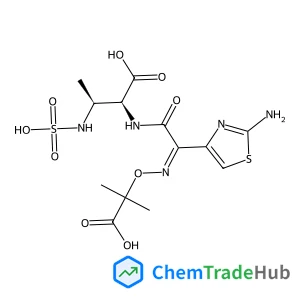
Aztreonam USP Related Compound A (Open-ring Aztreonam)
CAS Number:
87500-74-1
Molecular Formula:
C13H19N5O9S2
Recommended Suppliers







Disclaimer
This page provides academic journal information for reference and research purposes only. We are not affiliated with any journal publishers and do not handle publication submissions. For publication-related inquiries, please contact the respective journal publishers directly.
If you notice any inaccuracies in the information displayed, please contact us at support@chemtradehub.com. We will promptly review and address your concerns.